The prices of goods are on the rise. The prices of fish, meat, and eggs have increased unusually. A large number of the population cannot afford these foods. As a result, their daily protein requirements are not being fulfilled.
Many are vegetarians, meaning they do not consume much fish or meat. In this situation, dependence on plant-based proteins must be increased to meet protein needs.
How much daily protein is needed depends on body weight?
An adult needs 0.8 to 1 gram of protein per kilogram of body weight. This means if someone weighs 75 kg, they need to eat 60 to 75 grams of protein per day.
Depending on the type of fish or meat, 19 to 25 grams of protein can be obtained from every 100 grams of fish or meat. A medium-sized egg provides 6 to 8 grams of protein depending on its size. Four to five grams of protein can be found in every 100 ml of milk. All essential amino acids are found in animal protein.
What are the sources of plant-based proteins?
Fish, meat, eggs, milk – instead of these first-class proteins, we can meet our protein needs by eating second-class proteins.
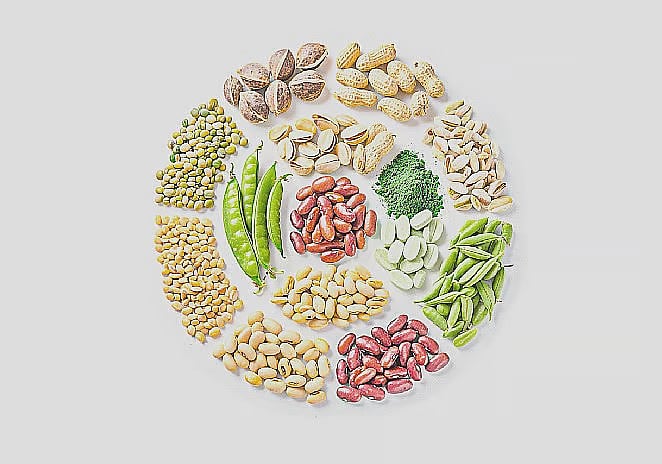
All types of lentils, beans, jackfruit seeds, soybeans, nuts, peas, yard-long beans, rajma, and spirulina are excellent sources of protein. Lentils contain 18 to 25 per cent protein. For example, chickpeas have about 18 per cent, peas 22 per cent, red lentils 23 per cent, and mung beans 25 per cent protein. All types of nuts also contain 23 to 25 per cent protein depending on the variety.
The highest protein is found in soybeans among plant sources. Which contain about 30 per cent protein? The quality of protein derived from soybeans is superior to other plant-based proteins.
Various protein-rich foods are made from soybeans, including soymilk, soy meat, soy yogurt, and soy paneer. Soymilk is lactose-free, so those who have lactose intolerance and experience issues with milk or dairy products can consume soymilk. It contains the same amount of protein and other nutrients as milk.
Spirulina is becoming quite popular as a source of protein. It is a type of marine algae. This alga is rich in other vitamins and minerals in addition to protein.
Since second-class or Grade B proteins have a deficiency of essential amino acids, it can be cooked with other foods to compensate. For example, lentils lack the essential amino acid lysine, but rice is rich in it. If khichuri is cooked with both rice and lentils, it will provide first-class protein. Adding some vegetables will turn it into a protein-rich balanced diet.
Consuming too much first-class protein, such as meat, increases the risk of blood cholesterol, fatty liver, and heart disease. However, there is less risk with second-class protein.
In this respect, plant-based protein is more health-friendly than animal protein. However, those who primarily want to get protein from plant sources should arrange their daily diet in such a way that there is no protein deficiency.
* Md. Iqbal Hossain, Senior Nutrition Officer, Chittagong Diabetic General Hospital