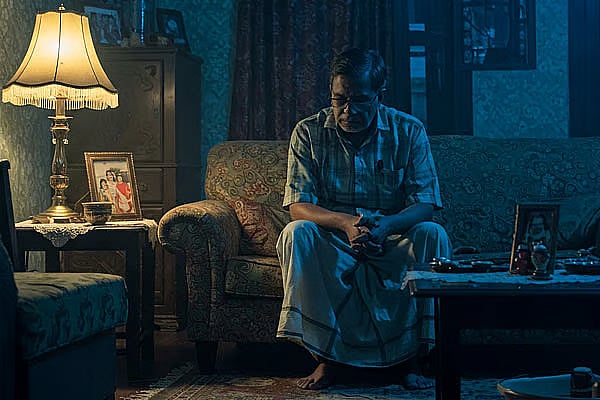
I’m writing this piece for a particular reason—one that relates to family empowerment. These days, whenever you turn on the news or open YouTube, you often see stories of families falling apart and elderly parents weeping in nursing homes.
In most reports, the voices of the parents are heard, but very few seem to listen to the sons and daughters. There are various studies and investigations on this topic, exploring factors like urbanisation, poverty, Westernisation, women’s empowerment, and the role of social media.
Beyond these commonly discussed causes, I have been studying another issue: laziness. To help us better understand the matter, I’ll refer to a general idea from a scientific study (Madsen, 2018), which offers insight into the nature of laziness.
“Laziness as a negative term referring to people who do not show an effort corresponding to their abilities and/or prerequisites, and/or the difficulty of the task in question.
Although like referring to journal articles isn't necessary when writing for newspapers, still I’ve mentioned it here so that everyday readers can align their thinking with the nature of academic research—especially regarding cultural heritage agendas.
Since childhood, I’ve often heard that Bangladeshis are a lazy nation, and strangely, there seems to be a certain joy in saying so. In stories and casual conversations, we enjoy discussing and criticising this idea. More than that, we've even created a joke that if one Bangladeshi gets into heaven, another pulls him down. No one feels ashamed to tell this joke; in fact, it usually ends with applause!
As someone who researches heritage, I want to begin by focusing on the family
In our education system, by the time someone finishes study and enters the job market, they are already around 30 years old. Once they cross 40, we begin making all sorts of excuses—such as, “My body doesn't cooperate,” “I can't remember things,” and many others.
As we grow older further, our focus shifts to the eldest son—When will he take on responsibilities? He is expected not only to take care of his parents but also to look after his siblings. Over time, the father retires, and the son gets married and takes on the full weight of running a household.
These days, our elderly parents are typically around 70 years old, still able to move around. But after retirement, many no longer want to participate in family responsibilities. It's often seen that they sit in rocking chairs reading newspapers, giving orders for tea or coffee. As time passes, their inactivity and sense of insecurity grow. The father starts monitoring the income and spending of his son and the son's working wife. He even feels entitled to a share in their small moments of enjoyment—especially if his other children are perceived to be getting less.
The mother, meanwhile, doesn’t want to help with cooking or looking after her grandchildren. Instead, she often prefers to argue about things like how much oil or gravy is in a curry.
In today’s Bangladesh—especially in Dhaka—domestic help is hard to find and expensive. Running a household on a dual income is already a struggle. Under such intense family pressure, working women often reach a breaking point and quietly move into a rented place near their original home, just to survive.
Eventually, the husband follows her, or if he can't, he migrates abroad. In my long career and life overseas, I’ve seen many men and women who left the country only because of family oppression, and now feel a kind of anxiety at the thought of returning.
Needless to say, there are many academic theories about brain drain in our education system—but is it really so hard to see this harsh truth?
I grew up reading Humayun Ahmed’s books and watching his dramas, where the story often revolved around the eldest son of a middle-class family—a man with no joy in life. Day and night, he toils like a donkey to keep the family running, while his parents feel a kind of quiet satisfaction. The wife and children of this eldest son seem to have no future—much like in the drama Ei Shob Din Ratri, where their children die of cancer without treatment.
Humayun Ahmed himself belonged to that very group. He took responsibility for his widowed mother and six siblings at a very young age. Except for a few books, I’ve rarely seen him give interviews on television, social media, or newspapers about his personal family struggles.
We cry watching this pain portrayed in his films and dramas, but we don't look for real solutions. Instead, we're caught in a cycle of laziness and oppression.
In the developed world, there are age-specific economic opportunities, volunteer work, and recreational activities that allow people to live active and healthy lives from age 15 to even 80 or 85.
I hope that the elders in our families will reconsider the need for cultural and collective empowerment—so that every member of the family can engage in mutual and equal empowerment, and we can prevent the breakdown of family structures.
Our broader social system and cultural empowerment depend on family-based empowerment. Moreover, this requires science-based research and public awareness, so that age-specific skills can be integrated into the goals of sustainable development.
I hope that the youth of our July revolution will transform this country through world-class research and leadership. In their hands, they hold the magic lamp of Aladdin—Nobel laureate Professor Yunus, Abu Sayeed, Humayun Ahmed, Jamilur Reza Choudhury, Sir Fazle Hasan Abed, Mugdha, and many others.
Even if everyone calls me crazy, I have never given up hope. Why should such a golden country like ours be constantly insulted and called lazy?
I have decided—I will never take that insult to heart. And if given the chance, I will risk everything to lead the boatmen of this transformation God willing (InshaAllah).
*Dr. Shahida Khanom, PhD, Board Member, International Union for Conservation of Nature (IUCN), Canada.