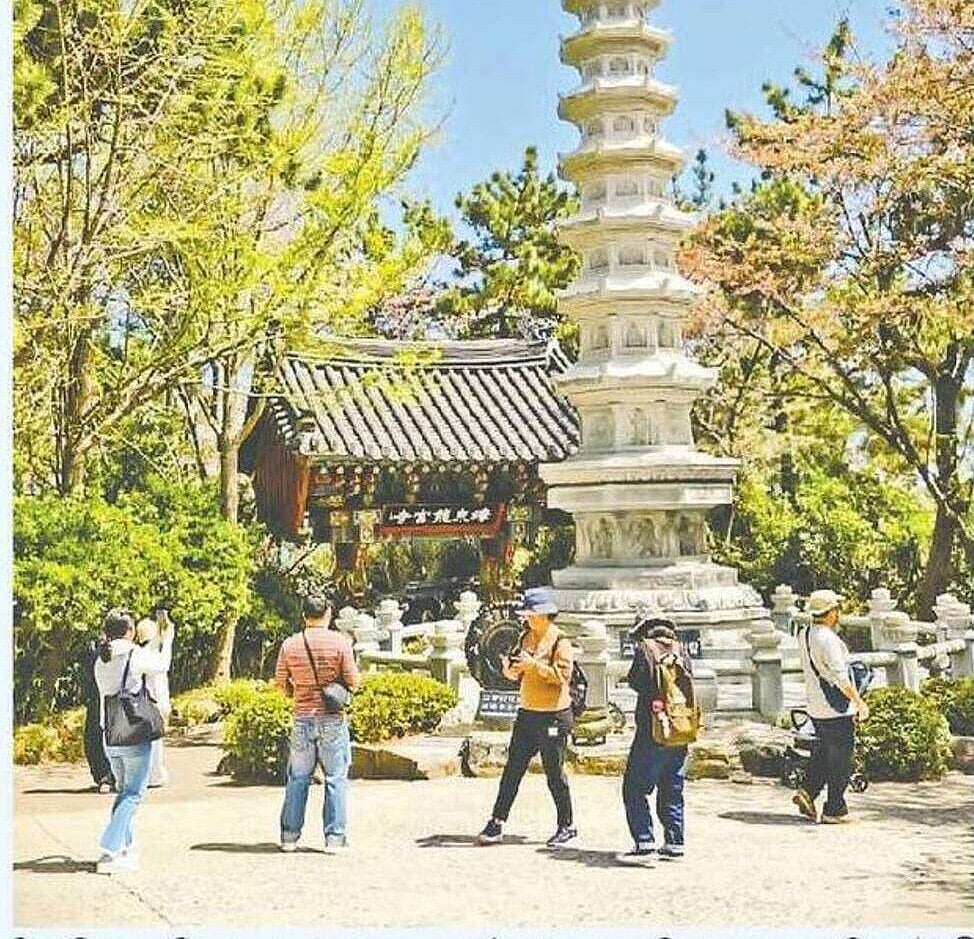
10 tips for travelling to South Korea on a budget
With a little planning, travellers can explore many attractions in South Korea, including Seoul and Busan, within a comparatively modest budget. Zonayed Azim Chowdhury, who recently visited the country, shares 10 practical money-saving tips for travelling in South Korea.
1. Apply for the visa yourself
You can complete the entire South Korean visa process yourself, including the official visa fee, for within approximately Tk 5,000.
Travel agencies typically charge an additional service fee ranging from Tk 3,500 to Tk 5,000 for the same process.
Applicants must complete the electronic form through South Korea’s visa portal at South Korea Visa Portal and print it afterwards.
They must then submit the form along with the required documents to the Embassy of South Korea in Dhaka.
Among the required documents, the most important is the tax return paper for the past three years, which remains mandatory for obtaining a Korean visa.
At present, applicants do not need to book an appointment. Therefore, they can organise the completed form and all supporting documents and submit the visa application on any working day by standing in the queue at the embassy.
Applicants must also pay the visa fee on the same day. Once the visa processing finishes, they can collect their passports. The entire process generally takes between three to15 working days.
2. Purchase air tickets early
Airfare represents one of the largest expenses when travelling to South Korea.
Travellers usually secure the best fares by booking international flights between two and four months in advance. Last-minute bookings often cost considerably more.
For flights between Dhaka and Seoul, ticket prices rise sharply during the cherry blossom season in March and April and during the autumn months of October and November.
During these peak seasons, return tickets can cost between Tk 120,000 and Tk 180,000 or even more.
In contrast, travellers may find tickets during the off-season for approximately Tk 60,000 to Tk 90,000, particularly with airlines such as China Eastern Airlines, China Southern Airlines, or Air China.
Therefore, travellers can save a substantial amount of money by planning their travel dates carefully and avoiding the peak tourist seasons.
3. Seoul’s “magic card”
For affordable and hassle-free travel around the capital city of Seoul, the “Discover Seoul Pass” can serve as an essential companion.
This card provides one-way transportation from Incheon International Airport to Seoul via the AREX train or the K-Limousine bus, free admission to more than 70 popular tourist attractions in Seoul, and unlimited high-speed internet access throughout the validity period. In other words, it offers an all-in-one travel solution for exploring Seoul.
Travellers can purchase 3-day to 5-day packages online before departure through Discover Seoul Pass or Klook.
Depending on the facilities included, the cost may range between Tk 4,500 and Tk 11,000 (with one Bangladeshi taka equivalent to approximately 12.12 South Korean won).
In addition, the pass includes the “Climate Card” facility for public transport.
By recharging approximately Tk 1,500 to Tk 1,600, travellers can use the subway and city buses unlimitedly for five consecutive days. The same card also allows access to Seoul’s popular public bicycle service.
4. How to find affordable accommodation
The most popular area for tourists in South Korea is Myeong-dong. Travellers can easily reach the airport and most tourist attractions from this area.
Due to this convenience, hotel rents there are comparatively higher. Those wishing to save money may choose the Hongdae area instead.
It offers direct train connections from the airport and also features excellent cafés, street food, and nightlife.
Moreover, travellers with a Climate Card can conveniently explore the city’s popular attractions by using the metro and city bus services.
Dongdaemun also serves as a good low-cost accommodation option. In Busan, travellers who wish to stay near the beach may choose Haeundae Beach. However, for even more budget-friendly accommodation, the Seomyeon area offers a particularly convenient alternative.
5. Save money on water and food
During international travel, small expenses often accumulate into a significant cost. One of the most common expenses involves drinking water.
Most hotels, metro stations, and public places in South Korea provide free water dispensers. Therefore, travellers can easily refill water by carrying a reusable bottle.
Meanwhile, dining at an ordinary restaurant may cost between 15,000 and 30,000 South Korean won (approximately Tk 1,200 to Tk 2,400) per meal.
However, travellers can enjoy excellent Korean dishes at much lower prices in street food markets.
In areas such as Myeong-dong and Hongdae in Seoul, as well as various street markets in Busan, many popular foods are available for between 3,000 and 6,000 won. Street food vendors also pay close attention to cleanliness standards, from cooking to serving.
6. Tips for transportation
The most popular and fastest mode of transport between cities is the Korea Train eXpress (KTX) bullet train. Although it offers speed and comfort, the fare remains comparatively expensive.
By contrast, travellers can reach the same destinations at a much lower cost by using express buses. South Korea’s express buses are also highly comfortable, clean, and punctual, making them an excellent option for budget travellers.
Taxis in South Korea are comparatively expensive, particularly at night or on long-distance routes. Therefore, relying on taxis every day can quickly increase the overall travel budget.
On the other hand, the metro and city bus systems in Seoul and Busan are highly modern, clean, and efficient. Travellers can easily reach almost all tourist attractions by metro or bus.
As stations display English signs and route maps, foreign tourists can navigate the transport system with ease.
7. Shop at “Daiso”
The retail chain shop “Daiso” offers almost every type of essential item at very low prices. Most products usually cost between 1,000 and 5,000 South Korean won.
As a result, travellers can purchase a wide range of items on a modest budget, including travel accessories, charger adaptors, umbrellas, water bottles, skincare products, stationery, and small souvenirs.
8. Visit multiple spots together
While sightseeing, many travellers move from one end of the city to the other every day, which increases both time and travel expenses.
Therefore, travellers should try to explore nearby attractions together on the same day.
For example, visitors can tour Myeong-dong, Namsan, and Dongdaemun in a single day, while Hongdae and Itaewon are also located close to one another.
This approach reduces long-distance travel, lowers expenses, and allows travellers to visit more places within a limited time.
9. Explore free viewpoints and parks
South Korea offers many beautiful places that visitors can explore completely free of charge.
At Seoul’s Han River Park, travellers can enjoy stunning riverside views, while the walking trails around Namsan Park provide impressive views of the city skyline.
In Busan, visitors can freely explore the viewpoints surrounding Gamcheon Culture Village, as well as many of the coastal walkways along the seafront.
By visiting these locations, travellers can reduce expenses while also experiencing the local environment and Korean urban life more closely.
10. Install essential apps in advance
One of the most important aspects of travelling in South Korea involves using the correct map and transport applications. Google Maps often fails to provide fully accurate routes in the country.
For this reason, local residents rely heavily on “Naver Map”, one of South Korea’s most dependable mapping applications.
It provides highly accurate real-time information on buses, metro services, walking routes, and traffic updates.
In addition, “KakaoMetro” helps travellers understand metro routes, transfer stations, and train schedules more easily.
By installing these applications before travelling, visitors can quickly identify cheaper and faster routes.
As a result, they can significantly reduce the chances of taking wrong turns, using unnecessary taxis, or incurring additional transport expenses.