Tale of a field hospital for freedom fighters
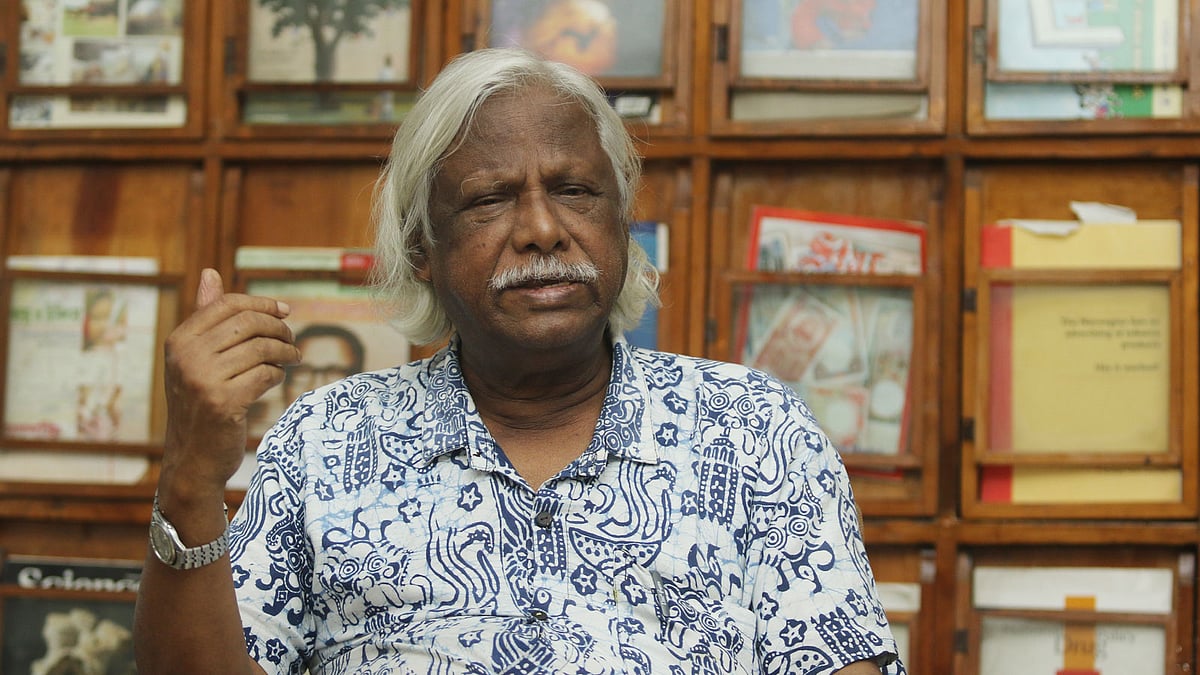
Zafrullah Chowdhury, Gonoshasthaya Kendra founder trustee who is widely known for his work in formulating the Bangladesh National Drug Policy, is a Bangladeshi public health activist. He was a young physician practising in England when the liberation war broke out back in his motherland Bangladesh. He rushed home to join in the efforts in liberating Bangladesh. Leaving his comfortable life in England, he set up a field hospital in Agartala of India along with some fellow physicians.
Talking to Prothom Alo’s Abu Taib Ahmed, he told the tale of his struggle in setting up the field hospital.
Prothom Alo: Please tell us how you joined the liberation war.
Zafrullah Chowdhury: I was living in England at the time. On 25 March 1971, we came across a news report on ITN television where it suddenly showed Sheikh Mujibur Rahman standing at the gate of Intercontinental Hotel in Dhaka. I still remember. It was News at Ten on ITN television. A British reporter asked him: “Mr Rahman, are you not afraid that you may be killed?” In reply, Sheikh Mujib said in a strong voice: “No, if they kill me, they have to face their worst enemy in the communists.” He stretched his arms outwards saying: “Did they have any bullets to kill seven crore Bangalees?” I started calling up people in my known circles. The very next day news came that an unknown major had declared the independence of Bangladesh. Then we realised that something was going to happen this time around. Over 1,000 Bengali physicians were staying in England at that time. We decided that we should play a role in liberating Bangladesh.
PA: When and how did you establish the field hospital in Agartala to treat wounded freedom fighters during the Bangladesh liberation war?
Z Chy: In April, justice Abu Sayed Chowdhury went to London. We met him and requested him to lead our efforts abroad to do something for the liberation war. At that time, we floated a platform of physicians named Bangladesh Medical Association (BMA) there in London. We opened a bank account with Midland Bank in the association’s name. We asked every doctor to pay 10 pounds each every month until Bangladesh was liberated. Some 150 thousand Bengalis were staying there. I told Abu Sayed Chowdhury if every Bengali paid 10 pound per month, the liberation war could be waged with this fund. I was a vascular surgeon and I quit my job there and engaged in organising these affairs. One day, along with other Bengalis, we set fire to our Pakistani passports at Hyde Park in London. We decided that we need to see the situation on the ground to know what sort of assistance was needed. Dr MA Mobin and I flew to India in May. In Agartala of India, I met Fazlul Haque Moni, then met Khaled Mosharraf and general MAG Osmani and told them that we need to set up a field hospital. Khaled Mosharraf replied: “We don’t need a hospital, we need guns and bullets, get some guns and bullets. Go to Czechoslovakia and get some guns from there. We need nothing but guns.” He was very inspiring. But when more wounded freedom fighters started returning to the camp, then they realised the importance of a field hospital. MAG Osmani gave me the go-ahead to set up the hospital. I went back to Kolkata and talked to Tajuddin Ahmad. He said it was a matter of huge funds. “If you can arrange the funds, you can set up the hospital,” said Tajuddin. But we would face difficulties in getting physicians, and nurses in particular, for the hospital.
PA: When did you establish the field hospital?
Z Chy: They gave us the go-ahead in July. We were planning to bring nurses from England. But Tajuddin Ahmad opposed this, saying it may create problems in the war. Then we trained up our male and female youths as paramedics who ran the field hospital. Once the field hospital was set up, Khaled Mosharraf asked me arrange arms and ammunition for the freedom fighters and I did so.
PA: What were the motivating factors that drove millions of people to join the liberation war in 1971?
Z Chy: People of the educated class in the society like me were all along suffering from injustice. The goal for which Pakistan was created was not fulfilled. Pakistan was created against injustice. It was not that it was only against the British colonial rule. It was against the repression spearheaded by Hindus and zemindars (aristocrat landlords). It was against inequalities and disparities. We need to think about why Pakistan became a separate state, why it was not with independent India.
After the creation of Pakistan, East Pakistan leaders like Moulana Bhashani started pointing out that the disparities [between the East and West wings of Pakistan] were not dissipating, but widening. The disparities began with language. An alien language was imposed on us which was not my mother tongue, which I don’t know. And the people belonging to the middle-class in the society started suffering most from the disparities. Against this backdrop, Moulana Bhashani unequivocally stated in 1957 that we will liberate ourselves if the disparities are not removed.
PA: What’s your feeling today, 46 years after the liberation war? Do you think people’s hopes and aspirations for which they fought the war have been fulfilled?
Z Chy: The liberation war was fought to get rid of injustice and inequalities. Bangladesh was liberated with the contribution of millions of people. Why are people today facing the onslaught of Article 57 for speaking out? What was the spirit of our liberation war? It comprised equality, human dignity and social justice. The spirit was of democracy, freedom of expression, and the right to speak out. Today those who speak out, disappear. Extrajudicial killings are widespread. These were not our goals of liberation. None of the goals were achieved. Yes, we’ve got a map and a flag. We’ve got economic achievement.
PA: What do you think are the reasons behind the failure?
Z Chy: It’s the failure of the country’s political leadership.
PA: Do you have anything to say to the new generation?
Z Chy: I’ll urge them to translate the dreams of the liberation war into reality. And I think it’s possible. A truly healthy political culture should be developed to translate the liberation dream into reality.
PA: Thank you
Z Chy: Thank you