A country's internal realities shape its external posture just as changes in the international system compel governments to rethink national policy. Over the past few years, both dynamics have unfolded simultaneously. Bangladesh's foreign policy has reached a critical juncture where, alongside lessons from the past, a new perspective is essential to address the challenges of the future.
The global order is undergoing a long-term realignment. The COVID-19 pandemic exposed the fragility of the global economy. The war in Ukraine elevated the importance of energy, food, and supply chain security. Strategic competition between the United States and China has reshaped international trade, technology, investment, and security cooperation. Today, economics and geopolitics influence one another more profoundly than ever before.
Bangladesh has not been immune to these changes. Development cooperation, trade, foreign investment, climate finance, migration, and regional connectivity have all become increasingly strategic. As a result, foreign policy is no longer merely about maintaining political relations; it has become a key instrument for driving economic transformation, strengthening technological capabilities, integrating into global supply chains, and enhancing the country's competitiveness.
Domestic realities have also evolved. Alongside political change, Bangladesh's economy has entered a new phase. Preparations for graduation from Least Developed Country (LDC) status, greater competition in global markets, the need to boost productivity, and the imperative of attracting investment have all raised new policy questions. The answers lie not only in domestic economic policy but also in foreign policy.
In this context, Bangladesh's most important objective is not the depth of its relationship with any single country. Rather, it is to build partnerships with a range of countries that support long-term development while preserving the country's freedom of decision-making. Today, the success of international relations is measured less by joint statements or the number of high-level visits than by the extent to which those relationships strengthen the economy, technology base, human capital, and institutional capacity.
Bangladesh's principal challenge, therefore, is not to deepen ties with any one power but to build a capable state that can safeguard national interests in a changing international environment while turning new opportunities into tangible gains.
A new language of partnership
One of the most significant changes facing Bangladesh's foreign policy stems from economic realities. For decades, development assistance, concessional financing, and preferential market access formed the foundation of the country's international engagement. LDC status created those opportunities, but the landscape is changing rapidly. After graduation from LDC status, Bangladesh must establish itself not merely as a recipient of aid but as a capable economic partner.
This means not only the gradual loss of financial concessions but also a transformation in the nature of international relationships. Development assistance will increasingly give way to investment, joint production, technology transfer, innovation, skilled human resources, and market competitiveness. Diplomats must therefore prepare themselves for negotiations suited to this new reality.
This is where the relationship between economics and foreign policy becomes even more significant. Economic strength enhances a country's bargaining power, while effective diplomacy creates opportunities to access new markets, attract investment, acquire technology, and build knowledge. Increasingly, the two can no longer be viewed separately.
Another implication of this transition is that future partnerships will depend not only on Bangladesh's needs but also on the value the country can offer. Bangladesh's strategic geographic location, expanding industrial base, blue economy potential, peacekeeping experience, skilled workforce, and large consumer market are all valuable assets. If these strengths are deployed strategically, international relationships will become more balanced and mutually beneficial.
In the diplomacy of the future, success will not be measured simply by the number of memorandums of understanding signed. The real test will be whether those partnerships strengthen productivity, employment, technological capability, and Bangladesh's position in global value chains.
Accordingly, Bangladesh's goal in a changing world is not merely to find new partners but to become a country whose partnership others also value. Durable international relationships ultimately depend on mutual interests and capabilities. Bangladesh's foreign policy must therefore move beyond a mindset of receiving assistance and embrace a new language of partnership based on mutual contribution.
Three major challenges
Discussions of foreign policy often create the mistaken impression that an active international presence alone defines a country's diplomatic strength. In reality, the issue is far more complex. Lasting international relationships depend on whether a state is credible, economically capable, and strategically independent in its decision-making. These three questions are becoming increasingly important for Bangladesh.
First, credibility is among the most valuable assets in international relations. Policy consistency, institutional effectiveness, the rule of law, a culture of implementing agreements, and predictability in decision-making are what build the confidence of international partners.
No country remains strategically important over the long term simply because of its geographic location. Investors, development partners, and strategic allies build lasting relationships with countries whose policies are stable and whose institutions function effectively. Bangladesh's first challenge, therefore, is not to make new promises to the outside world but to strengthen its domestic institutional foundations in ways that sustain international confidence.
Second, post-LDC Bangladesh is entering an economic environment where competition, rather than preferential treatment, will be the defining factor. Maintaining a competitive position in international markets will require greater productivity, stronger technological capabilities, and deeper integration into global value chains.
This reality is also redefining the role of foreign policy. Diplomacy is no longer limited to preserving political ties; it must also help open new markets, attract investment, foster technological cooperation, expand opportunities for skilled workers, and create an international environment conducive to economic transformation. Economic strength and diplomatic effectiveness now reinforce one another.
Third, the international system is becoming increasingly competitive. Rivalry among major powers is likely to persist in the years ahead, and South Asia and the Indo-Pacific will not be exempt.
For Bangladesh, this evolving landscape presents both opportunities and risks. Excessive dependence on any single power may prove costly over the long term, while becoming unnecessarily entangled in geopolitical rivalries would not serve the national interest. Bangladesh's diplomatic tradition has long been to maintain constructive relations with all while prioritising its own interests. That principle remains just as relevant today.
Strategic autonomy does not mean neutrality. Rather, it means retaining the capacity to evaluate every international relationship in light of Bangladesh's own priorities, economic needs, and long-term interests. A confident state makes decisions based on its own interests, not as a participant in someone else's rivalry.
These three challenges are closely interconnected. A competitive economy cannot be built without credible institutions; strategic autonomy cannot be sustained without a strong economy; and without such autonomy, it becomes difficult to secure an environment conducive to long-term development. Bangladesh's objective, therefore, should not be to privilege any one relationship but to build a capable state in which these three pillars reinforce one another.
Strong states make strong diplomacy
Discussions of Bangladesh's foreign policy often become dominated by international events. Which country has moved closer to another, what agreements have been signed, or how successful a particular visit was are all important questions. But they do not fully explain the success or failure of foreign policy.
The reality is that effective foreign policy reflects the overall strength of the state. If the economy is not competitive, institutions are weak, policies lack continuity, and administrative capacity is inadequate, even skilled diplomacy cannot deliver sustained results. Conversely, a confident and well-governed state can strengthen its international position even with relatively limited resources.
For this reason, foreign policy cannot be regarded solely as the responsibility of the Ministry of Foreign Affairs. Progress in trade, the economy, education, energy, technology, shipping, agriculture, environmental management, and human capital development ultimately determines the strength of a country's international relationships. A nation's standing in the world depends not only on what it wants but also on what it can contribute and how reliably it can establish itself as a partner.
Bangladesh stands at a moment when its international potential is greater than at any previous time. Its strategic location, expanding economy, young population, opportunities for regional connectivity, and active engagement with the global development agenda have created new possibilities. But potential does not automatically translate into success. That requires effective institutions, policy consistency, skilled human resources, and long-term planning. Diplomacy can advance these efforts internationally, but it cannot substitute for them.
The central question facing Bangladesh is therefore not its relationship with any single power but whether it can define and protect its long-term interests with credibility, capability, and confidence as a state. If it succeeds, its international relationships will naturally become more balanced and productive.
In a changing world, the greatest test of Bangladesh's foreign policy is not determining where others stand, but clarifying its own position. The true foundations of foreign policy are a credible state, a competitive economy, and farsighted governance. That is why the cornerstone of Bangladesh's foreign policy must be the creation of a capable state whose voice will naturally command respect on the international stage.
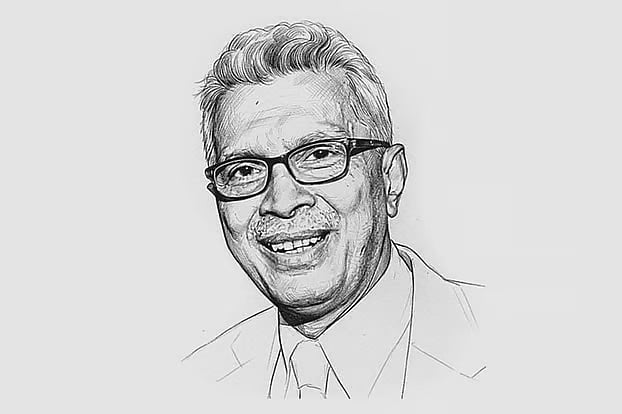
* M Humayun Kabir is President of the Bangladesh Enterprise Institute (BEI) and a former ambassador.