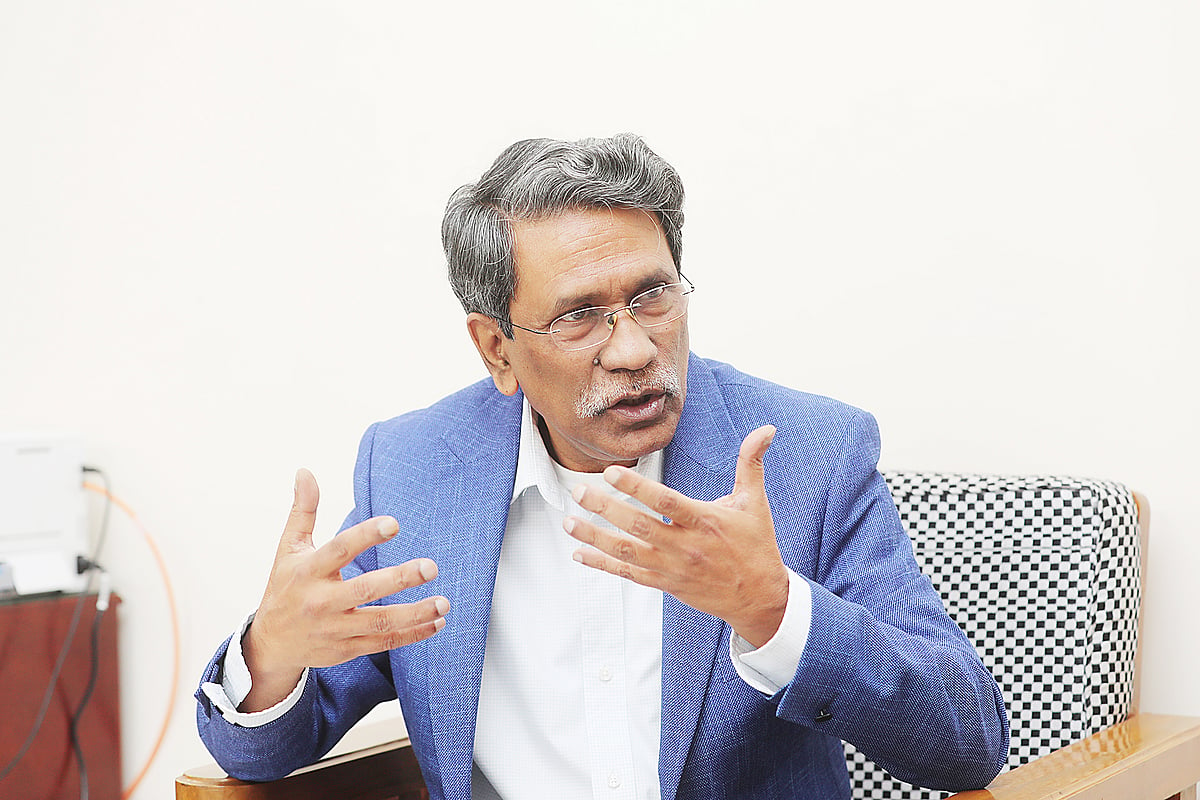
Exclusive Interview: Prof Ali Riaz
Minor constitutional reforms will not change the structure of the state
Professor Ali Riaz, former vice-chairman of the National Consensus Commission, spoke to Prothom Alo about the state of the reform process two years after the expectations for state reform emerged following the July mass uprising, the political debate over reforms, and the potential political implications of amending the Constitution without the participation of the opposition. Riadul Karim took the interview.
After the mass uprising of July 2024, there were expectations for state reform. Two years later, where does this reform process stand?
Ali Riaz: The expectation of state reform still exists. If you speak with ordinary people, they do not want to return to the old system. While they might not be able to specifically outline the constitutional articles, they understand that if the system remains as it was, no new outcomes can be hoped for. The framework for expecting state reforms has been established. People now realise that changes need to focus on the constitution and the independence of state institutions.
However, I feel the progress towards implementing these reforms is not happening as needed. There is an attempt to find alternative paths. Minor amendments will not change the state structure without major reforms. Without changing the state structure, you cannot achieve democratic transition.
You were the head of the Constitutional Reform Commission. Through discussions among various parties within the National Consensus Commission, the July Charter was formulated. Discussions on constitutional reform took a long time, yet debates continue on what reforms are necessary and how they should be implemented. Where do you see the core problem?
Ali Riaz: The issues specified during the creation of the July Charter have a broad consensus among political parties. There are differences in some areas, but considering the core or message, much of the current discussion or debate is unnecessary. The agenda is clear, and we know what needs to be done.
If you choose not to implement everything, then political parties need to decide through discussions. This was taken to the public, where seventy million people gave their opinions. You must consider their views. The current debate is unnecessary in that sense—there is no need to draft a new agenda. We know what needs to be done. It’s a waste of time and diverts us from the core issue, which is reforming the state system to make it accountable.
Some fundamental reform proposals made by you faced a note of dissent or different opinion from BNP. There is debate over this note of dissent and the method of implementation. Was there any fundamental shortcoming in creating these proposals, leaving room for ongoing debate?
Ali Riaz: We do not think so. At least as a participant in the process, I haven’t seen any fundamental flaws. There might be notes of dissent. In judicial rulings, a note of dissent doesn't mean a temporary suspension. It will be implemented. In political discussions, a note of dissent means 'disagreement'. But what if the public tells you something? It wasn’t just an agreement among political parties. We had said that if people don’t want reforms, they won’t happen.
We suggested a Constitutional Reform Council for implementing reforms because fundamental changes to the constitution are proposed. What measures are there for protection? Almost all parties in the consensus commission discussions undoubtedly mentioned that the thirteenth National Assembly needs additional powers because within Bangladesh's existing constitution, you cannot give additional powers to parliament.
Did BNP agree in that discussion, or is there any difference you notice in the party's stance now compared to its position during the consensus commission discussions?
Ali Riaz: Yes, there is certainly a difference. During the consensus commission discussions, BNP did not oppose giving additional powers to the thirteenth National Assembly. BNP representative Salahuddin Ahmed explicitly stated that parliamentary powers are being increased through a referendum. He also mentioned that the implications expressed through a referendum would have no legal significance, ‘it will be binding on us'. He described this as structural power.
To provide this structural power, you need to create a framework, and you cannot go beyond the existing framework of parliament. The integrated form of that is the ‘Constitutional Reform Council'. It is for a limited period. The traditional powers of parliament will remain. Parliament must continue its regular work. Alongside, specific steps need to be taken to implement issues that have public consent. In that sense, there was no principled objection from BNP to the proposal of giving additional powers to this parliament.
But the BNP government did not follow that. The Constitutional Reform Council was not formed. Now a special parliamentary committee is made for constitutional amendments. How do you view this?
Ali Riaz: I see it as BNP moving away from its commitments and promises. They talked about giving extra power to parliament through a referendum.
But BNP also said the July National Charter Implementation Order is an endless document of interim government deception.
Ali Riaz:I do not think so. There is nothing in the order that goes beyond the discussions that led to the July Charter. It was decided that commitments and consensus would lie within the Charter. We will differentiate the implementation process. What was discussed in the implementation process has been reflected in the order. So how can we call it deception?
The order was given on 13 November 2025. Elections were held the following year on 12 February. During this interim period, did BNP or any party reject the order and say they would not go to a referendum under this order? They did not.
How would you describe BNP's current position?
Ali Riaz: An attempt to maintain the status quo. If efforts are made for minor amendments from within the existing constitution, questions will arise about fundamental structural reforms. There is no guarantee this would be protected in the future. The public’s expectation, reflected twice—first through the July uprising, second through the referendum—won’t that be reflected? Hence, I cannot be optimistic about the future of the process we’re currently undergoing.
There are also no opposition parties involved in this process so far. Although the ruling party hopes the opposition will be there when the bill reaches parliament. But if the constitution is amended without the opposition, what might be the political impact?
Ali Riaz: It will further divide the country. The existing unstable situation will become more complex, which is undesirable. Bangladesh is currently at a significant crossroads. Even considering geopolitics, which you would understand.
The biggest question is whether it will aid in a democratic transition. I don’t think it will. If it's done excluding everyone and excluding the opposition, what will remain? It will seem like the agenda of a single party is being implemented. No matter how much you draw from articles 4, 5, or 11 of the July Charter, it would appear that the ruling party's agenda is being implemented.
An interim government conducted a referendum on constitutional reform. The special committee related to constitutional amendments states that a ruling has been made to restore article 142. According to this, after passing the constitutional amendment bill, some specific issues will again be taken to a referendum. How do you see this?
Ali Riaz: The government can hold a referendum at any time. There are no obstacles to holding a referendum. Even when article 142 didn’t exist, the government could hold a referendum. The obligation for a referendum on specific issues arose with the subject of article 142.
If you implement the previous referendum results unaltered, there's no need for another referendum. The people have already said, ‘do this'. Again, it’s stipulated in the July Charter that subsequent referendums on special issues would occur if amendments are made later. That’s for the future.
Does that mean this referendum might not be necessary?
Ali Riaz: If people's verdicts are implemented as it is, I don’t see the need for it.
The referendum was held on both the July Charter and the Implementation Order. The Implementation Order was not adhered to.
Ali Riaz: The referendum outcome is explicit. Today’s constitutional amendment discussion—the basis of it is what? The basis is the referendum, the basis is the mass uprising. These are not isolated events. You can't accept part and reject part—this won’t work. You cannot cherry-pick parts of a pledge.
What successes do you perceive in the efforts or initiatives you took, and what do you see as incomplete?
Ali Riaz: If I mention the success of all our efforts, the greatest success is that the urge among the Bangladeshi people to change the state structure has become stronger. They now understand where changes are crucial. This is not just a commission success, but also a success of political parties. They had to reach this stage and articulate it.
For the first time, everyone participated in a structural change aspiration and held long discussions. This had not happened previously, and I can’t say it will happen again in the future. We were able to carry out this task.
Regarding the process, I do not see incompleteness. But if we had more time, the social segments indirectly involved could be directly engaged. It would have been a bit better. We could have made discussions on implementation more specific. Despite efforts, I believe we couldn’t inform the public in great detail. We tried to create transparency as much as possible. If made more participatory, it would have been better. I felt incompleteness in this aspect.
Thank you for your time.
Ali Riaz: Thank you.
*This interview, originally published in Prothom Alo print and online editions, has been rewritten in English by Rabiul Islam