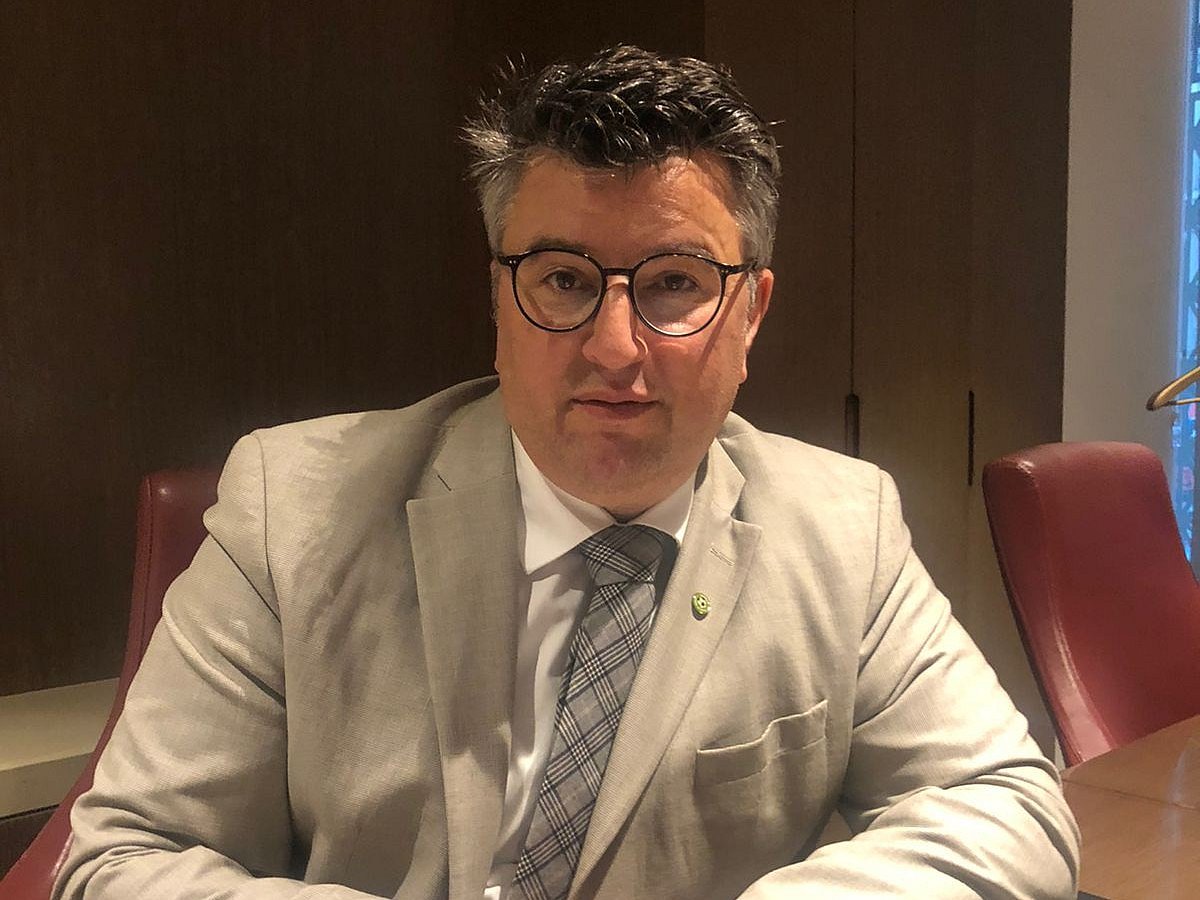
Interview:Boris Mijatovic
The new govt must strengthen democratic values like press freedom and fair elections
Welcome to Bangladesh, on your maiden trip here. Both Bangladesh and Germany are heavily engaged in supply chains, within their countries and globally. Given the disruption caused by the pandemic, how do you see the future of global supply chain management?
Regarding your question on global supply chains, it's essential that we have global rules for market activities. It should be common sense that there is no forced labour, no child labour, no gender abuse, and no environmental degradation in the products we trade globally.
In this sense, regulations are necessary to provide a framework within which everyone can compete based on the same set of rules. Otherwise, we risk a "race to the bottom," where the lowest standards and cheapest prices prevail. I’m advocating for a regulatory system that applies globally, ensuring that workers' rights are protected everywhere.
When discussing equal rules, labour rights are also a critical issue. This includes preventing harassment, intimidation, and ensuring safe working conditions.
Is labour rights one of the key areas of your discussion here with stakeholders? How do you see labour issues, particularly forced labour, labour rights and working conditions in the unions?
In the context of Bangladesh, we need to understand that security and working conditions are not just a local issue; they are a global concern. Issues like fire safety, security standards, and proper working spaces add costs to production. But we want these costs to be reflected globally.
In Europe, we call for a regulation that ensures that imported goods meet the same production standards. We support Bangladesh in its efforts, but we don’t want to leave them alone. When brands hire companies here to produce their goods, they should be required to follow both European laws and import standards. This is why we advocate for due diligence and reporting systems, so that companies take responsibility for improving working conditions and don’t settle for the lowest standards.
How does Germany plan to support the improvement of labour conditions and worker rights in Bangladesh?
As I mentioned, we aim to hold brands accountable. When they import goods, consumers must be confident that those products are not made under exploitative conditions, such as forced labour.
It's a complicated task because supply chains are long, and it's hard to trace every step back to the raw materials. But I strongly believe that due diligence is necessary to ensure that goods are produced in an ethical and responsible manner.
Do you think improving oversight mechanisms is essential to address these issues?
Yes, absolutely. In today’s globalised world, with so many production steps spread across different countries, it's necessary to have a global system and perspective on supply chains. Our Due Diligence Act for imported goods ensures that production standards are met. The European Union has a ban on forced labour, and we are working to ensure that companies are required to report and maintain these standards. However, we need to address the question of which companies need to report and comply. It's about ensuring a fair global system for all.
As Bangladesh progresses economically and plans to negotiate for GSP plus status with the European Union to enhance its competitiveness in global markets, do you have any specific policy recommendations for Bangladesh to achieve this without compromising labour standards?
I’m not here to advise your government, especially not the interim government, on policy. Your situation is challenging enough, and you don’t need external advice.
That said, I’ve met with civil society organisations here, such as the Ethical Trading Initiative (ETI), which is doing excellent work. They are transparent about their findings and suggestions. Bangladesh has the expertise and organisations in place to address these challenges without needing someone from outside to tell you what to do.
As for supporting civil society, Germany and other international actors are backing organisations that work to increase transparency and provide guidance on improving labour standards.
Moving from labour issues to climate change, an area where Bangladesh and Germany collaborate significantly. How can the two countries work together more effectively to tackle environmental protection and climate change, particularly flooding, rising sea levels, and the devastating floods from upstream last year?
Well, you’ve asked the right person, I’m from the Green Party, after all! First of all, I would recommend not investing in coal plants.
Private households should not only install solar panels on rooftops but also connect to the grid to share the energy. This could help with Bangladesh’s electricity challenges.
I also learned that Bangladesh is one of the most affected countries by climate change, with frequent typhoons and cyclones. The situation is alarming. We need to talk about strengthening protections with dams. Germany has experience with storm surges in the northern region, so there could be technical collaboration.
In general, I believe that addressing climate change must be a priority, both in UN forums and through cooperation between Germany and Bangladesh.
It has been almost eight years, and not a single Rohingya refugee has returned to their place of origin. The military takeover in Myanmar in 2021 only made things worse, and the situation has worsened under the current regime. How do you view the Rohingya crisis? What role do you see for the European Union and the United Nations in resolving it, particularly with funding which is drastically reduced?
I’m here to support the effort of bringing the Rohingya crisis back to the global agenda. I’m here to report what I’ve seen and learned and to raise awareness in Germany and Europe that this crisis cannot be left solely to Bangladesh. It has the potential to destabilise an entire region.
The 1.2 million refugees must receive more than just food and medical aid—they need better living conditions and a chance to lead dignified lives. The young people need perspectives for their futures, so they don’t end up in gangs or extremist groups.
As for the United Nations, it’s difficult. We need to ensure that humanitarian assistance continues. It's not just the responsibility of a few countries, but of the international community. Funding has been cut significantly in 2023, and the situation is becoming tense.
Many NGOs are trying to help, but they’re also facing funding constraints. We must remain vigilant and ensure the international community provides the necessary resources and support.
How would you assess the current status of Bangladesh-Germany bilateral relations?
I believe the relationship is strong. We have solid cooperation in areas like development, trade, and academic exchange, not to mention civil society cooperation. I think there is room for improvement, but overall, the relationship is good. The new German government is paying attention to the region, as evidenced by the recent visit of the German State Secretary for Development.
What are the key areas you believe both countries should prioritise in the coming days?
For me, one key area is tackling disinformation, especially in this digital age. We are all facing challenges with fabricated profiles, fake news, and media manipulation. Both Bangladesh and Germany must address these issues together. I also learned that Bangladesh has a vibrant, tech-savvy youth population. This could be an opportunity for Bangladesh to diversify its economy beyond just one sector. The youth here could drive innovation and help the country strengthen its position in the global market.
As Bangladesh approaches its next election, after the historic political changes of the July mass uprsing, what is your expectation from the new government? How do you assess the country’s evolution compared to last year and the fall of the previous regime?
First of all, I hope the government can recover the money that was taken from the country. This is a huge challenge, and it’s something we can support. I hope new the government strengthens democratic values like press freedom and fair elections. Bangladesh has made great strides over the past 20-30 years. The country has evolved significantly and should continue on this path, ensuring that people’s voices are heard and that they can live dignified lives.
I hope the new government will continue pursuing these values, rather than turning to authoritarian promises, which would only undermine democracy.
Finally, in the context of the upcoming election and the concerns over vote manipulation and fraud, how do you see the election process?
For me, free and fair elections are essential. A free election means voters can make their choices without fear or manipulation, and everyone running has an equal opportunity. We’ve seen election fraud in many parts of the world, including Europe. Media can be controlled, and information manipulated to favour a particular party. This is something that must be avoided.
The key point is that elections should be free and fair—this means we need to combat disinformation and ensure that no party uses unethical means to influence the vote.
Thank you.
Thank you, too.