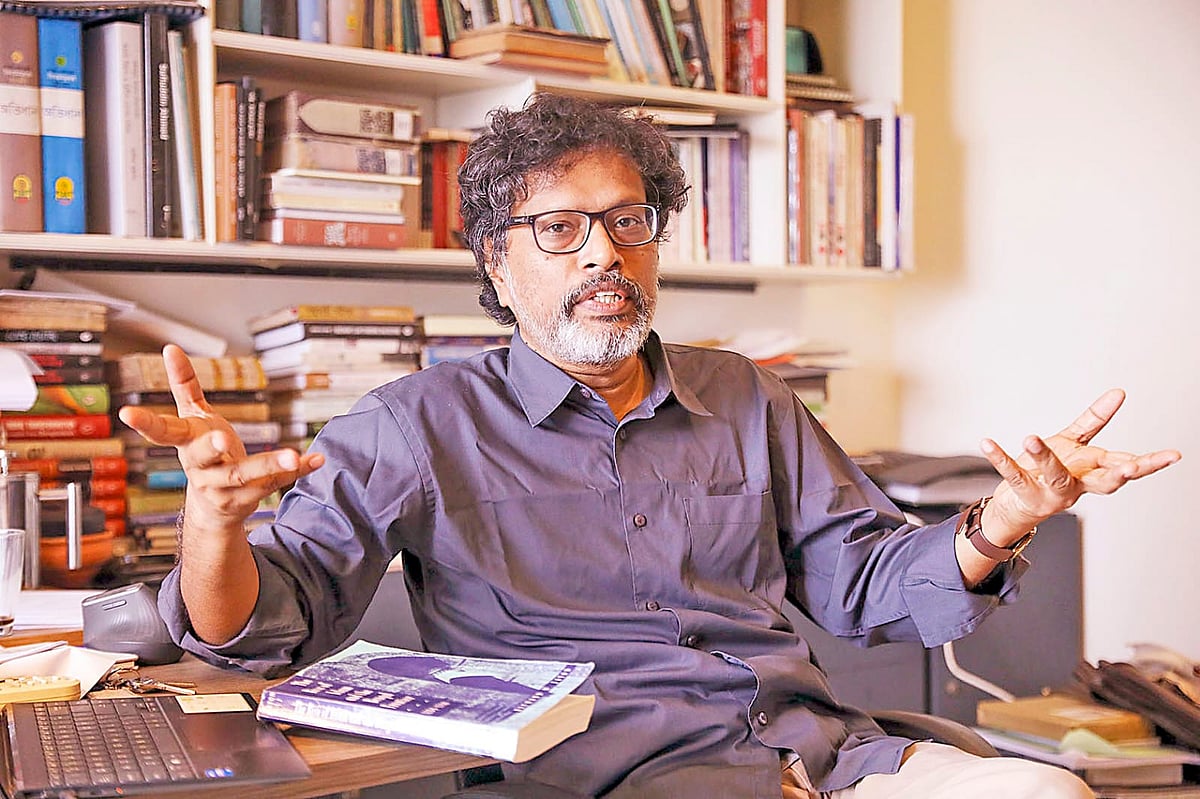
Exclusive Interview: Firoz Ahmed
Government did not act to stop mob violence
Firoz Ahmed is a writer and thinker who served as a member of the Constitution Reform Commission. He is a former president of the Bangladesh Student Federation and has been actively involved in political and intellectual activities for over three decades. He spoke to Prothom Alo about the successes and failures of the interim government, mob violence, constitutional reform, and related issues. Monzurul Islam has taken the interview.
You were a member of the Constitution Reform Commission. Could you share your thoughts on constitutional reform?
Firoz Ahmed: We were unable to reach consensus within the commission on some serious issues—such as state religion and secularism. As a result, dissenting opinions were submitted in writing. However, the commission’s success lies in the fact that it was able to correctly identify the structural power crises within Bangladesh’s Constitution.
Not everyone has to agree with all the solutions proposed by the commission, but the important thing is that issues which had once been almost taboo to discuss are now returning to public conversation.
In this context, we must remember: the mass uprising of 1969 failed to resolve certain core issues, and that's what ultimately necessitated 1971. The movement of ’69 only unleashed the dream—it did not fulfill it. The public uprising of 2024 stems from frustration with a similarly stagnant authoritarian structure. If those in power continue to ignore these issues, we may see many more mass movements and uprisings—both large and small—in the days ahead.
There’s been a lot of talk about reforms. But is reform even possible before the election?
Firoz Ahmed: If the reforms I mentioned had been part of the interim government's agenda, they would have earned overwhelming public support. Whether businesspeople or ordinary citizens—everyone would have felt hopeful that something positive was on the horizon.
Personally, I would have wanted such a government to take the necessary time to carry out reforms—to rid the country of corruption, bureaucracy, waste, and the absence of accountability.
The danger right now is that, because this is a post-uprising government, people are still giving it a pass—despite allegations of inefficiency and lack of transparency. Meanwhile, the economy is faltering due to a lack of investment, and public trust is steadily eroding.
In such a situation, it has become critically important to hold elections quickly and transfer power to an elected government. That said, I still hope that before stepping down, the interim government will ensure meaningful progress in holding Hasina and her associates accountable for the killings and corruption committed under their rule.
Thank you for your time.
Firoz Ahmed: Thank you as well.