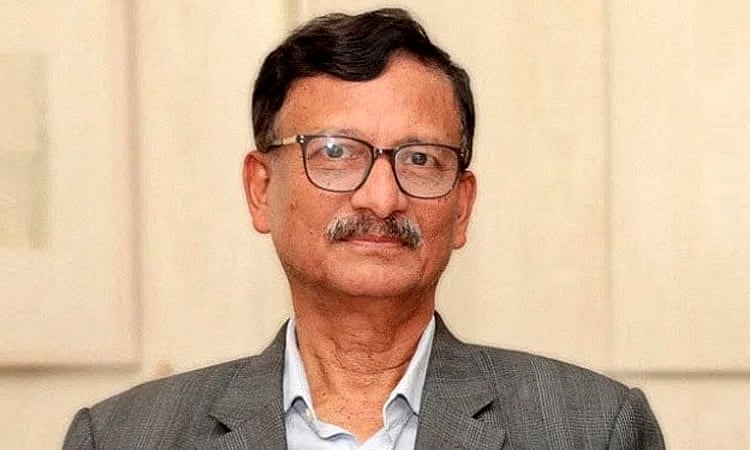
Exclusive Interview: Md Touhid Hossain
“I said, let me step down”
Md Touhid Hossain served as the foreign affairs adviser in previous interim government. In an interview with Prothom Alo, he discusses the interim government's relations with various countries, his experience in office, and other related issues. Prothom Alo's diplomatic correspondent Raheed Ejaz took the interview.
Can you tell us something about your experience serving as foreign affairs adviser in Professor Muhammad Yunus' interim government after the 2024 mass uprising?
Touhid Hossain: I never imagined I would have a role at the highest policymaking level. But when I was approached and became certain that Professor Yunus would be leading the government, I agreed. I cannot say that my one and a half years in office were entirely pleasant or exactly as I had hoped. But it was certainly a unique experience. I did what I could within my capacity. I'm not overly concerned about success or failure because I didn't lobby for the position.
Did Professor Yunus, as head of the interim government, give you any specific instructions?
Touhid Hossain: At that time, neither I nor anyone else was the main issue. The government's primary responsibility was to restore normalcy. That was the immediate priority in every sphere. We all worked toward that goal, both domestically and internationally.
So there were no specific directions regarding priorities?
Touhid Hossain: Not in the sense of formal, detailed directives. Initially, our main task was to clearly communicate Bangladesh's position to the international community. But I can say that Professor Yunus also believed it was important to establish a modus operandi with India. India is a geopolitical reality. We have multidimensional relations, and it surrounds us on three sides.
The reality was that Sheikh Hasina left office, Professor Yunus assumed responsibility, but there was no warm response from India. Unlike China and several other countries, India did not immediately send a formal message welcoming Professor Yunus. That came much later. That was not entirely unexpected. Given India's close relationship with the previous government, perhaps they were taken aback. Whether they were uncertain about how to respond is something only they can answer.
From our side, we had to take the initiative to arrange the first telephone conversation between Professor Yunus and Indian Prime Minister Narendra Modi.
So the interim government initiated the call to the Indian prime minister?
Touhid Hossain: Yes. Professor Yunus called Prime Minister Modi. We requested an appointment, and once a time was fixed, Professor Yunus spoke to him from the state guest house Jamuna.
How much freedom did you enjoy as foreign affairs adviser?
Touhid Hossain: During the first three or four months, I enjoyed considerable freedom. Of course, I sought Professor Yunus' approval on every major matter. But I can say I was able to handle many issues largely on my own.
So until around December 2024, you worked with relative independence?
Touhid Hossain: Yes. At least I wasn't obstructed. For example, there were allegations against several ambassadors. I discussed with Professor Yunus whether we should take immediate action or proceed gradually. I preferred a phased approach, and he agreed.
In the early months, he fully endorsed my recommendations on internal matters and ambassadorial appointments. He also initially believed he would not travel abroad much. Before the UN General Assembly in September, I argued that he should attend because he was an internationally recognised figure. Global leaders would better understand Bangladesh's position if they heard it directly from him. That level of attention would not be given to someone else. He eventually attended the UN session.
There was also the Commonwealth Heads of Government Meeting. I felt it was not important enough to require his attendance, and he agreed. I attended as foreign affairs adviser instead. That was how things were in the beginning. Later, however, various tensions gradually emerged.
Why did the situation change?
Touhid Hossain: It's not that I never disagreed with him. One of his government's priorities was improving relations with India. We made serious efforts in the beginning, but later it became clear those efforts were yielding no results.
At one point he suggested, "Since you'll be passing through, why don't you stop in Delhi?" I replied, "Sir, I don''t think that would be appropriate."
When was this?
Touhid Hossain: Around November or December 2024. I told him I couldn't simply go to Delhi to meet the Indian foreign minister unless I had been invited. Such a visit offered no guarantee of creating a better atmosphere in bilateral relations.
Moreover, it wasn't just the Indian government. There were also people in India with strong anti-Bangladesh sentiments and considerable support for the Awami League. So I saw no point in making such an unnecessary visit. He accepted my reasoning.
You mentioned tensions. How did they begin?
Touhid Hossain: I continued doing my work in my own way. Perhaps Professor Yunus wasn't satisfied with my capabilities. Or perhaps some of those close to him didn't like me.
Take the appointment of Lutfey Siddiqi as Special Envoy for International Affairs. Although I was a member of the advisory council, I only learned about the appointment after the official order had been issued and I received the notification from the Cabinet Division. The government took office in August, and when he was appointed in September, I expected the chief adviser would inform me beforehand.
Later I called him and said, "Sir, after looking at Lutfey Siddiqi's CV, I think he would have been an even better fit for BIDA." He replied, "I've already appointed someone else there."
It was a minor setback. I'm not saying he didn't have the authority to make the appointment—of course he did. But shouldn't I, as foreign affairs adviser, at least have been informed?
In a recent interview with a television channel, you said you wanted to resign on three separate occasions. Why?
Touhid Hossain: I won't go into details. But I didn't realise that, by then, a kind of "kitchen cabinet" had already emerged.
How did you come to realise there was a kitchen cabinet?
Touhid Hossain: I was invited to a lunch meeting to discuss a particular issue. When I arrived, I found myself in an uncomfortable situation. It wasn't a cabinet meeting, it was a meeting of a select group. Once I got there, I was subjected to a barrage of questions. It felt as though I had been invited specifically to be criticised.
You had no indication beforehand about what would happen?
Touhid Hossain: No. The lunch meeting focused on the unfortunate incident involving Asif Nazrul at Geneva airport. After I explained what had happened in Geneva, I faced such hostile criticism that I felt I was there as the accused.
I finally said, perhaps you're not happy with the way I'm doing my job. Perhaps you think that because I spent 33 years in the Foreign Ministry, I'm unfairly defending its officials. If that's what you genuinely believe, then please appoint someone else. Let me step down.
When did you next consider stepping down?
Touhid Hossain: During the UN General Assembly session on 22 September, 2025, an unfortunate incident occurred at New York's JFK Airport involving several members of the Bangladeshi delegation. At the time, I told leaders of various political parties, including the three or four members of that group, that after completing our work and returning to Dhaka, I would resign and take responsibility for what had happened. That way, no one else would have to bear the blame. Everyone, including Mirza Fakhrul, opposed the idea.
I also met separately with Khalilur Rahman and told him, "You had wanted to appoint Sufiur Rahman as a state minister. I didn't agree then. Let me return to Dhaka, appoint him as state minister, and let me leave."
Bangladesh had nominated you to run for President of the UN General Assembly. But while you were in New York, news came that Bangladesh had withdrawn its candidacy. What happened?
Touhid Hossain: Suddenly, a colleague in New York sent me a message and called, asking me to take a look. After reading it, I said, "No one informed me either before or after this decision was made." Basic courtesy would have been to consult me. So I said I would not comment on the matter. Whoever made the decision should explain that Bangladesh was withdrawing its candidacy in support of Palestine.
The plan had been that after Professor Yunus addressed the General Assembly, we would formally launch our campaign for the presidency the following day. That never happened. Instead, I changed my ticket and returned to Bangladesh with Professor Yunus. I told him, "Sir, you didn't have to handle it this way."
Did you say that after returning to Dhaka?
Touhid Hossain: Yes. If he had simply told me that we wanted to withdraw the candidacy, I would have understood. But he said nothing. I told him, "Sir, I agreed to take this responsibility only because you were going to be there. If you think it would make things easier for you if I stepped aside, I will do so. You don't even have to explain why."
What was the role of this "kitchen cabinet"?
Touhid Hossain: I never attended any of their meetings, so I can't say exactly. But they were active and met regularly.
When did they meet? After cabinet meetings?
Touhid Hossain: All I know is that they met once a week.
How many members were in the kitchen cabinet?
Touhid Hossain: Five or six.
India had said that relations with Bangladesh would normalise after the election. Indian Lok Sabha Speaker Om Birla attended the swearing-in ceremony of the BNP-led government in Dhaka, and in April Foreign Minister Khalilur Rahman visited Delhi. Yet relations with the newly elected government have not progressed as many expected. Where does the problem lie?
Touhid Hossain: I can't say why things are happening this way now. The foreign minister would probably be in a better position to answer that.
Leaving India aside, do you think the interim government was able to advance Bangladesh's interests by maintaining balanced relations with other countries and alliances during its one-and-a-half years in office?
Touhid Hossain: I think it managed to do so to a reasonable extent. However, while the first six months showed signs of progress, things stagnated in the final six months. The reason is fairly clear. Once it became apparent that elections were approaching, there was little further movement.
Take China, for example. It had been friendly toward our government, and we were making progress on several issues. We had hoped for some positive developments, but suddenly everything slowed down.
How would you assess relations with the United States?
Touhid Hossain: I believe we could have left the trade agreement with the United States to the elected government. Signing it just three days before leaving office was, in my view, not the most appropriate course of action.
But the interim government also signed the Economic Partnership Agreement (EPA) with Japan close to the election.
Touhid Hossain: The two situations are not exactly the same. As the election approached, we should have proceeded more cautiously on all major matters. The agreement with the United States was concluded in great haste at the very last moment. We could easily have spent another week negotiating. It may be that negotiations with Japan were at a more advanced stage. Even so, that agreement could also have been signed later. In any case, it did not generate much controversy.
Did the Ministry of Foreign Affairs have any role in the agreement with the United States, or was it primarily a government initiative?
Touhid Hossain: Without assigning blame, I can say that from September 2025, or even earlier, the National Security Adviser had begun taking responsibility for many matters. In one sense, that was understandable, since he is now the foreign minister. I don't know whether it was already decided at the time that he would eventually assume that role.
It's worth remembering that he was initially supposed to be appointed High Representative on the Rohingya issue. But when the decision was finalised, several additional responsibilities were added. That meant he would oversee much of the Foreign Ministry's work. Accordingly, he handled many matters. We had a good understanding on many issues, though not on all. It is undeniable that, toward the end, relations with a number of countries had largely come under his jurisdiction.
Thank you.
Touhid Hossain: Thank you.