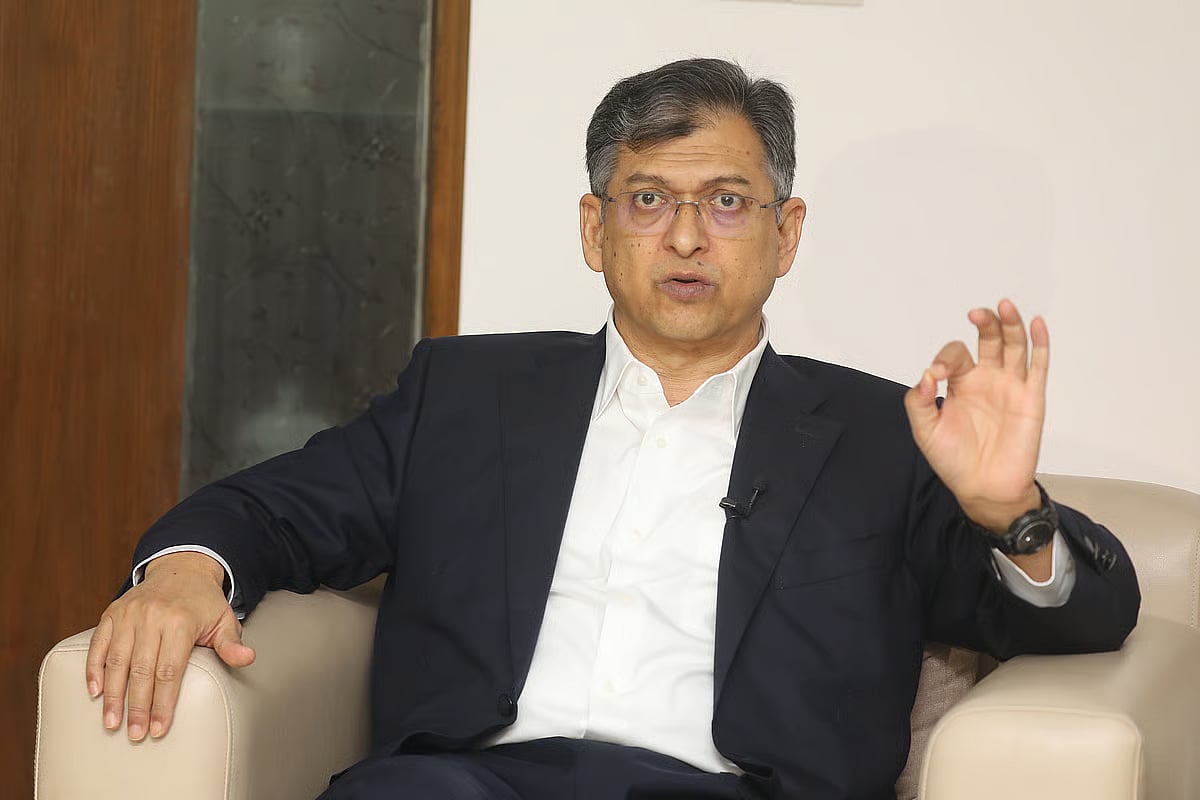
Exclusive interview: Salahuddin Ahmed
How is it possible to hold a referendum on countless reform proposals?
After the interim government assumed responsibility, it undertook initiatives to bring reforms in various sectors of the state. In discussions between political parties and the National Consensus Commission, agreement and decisions were reached on 84 reform proposals. However, implementation has stalled due to differences of opinion over the commitment to and the process of carrying out the July Declaration. Representing BNP in the Consensus Commission discussions is the party’s Standing Committee member Salahuddin Ahmed. He spoke with Prothom Alo about the reform process. The interview was conducted by Selim Zahid and Riadul Karim.
The core proposal was to ensure that impartial persons are appointed to constitutional institutions. Their functions can be defined in law, but the key issue was the appointment process.
Salahuddin Ahmed:
Yes, what is the problem if we regulate the appointment committee through law? Then, if needed, we can amend it later through a trial-and-error process. But if we include it in the constitution, there won’t be opportunities for frequent amendments. And what’s been Bangladesh’s experience? If we grant an institution too much independence, and it later abuses it against the people—as we saw with the ACC—then there’s no scope for correction.
For the past 15 years, everyone has criticised Awami League for politicising everything—for example, the Election Commission, PSC, and ACC. Now the commission has proposed changing the appointment process in these institutions, but you are objecting. Does that mean if BNP comes to power, the same politicisation will return?
Salahuddin Ahmed:
The root malaise of the state is not there, rather in the absence of a caretaker government, the lack of an independent judiciary. Politicisation did occur. Constitutionally, the Election Commission is independent, but in reality, it became subservient to the executive. There was opacity in governance, freedom of the press was curtailed. If we ensure the full independence of the judiciary and Election Commission, and reintroduce the caretaker government, then no constitutional or parliamentary dictatorship will arise, nor any personal autocracy. But weakening only the executive branch will not ensure truly effective state governance.
BNP agreed that the President will directly appoint the heads of the Human Rights Commission, Information Commission, Press Council, and Law Commission. But why do you object to appointments in the cases of the Bangladesh Bank governor, the army chief, the directors general of DGFI and NSI, and the Energy Regulatory Commission?
Salahuddin Ahmed:
The issue of the chiefs of the three armed forces never came to our table. In the discussions, six matters came up. Of those six, we agreed on four and gave notes of dissent on the remaining two.
The reasoning is that if the Energy Regulatory Commission is given independence, and at some point it goes against the executive—for example, declaring that the unit price of electricity should be Tk 50—then it will not possible for government to remain in power for even a day. The energy regulatory commission sets these rates through public hearings. If the President handles it independently, the responsibility will lie with the executive, but the authority will be with the President. That becomes a contradiction.
So your concern remains that if these institutions stand independently, the government will face problems?
Salahuddin Ahmed: We are thinking this way because of the current crisis in Bangladesh’s energy and power sector. If we had no power crisis, no electricity crisis, then we could have thought differently.
Critics might say, especially regarding the Bangladesh Bank governor, that putting party loyalists in such positions could involve corruption and political bias.
Salahuddin Ahmed:
In the case of the governor, your point is quite valid. If we want to run Bangladesh Bank and the office of the governor as an autonomous body, we certainly can. That would remove the problem. But simply giving the President appointment power without changing the law would not be correct. This is because the people want reform in the state of our financial management.
Our proposal is that through broad discussions in parliament, we should legislate in a way that ensures the autonomy of Bangladesh Bank. Merely appointing one governor will not change the regulatory framework of the Bank.
In the past, partisan appointments in certain areas of the state have not produced good results. For example, the chiefs of the three forces, DGFI, NSI—many believe that your party too will make such partisan appointments in the future.
Salahuddin Ahmed:
I’ve said before—the state’s malaise is not in these areas. The real sickness lies in not having an independent Election Commission, not having elections under a caretaker government, not having an independent judiciary, and not having freedom of the press.
If the executive is to govern the state, but its hands and feet are tied everywhere, while the other organs can function within their constitutional mandates, and the executive lacks constitutional authority, then the state will be run by a weak, paralysed executive.
So, does this mean you think that in order to run the government, you need people in constitutional institutions who share your views or serve your interests?
Salahuddin Ahmed:
Who said all of these are constitutional institutions? The Election Commission is one constitutional body. The Comptroller and Auditor General and the Attorney General are constitutional positions. Has there ever been any question about these? No. The Ombudsman is also a constitutional institution, though it has never been formed. We said we would establish the Ombudsman, strengthen and reform the law to make it functional. But the other appointments you mentioned—these are neither constitutional bodies nor even statutory ones.
You speak of independence of judiciary. But you support the system where the Chief Justice would be appointed from among two judges of the Appellate Division. Many parties in the Consensus Commission expressed concerns that if the choice is between two, it could foster party loyalty among judges.
Salahuddin Ahmed:
In the case of appointing the Chief Justice, we want to keep an option because our past experience has not been good. If the only option is the senior-most judge, and his reputation is such that he is unfit to be Chief Justice, then there should at least be another provision.
But that risk could exist even with two candidates.
Salahuddin Ahmed:
True, it could happen with two as well, but at least there is a choice. There is no scope here for executive recommendation. This is a constitutional provision confined to the President and the judiciary.
If we can enact the laws for judicial appointments that we are committed to, and practice this system for 10–15 years, then party-affiliated judges will gradually disappear from the judiciary. After 15–20 years, perhaps we can fix it back to one option.
The Consensus Commission said that notes of dissent are important, but so is the opinion of the majority. This too must be considered. How do you see this?
Salahuddin Ahmed:
I look at who the 27 parties are, and who are outside those 27. I consider the level of representation each party has among the people, and what share of seats they would hold in parliament. Numbers of parties alone do not prove majority support among the people.
From the way you explained it, can we then call this national consensus?
Salahuddin Ahmed:
Since many parties are absent, this is the most valid question. If 36 parties sit, and 32 agree, can we claim to represent all the people of Bangladesh? That would be a mistake grammatically. Because not all people in Bangladesh are members of political parties. Floating voters account for at least 40–50 per cent. They support a party only when casting their votes. So, to think that political parties together represent 100 per cent of the people is not correct.
At the beginning, Jamaat suggested that on issues where consensus cannot be reached, a referendum could be held. In a referendum, the opinion of the general public would be reflected. What do you say about this?
Salahuddin Ahmed:
When is a referendum held? According to our constitution, a referendum can only be held on a few specific provisions. Beyond that, if all parties nationally agree to hold a referendum on an issue, that would be an extra-constitutional provision. It could be done on that basis. But that would apply only to one or two specific matters. Is it possible to hold a referendum on countless reform proposals? If there are 85 or 100 points, how can we take all that to the people?
So, what is the consensus now?
Salahuddin Ahmed:
The consensus on reforms that is happening now is essentially a document of national political understanding. Whoever goes to parliament will have to implement it, and everyone will have to accept these reform proposals. The method of implementation can be worked out through discussions. But for implementation, a legitimate forum is required, and that forum is the National Parliament.
In the draft of the July National Charter that was sent to all of us on 27 July, it was stated—and the Honorable Chief Adviser also mentioned in his speech—that the proposals and recommendations prepared through discussions with the National Consensus Commission would be implemented in the next elected National Parliament. We agreed with the proposal that these reforms should be implemented within two years after the parliament is elected, and we submitted our opinions accordingly.
But on 31 July, when the second round of discussions concluded, some parties raised objections, saying that if there is no legal basis for implementing these, they would reconsider signing. At that time, our proposal was that if a call for discussions is made to find a legal mechanism for this, we will participate.
As of now, no discussion has been held on what valid legal mechanism could be created. However, in the revised draft—titled Commitment Document—there are some provisions that are actually unreasonable and unacceptable.
Let’s change the topic slightly. In your 31-point reform proposal for restructuring the state, you spoke of a bicameral parliament. In the commission’s discussions and your party’s proposal, you suggested allocating upper house seats in proportion to the lower house seats. Many say if it is done this way, the upper house will just become a replica of the lower house. Apart from wasting the state’s money, what would be the benefit?
Salahuddin Ahmed:
When we proposed this in our 31 points, the idea was that the country would benefit if we could include in the upper house distinguished personalities from various sectors. Yet if we nominated them in direct elections, they might not succeed in getting elected. That’s why we made this proposal in our 31 points.
But the commission proposed a bicameral parliament to bring balance to the legislature.
Salahuddin Ahmed:
We did not propose an upper house with the idea of balance. Because if it is an indirectly elected or unelected upper house, we will not be granting it full jurisdiction.
Then what would be the benefit of doing this?
Salahuddin Ahmed:
It is primarily about utilising the talents and contributions of distinguished individuals in various sectors for nation-building. Their advice and ideas can be used. They would advise the lower house. And if they want to provide input in drafting new laws for the state and its people, they would be able to do so.
The proposal to increase reserved women’s seats to 100 and make them directly elected did not reach consensus. BNP, Jamaat, and almost all parties became united on this point. Why?
Salahuddin Ahmed:
There were one or two small parties that supported direct elections. But debates over which 100 constituencies would be designated led to no solution. And Badiul Alam Majumdar suggested a rotational method, which has not been very effective in any country.
In the rotation system, people of that area would have no choice. We would force them to accept a female member in that constituency. But the people of that area have a democratic right to decide whether they want a man or a woman candidate, and then vote accordingly. That option would not exist. That’s why this method was rejected.
I proposed that we begin direct elections for women now, but on a limited scale. At present, a constitutional amendment is not feasible. For the coming election, we could urge political parties to allocate 5 per cent of their direct seats to women. At the same time, 50 reserved seats must remain. Without them, women could disappear from parliament altogether.
We start now, then in the following parliament raise it from 5 to 10 per cent. This provision is included. Step by step, when women’s representation reaches one-third, then the reserved seat system will no longer be necessary. At that point, we can decide on fixed constituencies or some other arrangement.
How many women candidates does BNP have who can be nominated in direct constituencies?
Salahuddin Ahmed:
Not many, even in our party. Other parties face an even bigger crisis. Because our social progress and the progress of women in society have not yet reached that stage. That’s why our proposal is to begin direct elections for women now. Over time, they will be ready to participate and compete directly. But this cannot be done overnight.
What are your thoughts about Jamaat-e-Islami?
Salahuddin Ahmed:
Jamaat-e-Islami is a political party in this country. They have been in parliament several times. They have their own political history and ideology. At one point we formed an electoral alliance with Jamaat. That was strategic, not ideological. We still acknowledge the role they played in anti-autocracy movements. We believe they will participate in future democratic practices and in upcoming elections.
They were your political allies for a long time. Is there any chance of such an alliance again?
Salahuddin Ahmed:
We have said long ago that in the next election there is no possibility of forming an electoral alliance with Jamaat-e-Islami.
But you are seeking confidence of other Islamic parties, aren’t you?
Salahuddin Ahmed:
Yes. About 90 to 92 per cent of people in Bangladesh are Muslims. Not everyone is politically involved, but they are religious-minded people. Their religious representation largely comes from the ulama (clerical) community, some of whom have formed Islamic parties. We had contacts with them before. Even now, we are considering alliances with Islamic parties that contributed to anti-fascist struggles.
We met the honorable Ameer of Hefazat-e-Islam, Allama Mahibullah Babunagari. We also met religious leaders like the Pir of Shorshina, who contributed to creating Islamic institutions, madrasas, and promoting religious education in Bangladesh. Our late President Ziaur Rahman also met the Pir of Shorshina several times. We have held meetings with Jamiatul Mudarresin, which is linked to madrasa education and is a large organisation. In this way, we aim to build a broader unity among the people.
In an interview with Prothom Alo, Bangladesh Khelafat Majlis Ameer Maulana Mamunul Haque said that BNP must move forward with the support of Islamists. Do you agree with that?
Salahuddin Ahmed:
I am not accustomed to commenting on what the leader of another political party has said. We went to Hathazari Madrasa. We met the senior alems there, we spoke with the principal and the director general. We visited the grave of Allama Shafi, and we also visited the grave of Allama Junaid Babunagari.
During the anti-fascist movement, we could not maintain direct communication with them, but there was contact nonetheless. Whenever the opportunity came, we went there in recognition of that, spoke with them, with the aim of creating a national consensus. But I do not want to link this with the political statement you referred to. Because this is not about seeking someone’s favour. This is about the fact that we conduct politics upholding Islamic values.
Recently, various political parties have been alleging that since the London meeting, the interim government has been operating in BNP’s interest or under BNP’s advice, and that BNP’s people are influencing the administration. In such a situation, if an election is held, will equal opportunities be created for all?
Salahuddin Ahmed:
Yes, we have heard that such allegations have been raised by some parties. But our leader Tarique Rahman resides in London. When the Chief Adviser visited London, it was only natural that he would pay a courtesy call on the leader of Bangladesh’s largest political party, who also led the anti-fascist movement. That is normal. It is also normal that political discussions would take place there. He spoke about the election schedule in line with our demands. But in fact, 52 political parties had the same demand. Even those who are raising objections had also demanded that the election be held before Ramadan.
The question arises because the July Declaration announced by the Chief Adviser was finalised through discussions with BNP, while others were only informed at the last moment.
Salahuddin Ahmed:
You may ask the Chief Adviser with whom and at what time the discussions took place. Yes, discussions were held with us, our opinions were sought, and we gave them—that is true. But whether it was formulated solely through discussions with BNP, the answer to that question can only be given by him.
At the London meeting, was there any agreement between BNP and the interim government?
Salahuddin Ahmed:
It was not an agreement, it was a discussion. At the London meeting, we talked about the election and why the election timeframe needed to be reasonably brought forward. Our demand, along with most political parties, was that elections be held by December 2025. But for one reason or another, the Chief Adviser felt it would not be possible within December. We said that even if delayed, it should not be delayed beyond Ramadan. He found that reasoning logical and accepted it.
Thank you for your time.
Salahuddin Ahmed:
Thank you, too.