Interview
Investing in girls’ education is the path to an economically strong, socially just Bangladesh.
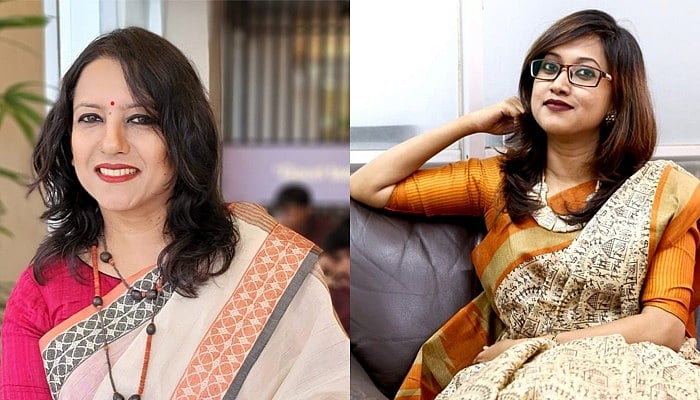
Sahelee Naz is the Manager of the British Council’s English Programme, working on teacher development, school leadership, and 21st-century skills. Zakia Sharmin is the Senior Programme Manager at the British Council, Bangladesh, working in education strategy, project management, curriculum development, and stakeholder engagement. They share their thoughts about the various initiative undertaken by British Council in Bangladesh.
What are the past and ongoing initiatives of the British Council in Bangladesh regarding girls’ education?
Sahelee Naz: The British Council has been working in the education sector of Bangladesh for a long time. One of our notable initiatives on girls’ education is EDGE (English and Digital for Girls’ Education). Gender inequality is still visible in many parts of Bangladesh. Especially in marginal areas, girls are deprived of quality education and skills due to social norms, economic hardship, and child marriage.
The EDGE program is designed to help adolescent girls overcome these barriers by improving their English, digital skills, confidence, and life skills. Over the past 12 years, this program has expanded to all divisions of the country and has supported nearly 10,000 girls. The 18-month program is led by locally selected adolescent girls, known as peer group leaders, who are trained by the British Council. These leaders run EDGE clubs where other girls receive training in English, computer skills, life skills, and social awareness.
Research has shown that participants of EDGE become more confident in decision-making and social engagement. The program has also contributed to preventing child marriage, building employability, and including adolescent girls with disabilities.
What kind of work is the British Council doing regarding girls’ participation in higher education?
Zakia Sharmin: The British Council Bangladesh works on higher education reform, transnational education, strengthening the capacity of public and private universities, student exchanges and scholarships with the UK, and alumni networks. One of our key priorities is women’s empowerment and ensuring gender equality in higher education.
Although girls often achieve outstanding academic results, they face structural discrimination and biases when advancing in leadership and careers. To overcome this reality, joint efforts by the government, universities, donors, and partners like us are needed.
Our global programme “Going Global Partnerships” is an important platform for fostering equity and inclusion in higher education. Within this, the “Gender Equity Partnership Grant” is particularly significant. In Bangladesh, two projects are currently running under this initiative:
One project involves the University of Dhaka’s International Business Department and the University of Salford, UK, working together to remove barriers to women’s leadership in higher education.
Another project involves Independent University Bangladesh (IUB) and the University of Greenwich, UK, studying the social and structural factors that influence the careers of female doctors in the health sector.
In addition, our Women in STEM scholarships have created targeted opportunities for women in science, technology, engineering, and mathematics. In the last three years, 11 Bangladeshi women have received this scholarship to study in the UK. Likewise, women’s participation in Commonwealth and GREAT scholarships is increasing. To date, more than 2,000 Bangladeshi students have received Commonwealth scholarships, with women making up the majority in recent years.
These initiatives not only expand women’s access to higher education but also help build future female leadership.
What social and cultural barriers exist in girls’ education, and how can they be overcome?
Sahelee Naz : From our experience, many families still consider girls’ education unnecessary. There is still the belief that boys will earn in the future while girls will marry and manage households. As a result, education or technology education is often not seen as relevant for girls.
Let me share a story from Rayerbazar slum. A mother allowed her daughter to join an EDGE club, but her relatives asked: “Why does your daughter need to learn English and digital skills?” At first, the mother remained silent, but she continued to support her daughter. Later, the girl became confident enough to speak on social issues—even in front of community leaders. Eventually, the same relatives began praising her.
This shows how EDGE not only fosters personal development but also transforms social attitudes.
What impact does investment in girls’ education have on society?
Zakia Sharmin: The impact of investing in girls’ education goes beyond the individual and reaches families, communities, and the nation. When a girl gains access to higher education, new aspirations arise in her family, siblings become inspired, and society develops a positive attitude toward women’s progress.
We clearly see this change in Bangladesh. Compared to before, parents are now more willing to send their daughters to universities, and community leaders value the contributions of educated women. However, despite academic success, women still face discrimination in entering the workforce—especially in STEM. Globally, women’s participation in STEM is less than 30 percent, and the rate is even lower in Bangladesh.
Therefore, with policy support and the right leadership, we must ensure that academic achievements translate into professional success.
What role do families and communities play in girls’ education?
Sahelee Naz : Within society, there are both supportive and negative voices. That’s why in our British Council initiatives, we always involve families and community leaders. Before launching EDGE clubs, we held meetings with local people, organized regular parent gatherings, and conducted surveys and interviews for feedback.
The girls themselves also took part in various social activities. For example, one club noticed that a road in their area had become unusable due to garbage. They mobilized the community, submitted a petition to the municipality, and eventually got the road repaired. This not only improved the community’s quality of life but also increased respect for the girls.
What is your message for girls?
Zakia Sharmin: My message to the young women of Bangladesh is: see yourselves as future leaders—because you are. Whether in research, policymaking, technology, health, or education—your contributions will make society fairer and stronger.
Equally important is the message for supporters—families, teachers, institutions, and policymakers. Creating opportunities for young women is not just for their benefit but an investment in the prosperity of the entire nation.
Through initiatives like Women in STEM, Commonwealth and GREAT Scholarships, and Alumni UK, the British Council stands alongside you on this journey. But it cannot be achieved alone—only through collective effort can every girl be given the opportunity to fulfill her dreams.
Can you share any story of a girl who became empowered through education and skills from this programme?
Sahelee Naz: This is the story of a 16-year-old girl named Sadia, a member of an EDGE club in Goran, Khilgaon. Her education was interrupted after primary school due to mental disability. But after joining the EDGE club, she rediscovered her confidence.
Her peers respected and cared for her, encouraging her interest in arts and crafts. Most importantly, EDGE gave her the belief that children with special needs are also talented and can contribute to society. Now her family is supporting her, and Sadia has re-enrolled in school.
In your view, how can educated and empowered girls shape the future of Bangladesh?
Zakia Sharmin: An educated and empowered girl is not only her own success story but also the foundation of an inclusive and prosperous future. Women with access to higher education bring new ideas, empathetic leadership, and creative solutions. They challenge old mindsets, inspire society, and accelerate development.
I imagine a Bangladesh where women professors lead universities, women researchers drive innovation, women entrepreneurs power industries, and women policymakers shape national decisions. That future is within reach—if we can break today’s barriers.
Education is the most powerful catalyst for this transformation, and investing in girls’ higher education is the surest path to building an economically strong, socially just, and globally respected Bangladesh.