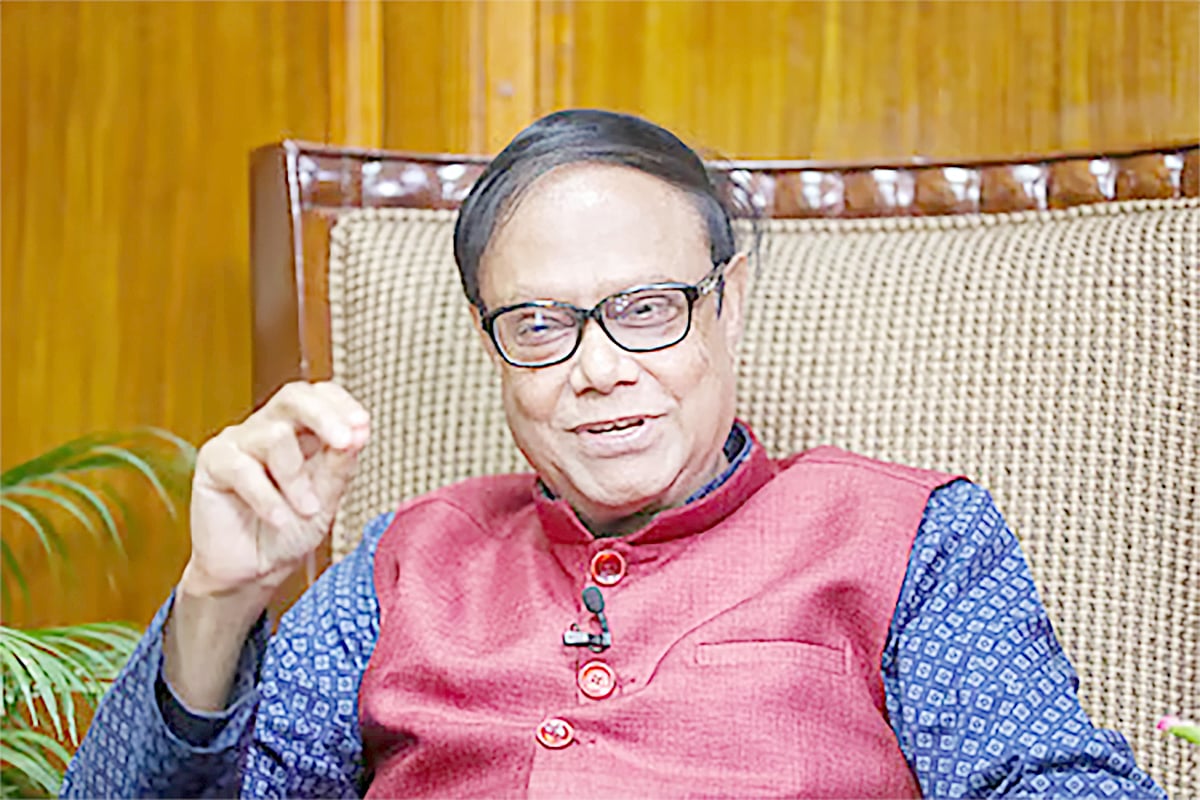
Within days of the interim government assuming office, Ahsan H Mansur took charge as governor of Bangladesh Bank. A former senior official of the IMF (International Monetary Fund), his appointment was widely welcomed across the spectrum. At the time, the economy stood perilously close to the edge of a precipice. The financial sector, in particular, was nearing a meltdown.
Foreign exchange reserves, which had peaked at US$48 billion in August 2023, had plummeted, amid extensive alleged plunder, to a dangerous low of $20 billion by 5 August 2024. The exchange rate had depreciated sharply from Tk 87 per US dollar in 2022 to Tk 125 by that same date in 2024. Of the country’s 61 banks, 11 were on the brink of insolvency.
Even Islami Bank Bangladesh, the largest private commercial bank in the country, was among those teetering. Ownership of seven banks, including Islami Bank, had been transferred to the controversial Chattogram-based businessman S Alam, who was later accused by a government-formed white paper committee of siphoning off nearly Tk 2 trillion (200,000 crore) and laundering the funds abroad.
The committee further claimed that, over the 15-and-a-half-year tenure of former prime minister Sheikh Hasina, an average of $16 billion per year, amounting to $234 billion in total, had been illicitly transferred overseas.
The banking sector arguably suffered the gravest excesses during that period. Despite there being no economic rationale for licensing 61 banks, approvals were allegedly granted to benefit politically connected individuals, influential party leaders, and favoured oligarchic business figures.
The seven banks reportedly controlled by S Alam included Islami Bank, Social Islami Bank (SIBL), First Security Islami Bank, union Bank, Commerce Bank, NRB Global Bank and Al-Arafah Islami Bank. Allowing a single individual to exercise effective control over seven banks would be virtually unprecedented anywhere in the world.
Despite intense pressure to lower lending rates, Ahsan H Mansur did not give in in order to prioritise inflation control. Remittance inflows exceeded $31 billion in 2025 and are projected to approach $35 billion by the close of FY2025–26. The current account of the balance of payments, which had been in severe deficit during the final three years of the previous administration, has returned to surplus in 2026, while the financial account deficit has narrowed substantially.
Until 2017, Islami Bank was widely regarded as being politically aligned with Jamaat-e-Islami and its student wing, Islami Chhatra Shibir. At that time, it was the largest private-sector bank in the country. Nearly 30 per cent of the nation’s inward remittance flows from expatriate workers were channelled through Islami Bank. Such a financially robust institution was subsequently brought under the control of S Alam, reportedly with the direct backing and patronage of the then autocratic ruler, Sheikh Hasina.
Between 2017 and 5 August 2024, S Alam allegedly siphoned off around Tk 70,000 crore (700 billion) from Islami Bank through various mechanisms. Saifuzzaman Chowdhury, the land minister in the ousted government, is similarly accused of having plundered United Commercial Bank. Meanwhile, BEXIMCO, the conglomerate owned by Sheikh Hasina’s former adviser on industry and private investment, Salman F Rahman, has reportedly left more than Tk 50,000 crore in defaulted loans across several banks.
Over the past 18 months under Ahsan H Mansur’s stewardship, stability has gradually returned to the banking sector, though the non-performing loan (NPL) crisis remains acute. With previous practices of concealing defaulted loans discontinued, the officially classified loan ratio has now exceeded 36 per cent, the highest not only in South Asia but across Asia. Compounding the problem, a substantial portion of these defaulted loans is believed to have been laundered abroad.
Nonetheless, there have been notable improvements under Ahsan H Mansur. Foreign exchange reserves surpassed $35 billion on 25 February. The exchange rate has remained broadly stable at Tk 122 per dollar for over a year. Islami Bank has regained operational footing; United Commercial Bank has also recovered significantly. Five struggling Islamic banks were merged into a combined entity that has since commenced operations. Total bank deposits have again exceeded Tk 18 trillion. Credit growth is projected at 11 per cent for FY2025–26.
Despite intense pressure to lower lending rates, Ahsan H Mansur did not give in in order to prioritise inflation control. Remittance inflows exceeded $31 billion in 2025 and are projected to approach $35 billion by the close of FY2025–26. The current account of the balance of payments, which had been in severe deficit during the final three years of the previous administration, has returned to surplus in 2026, while the financial account deficit has narrowed substantially.
It is sad that despite his commendable achievements, his appointment was terminated with over two years remaining on his contract. Most importantly, he was terminated without any prior consultation.
These indicators suggest that the financial sector has regained a degree of stability after a prolonged period of kleptocracy under the ousted autocratic government of Sheikh Hasina. However, investment conditions remain fragile, and foreign direct investment continues to stagnate.
Regrettably, the interim government also did not allow several reform initiatives proposed by Bangladesh Bank to proceed. Amendments intended to strengthen the Bank’s autonomy under the Bangladesh Bank Order were stalled, as were proposed revisions to the Money Loan Court Act and the Bank Company Act. Opportunities to enact structural reforms addressing the NPL crisis were thus missed.
Ahsan H Mansur had proposed a number of pragmatic and well-considered reforms aimed at resolving the crisis of NPLs, yet those proposals were not adopted. Among all the policymakers, who assumed office during the tenure of the interim government, governor Ahsan H Mansur emerged as the most widely admired figure in the eyes of an informed and discerning public.
It is sad that despite his commendable achievements, his appointment was terminated with over two years remaining on his contract. Most importantly, he was terminated without any prior consultation. When he addressed a press conference on Wednesday afternoon, he had reportedly not yet been informed of the decision. Only after learning of his dismissal from journalists and departing the Bangladesh Bank premises was the Ministry of Finance’s official notification issued at 4:00 pm.
It is not unusual for a newly elected political government to appoint individuals of its choosing to pivotal positions. However, given the relative stabilisation achieved under Ahsan H Mansur Mansur’s leadership during a period of acute economic fragility, the abrupt and discourteous manner of his removal is difficult to justify. A courteous consultation and orderly termination of contract would not have attracted such criticism.
* Muinul Islam is an economist and retired professor of economics at the University of Chittagong.
* The views expressed are the author’s own.