Opinion
Justice for July: Hopes and realities
Two years ago, on 4 August 2024, a High Court bench dismissed the petition filed by two public interest lawyers, Manzur al Matin and Aynunnahar Lipi, challenging the detention of the six coordinators of the Anti-Discrimination Movement, and seeking orders to stop the continued shooting on protestors. The Court passed orders in the face of real intimidation, with the then Attorney General of Bangladesh, Aminuddin, appearing alongside several former ministers, and with a room packed with lawyers from the AG’s Office thumping the tables and chanting "Reject!" "Reject!"
A lawyer from the government’s team shouted that we were relying on a Pakistani judgement. He was right – we were. It was the judgment of Justice Murshed, about the circumstances in which a court must interfere in a case of illegal detention! The entire effort was to paint in broad brush not only the protestors, and victims of the shoot on sight orders, but also lawyers seeking protection for them, as terrorists, and anti-nationals, and anti-liberation.
While the court scenes were unprecedented, they should perhaps not have been unexpected, given that the then government constantly conflated these three issues. Its supporters and followers – in the law, in development organisations, in the media, in cultural organisations, in professional associations, would reiterate the same mantras, alongside an insistence that the only way forward for Bangladesh was to support the Awami League’s leadership and its invocation of the “spirit of Liberation”, no matter how far they strayed from its values.
We saw how this was spun out over and over again on the media and within civil society in the last days of August. While the court drama played itself out, and while protestors kept being maimed, blinded and killed on the streets, we saw talkshows rolling out on channel after channel, where well-known and well-established people, celebrities, academics , professionals and ‘ activists’, sought to consolidate public opinion that the protests were about destroying the state and not about a desperate call against injustice.
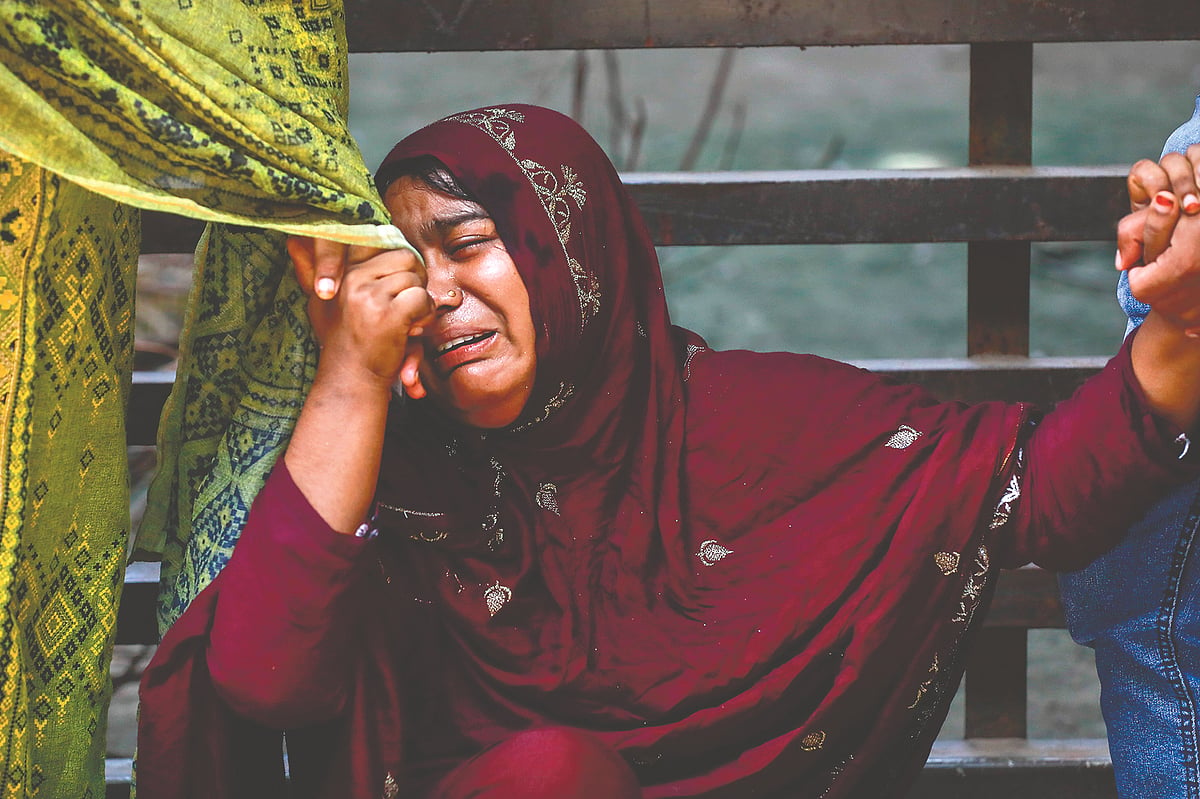
Why is it important to remember all this today? Two years on from the July Uprising, what has happened in terms of justice? The days on which the largest single number of killings occcured during the Uprising were the 4th and 5th August 2024. Except for those whose cases have been before the ICT, none of the families of those killed, and none of the victims and survivors among the thousands injured, or the tens of thousands, who were arbitrarily arrested, including children, have yet seen any of the perpetrators held to account through the courts.
Instead, as we are all aware, most of those responsible for these atrocities – the then Prime Minister, her Defence Advisor, the Home Minister, the heads of various security forces, the defence advisor as well as many police officers and key intelligence agency officials, and local party leaders, also allegedly using lethal weapons in many instances – were able, or enabled, to leave the country. They are now ensonced abroad, in India, or further afield in the UK or US, or Canada, or in other European countries. Some hold foreign passports, or have obtained residence or asylum. They are brazen in their refusal to acknowledge the atrocities they perpetrated, and constantly reinscribe false narratives of ‘deep state’ conspiracies repeating vicious and vindictive and personal attacks on those involved in the transition, without any attempt to recall, reflect upon, or acknowledge their own roles, and casting themselves as victims of harassment.
It is particularly disturbing to see these distorted narratives being echoed and amplified by civil society members who are eager to rush to criticise allegations of human rights violations, in context-free statements, with no mention of the continuity of practice or the culture of political and judicial harassment, or their role in creating narratives and structures of exclusion based on political affiliation and opinion.
And what of the victims? For protestors who had faced arbitrary arrest and detention, thousands of cases against them, were withdrawn swiftly. But none of those responsible for such arrests has been held to account through any criminal court, including the ill-treatment of children arrested through tying them in ropes, or the denial of access to their families and lawyers for days and for arbitrary refusal of bail. And if there has been any disciplinary action against these police and the magistrates who refused bail, there is no public information about it.
As for the killings and injuries, hundreds, perhaps thousands, of cases have been filed, by the family members of the deceased, and by the victims/ survivors themselves. Other than in the ICT, there are no judgments in the ordinary courts even after two years. In fact in the vast majority of cases, investigations remain pending, with the trial not even having started. And victims remain without any answers and without any roadmap, beyond mere promises, that perpetrators will be held to account.
On the flip side, the lack of urgency, and the failure to undertake any significant reforms in terms of the practice of criminal justice (beyond legal reforms), has meant the culture of the past – of revenge and retaliation – remains largely embededed. In many of the so called "July cases" that have been filed, police officers involved in the shooting are neither named, arretsed, and many FIRs contain names of hundreds of persons, many unnamed, identfied through their affiliation or membership of particular groups, rather than their presence or involvement in any occurrence.
The fact that investigations are still ongoing, and the risk that people responsible will evade justice, continues to be cited as a reason for Courts at various tiers to deny bail for those arrested and incarcerated in the aftermath of the Uprising. In some cases bail is not denied as such, but bail related applications simply do not get listed, even after dates are announced. Lawyers have reported hearing statements in open courts that certain cases will not be heard given the names of the accused involved.
Patterns of retribution reported from the aftermath of the Liberation War and reinvoked by the Awami League government, of routinely denouncing opponents as ‘razakars’ are now seen again. People affiliated to the past regime, its beneficiaries and supporters – whatever their level of criminal culpability - are excluded or ostracised as ‘fascist enablers’. The public rage and resentment at the moral complicity of some of these people can perhaps be understood. (And those who are Awami League supporters/members can understand this if they recall how they themselves speak and think about ‘razakars’ or ‘anti-Liberation forces’ to label any opponent or dissenter).
The question remains - can the translation of this anger into accusations of criminal accountability really withstand scrutiny?
In the meantime, we can play a role as citizens in starting the processes of truth telling on the actions in July, and what has happened since the 5th of August in pursuit of justice.
Among those who are incarcerated now, there are certainly a significant number of people who can be held criminally accountable. But there are also many who are not. Some of them sought to justify violations in their broadcasts or public speeches against political opponents. Some took actions within their institutions to ensure those with opposing political opinions could not advance, in courts, educational or cultural institutions, development organisations and in business.
Others chose to align themselves with powerful bodies, and found it easier to close their eyes and ears to the wrongdoings they witnessed, in the name of ‘growth’ and development’. But do such actions constitute ‘murder’ or ‘abetment to murder’ and should people involved in such actions be incarcerated for months on end on such charges, or indefinitely excluded from professional associations or removed from their institutional positions? If they are not criminally responsible – then what kind of process can be created to make it possible for them to speak of their roles, without proportionate responses, that allow acknowledgment, enable remorse, and make possible real change?
What many hoped for on the 5th of August was that the extraordinary relief and celebration witnessed across the country as news broke of that helicopter leaving our skies, would be translated into a real reconstruction and reform of state structures. At the very least it would involve accountability for those who had carried out the horrors carried out over the weeks of July and August.
At the end, the test for us is whether we can use this opportunity to break with the past cycles of revenge and retaliation. In a number of countries, there has been serious engagement with the idea of transitional justice. This includes an expanded understanding of accountability, including criminal penalties for perpetrators, but it involves going beyond punishment of perpetrators, to ensure a focus on victims and reparations for them to enable them to continue their lives and to heal. It also involves truth telling and memorialisation, that would enable us to confront what happened and why, and to remember the lives lost and destroyed, and the contributions of those who made change possible.
And most critically it involves reform not only of laws but also institutions and of culture. We have made some important changes to laws, including with respect to strengthening protection for victims of serious crimes, including violence against women, and crimes against humanity (with amendments to the ICT Act and the Suppression of Violence against Women Act), and putting place safeguards against arbitrary arrest, detention and torture (in the form of the Code of Criminal Procedure amendments).
We had made some important institutional changes; while some have sadly not been consolidated (an independent judicial appointments process, a judicial secretariat), others remain under consideration (strengthening of the National Human Rights Commission).
But where we have the most work to do is to attempt to address culture – the culture of impunity, the culture of retribution and revenge, and the culture of total and utter lack of remorse. We need a commitment to change from the state – to act on the reforms it has already made, to make sure the promise of accountability is translated from lofty statements to action within the administration. And we need commitments, and support from the international community, to identify and locate and take action against the perpetrators of the atrocities of July.
In the meantime, we can play a role as citizens in starting the processes of truth telling on the actions in July, and what has happened since the 5th of August in pursuit of justice.