Opinion
Sajek incident not the problem, but symptom of deeper problem
It is not appropriate to view the incidents happening over the past few days in Sajek, Rangamati as isolated events. Seeing them as isolated might make some believe it's a significant law and order problem affecting the burgeoning tourism industry in the Chittagong Hill Tracts. Many might think deploying more law enforcement agencies is required to address this issue. However, understanding the underlying problem that these incidents are merely symptoms of a long-standing issue in the Chittagong Hill Tracts will be challenging without a proper diagnosis and treatment.
What is the core issue of the Chittagong Hill Tracts? Since the 1980s, several dialogues have occurred between the Parbatya Chattagram Jana Samhati Samiti (PCJSS) and the governments of the Jatiya Party, BNP, and Awami League. The Chittagong Hill Tracts issue has been identified in dialogues as a political problem. The people of different ethnic groups in this region demand self-governance, land ownership security, and constitutional recognition of their identities. They have enjoyed these rights since the Mughal, British, and Pakistani times. Even after the independence of Bangladesh, they have been pressing their demands. These demands could be politically fulfilled. For political fulfillment, the Chittagong Hill Tracts Agreement was signed between the government and the PCJSS on 2 December 1997, which is widely known as the Peace Accord both locally and internationally.
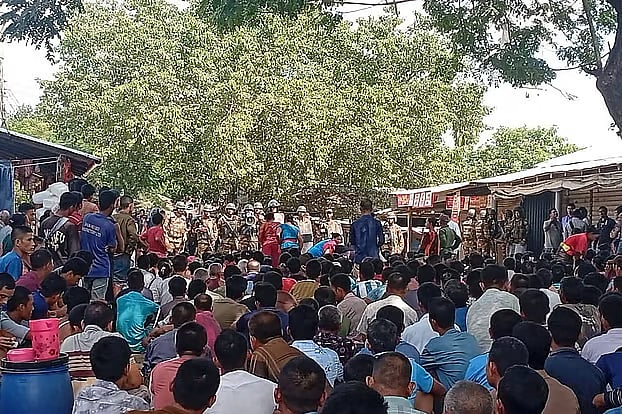
Recent incidents in Sajek can be seen as a reflection of the despair of the local populace. Whether the road blockade and subsequent events over dominance by two regional organisations in the Machalong and Baghaighat areas of Sajek are logical or illogical; incidents are occurring nonetheless. Nearly three thousand tourists were trapped in panic, disrupting the normal life of local people.
But in the 29 years since then, has the Peace Accord of the Chittagong Hill Tracts, which held many hopes and aspirations for the hill residents, been implemented? According to the PCJSS, as part of preparing for the implementation of the 1997 agreement, various agencies like the Ministry of Chittagong Hill Tracts, District and Regional Councils, Land Dispute Resolution Commission, and Refugee Rehabilitation Task Force were formed. However, the implementation remains stagnant as of 1998. Key aspects such as law and order maintenance, district police, and land management have not been implemented. In some cases, there have been efforts to implement certain aspects, while at the same time, there has been counteraction to impede these efforts.
Initially, for the implementation of the agreement, transferring the police department to the district council to maintain law and order (as mentioned in Article 24 of the Chittagong Hill Tracts Agreement, which states that, regardless of other laws, all personnel from sub-inspector to lower levels in the hill district police will be appointed under council supervision in the prescribed manner) was crucial. Because maintaining law and order during the agreement period was a prerequisite for its implementation. Yet, no steps have been taken in these 29 years to transfer the police department.
If it had, personnel could have been appointed based on community-based seats in the district council. Consequently, controlling law and order would have been easier with a mixed police force comprising people from various communities like Chakma, Marma, Tripura, Mro, Bom, Khiyang, and Khumi.
Language remains a significant barrier in working in the Chittagong Hill Tracts. There are 12 languages from 12 ethnic groups, including Chakma, Marma, and Bengalis. One ethnic group's language is not understood by another.
Mutual trust and belief, which are essential for security arrangements and law and order improvement, can be achieved through language. If members of various ethnic groups and languages were in the mixed police force, the language barrier with local language speakers could be eliminated. The police would become a multi-ethnic force. Currently, almost all members of the police and other law enforcement agencies deployed in the hill region are Bengali. They do not understand the language of any hill ethnic groups, have no clear concept about the local culture, and are unfamiliar with the geographical positioning.
In such circumstances, despite being amidst thousands of people, they can't comprehend the current environment and situation. On the other hand, due to linguistic isolation, local inhabitants cannot place their trust in them. Such mutual distrust becomes a significant obstacle to maintaining and improving law and order.
Yet, for implementing the Chittagong Hill Tracts Agreement, mutual trust, improvement, and stability in law and order are crucial. The agreement implementation remains elusive for nearly three decades due to non-fulfillment of these conditions. Here, the laxity of government sincerity mainly comes into question.
Before the agreement, during almost two and a half decades of unrest, the people of this region had suffered physical, mental, and various forms of harassment. According to the Task Force on Refugee and Internally Displaced Persons Rehabilitation, nearly 90,000 families of different ethnic groups in the three hill districts became internally displaced, losing their homes. At that time, almost two-thirds of people were from hill ethnic groups.
Nearly 70,000 took refuge in India and returned as refugees. These harassed people were overwhelmingly hopeful with the Peace Accord of 1997. Those who didn't witness this would need help understanding. However, when they later saw the agreement not being implemented, much like prior to the agreement, with new symptoms and various factions and sub-factions emerging, their exuberant hope transformed into despair over an uncertain future.
Recent incidents in Sajek can be seen as a reflection of the despair of the local populace. Whether the road blockade and subsequent events over dominance by two regional organisations in the Machalong and Baghaighat areas of Sajek are logical or illogical; incidents are occurring nonetheless. Nearly three thousand tourists were trapped in panic, disrupting the normal life of local people. This situation clearly shows that government initiatives to implement the Chittagong Hill Tracts Agreement and resolve the region’s issues are necessary. Without a reasonable and acceptable solution, the recurrence of incidents like Sajek will continue.
#Buddhajyoti Chakma is the Bandarban correspondent for Prothom Alo.
*The views expressed here are the author's own
#This article, originally published in Prothom Alo print and online editions, has been rewritten in English by Rabiul Islam