Hamid Mir's analysis
How 'Maulana Diesel' became a last hope of Imran Khan
Pakistan’s two influential politicians, Imran Khan and Maulana Fazlur Rehman, had long been divided by a deep wall of distrust. Ultimately, a misstep by the Shehbaz government brought them closer. Hamid Mir writes about how Maulana Fazlur Rehman became Imran Khan’s last hope.
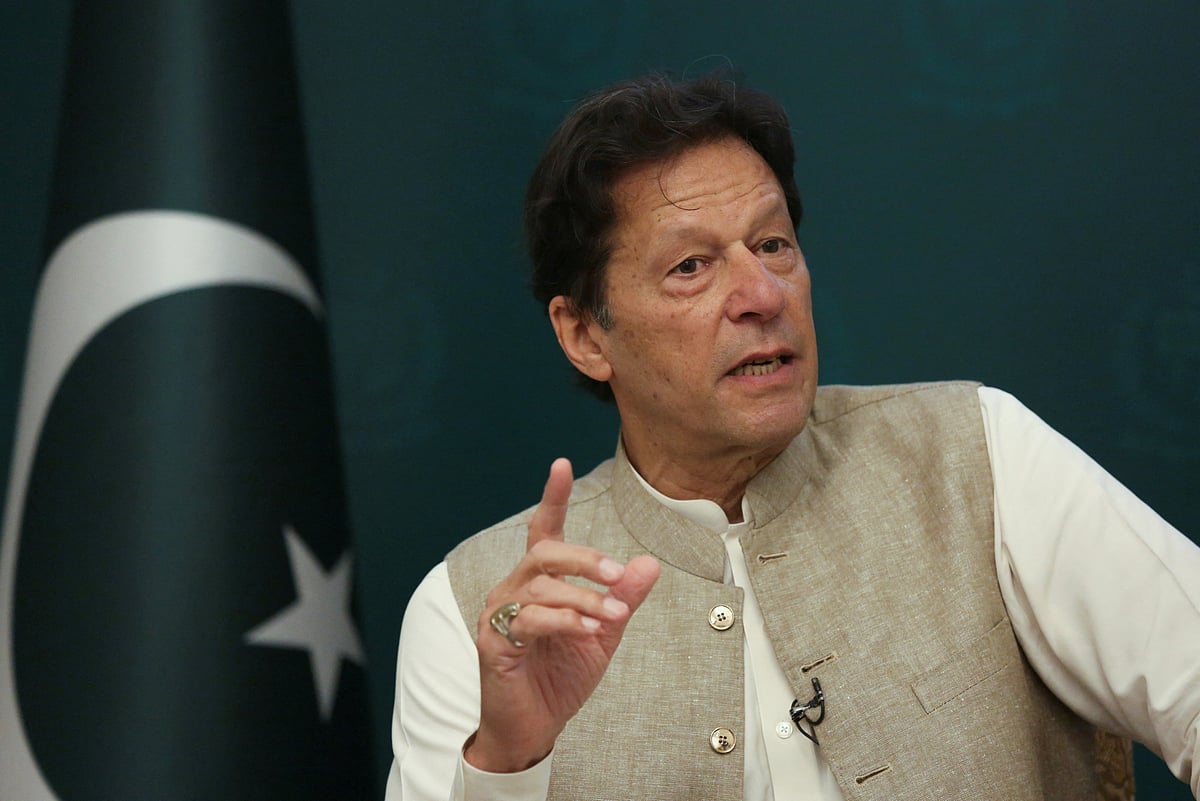
I never imagined that Maulana Fazlur Rehman would join those demanding the release of Imran Khan. A few years ago, the Maulana publicly branded Imran Khan a "Zionist agent," while Khan, at political rallies, mocked him as "Maulana Diesel." Today, the Maulana has become the last hope of Khan, who has been imprisoned for three years. Khan's popularity has failed to translate into a mass movement, partly because of fifth columnists within his own party. He knows that only the Maulana, the second most popular leader in Khyber Pakhtunkhwa, can bring people onto the streets against the current government.
I have known both men since 1988, when Pakistan's military ruler, General Zia-ul-Haq, dismissed Prime Minister Muhammad Khan Junejo on corruption charges. Junejo, of the Pakistan Muslim League, had been appointed by Zia himself after the non-party elections of 1985. Nawaz Sharif, then Chief Minister of Punjab, chose to side with Zia rather than stand by the prime minister of his own party. After removing Junejo, Zia decided to bring Imran Khan into the new government. Khan had retired from Test cricket in 1987 but returned at Zia's request. The general believed that Khan's presence would help repair his battered reputation.
I was new to journalism in 1988 when I received a tip that Khan had been offered a ministry. When I contacted him to confirm it, he asked, "What do you think I should do?" I replied instantly: "Refuse." He said, "Fine, I will refuse, but don't make my refusal a news story, or it will create great difficulty for me." I could not sit on the story for long, and one day I published it. Khan was furious with me. Yet had he joined the government in 1988, he could not have led Pakistan to its Cricket World Cup victory in 1992.
Around the same time, I interviewed a German scholar on the Silk Letter Movement (Tehreek-e-Resheemi Rumal). He told me that during the First World War, Deobandi scholars of the subcontinent, with the help of Afghanistan, Turkey and Germany, had devised the "Berlin Plan" to resist British rule. The Silk Letter Movement was part of that plan, and had it succeeded, India might have won its freedom in 1916. Maulana Fazlur Rehman read the interview and praised it warmly when we met in Lahore.
He then sent me, through an associate, Maulana Syed Muhammad Miyan''s four-volume work Ulama-e-Hind Ka Shandar Mazi (The Glorious Past of the Ulema of India) so that I could learn more. That was the beginning of my respectful association with the Maulana.
In 1990, Iraqi President Saddam Hussein invaded Kuwait, and America sent forces to several Gulf countries to defend it. Pro-Saddam demonstrations erupted across Pakistan. One day, Shahid Sheikh, the sports reporter of Daily Jang Lahore, brought a statement from Imran Khan: "Whoever is not with Saddam is not a Muslim." It caused a stir, since the Pakistani government stood with Saudi Arabia rather than Saddam. For the first time, I heard Maulana Fazlur Rehman praise Imran Khan. My own opinion of Saddam was different, but it was clear that both men were critics of America.
In 2002, another military ruler, General Pervez Musharraf, tried to give his unconstitutional government a constitutional veneer through elections. Imran Khan was his party's only member in the National Assembly. From Adiala Jail in Rawalpindi, Asif Ali Zardari began efforts to make Maulana Fazlur Rehman prime minister, in opposition to Musharraf''s candidate, Mir Zafarullah Khan Jamali. Benazir Bhutto, in exile in Dubai, refused to support the Maulana under American pressure. Nawaz Sharif, in exile in Saudi Arabia, nominated him because he had no other option. Among those who voted for the Maulana were not only members of the Muslim League (N) but also Imran Khan.
I remember that in those days, whenever some impudent person called the Maulana "Maulana Diesel," Khan would pick a fight with him. Maulana was opposition leader in the National Assembly those days.The nickname “Maulana Diesel” had been coined in 1995 by Nawaz Sharif''s supporters, when the Maulana was an ally of Benazir Bhutto, whose government was backing the Taliban in Afghanistan. Yet when this same Imran Khan became prime minister in 2018, he began using the same taunt at his rallies. The animosity grew so deep that in 2019, in an interview with me for Geo Television, the Maulana declared Khan a Zionist agent.
That same year, the Maulana announced a long march against Khan's government. The then Army Chief, General Qamar Javed Bajwa, would summon journalists to Army House and tell them that the Maulana worked for British intelligence agency, MI6. Once I asked General Bajwa why he did not produce concrete evidence and take legal action. He promptly changed the subject. It was a curious contradiction: Bajwa extolled the benefits of friendship with Israel on one hand, while branding the Maulana a British agent on the other.
The Muslim League (N) and the Pakistan Peoples Party then decided to use the Maulana against Khan. In 2020, the Pakistan Democratic Movement (PDM) was formed under his leadership, and a campaign against Khan''s government began. Khan set all the intelligence agencies and NAB to dig up evidence of the Maulana's corruption. ISI chief General Faiz Hameed personally planted fake stories against him with favoured journalists, and a media trial began. It had no effect on the Maulana. Intelligence agencies found nothing against Maulana. One former ISI official Major General Rtd Nusrat Naeem told me in those days that once he tried to buy the support of Maulana for General Musharraf and handed him over a bag full of money but Maulana refused to accept it. When I wrote that fact in a column supporters of Imran Khan started a compaign against me on social media.
Meanwhile, Bajwa''s desire for friendship with Israel drove a wedge between him and Khan. Instead of granting Bajwa another extension as Army Chief , Khan decided to make General Faiz the Army Chief. In 2022, the opposition exploited the rift between the army chief and the prime minister and ousted Khan through a no-confidence motion. Out of power, Khan realized the Maulana''s importance and tried hard to forge an alliance with him, but failed. By then, the new ISI chief, General Nadeem Anjum, had driven the Muslim League (N) and the PPP away from the Maulana.
This was the same Maulana who, in 2010, had persuaded ulema(religious scholars) from across the country at Jamia Ashrafia Lahore to sign a unanimous declaration against terrorism. Now he was being labelled a supporter of terrorists. After that declaration, he survived back-to-back suicide attacks in Swabi, Charsadda and Quetta, yet never abandoned his stand against militancy in politics. That was his great contribution to Pakistan''s democratic process.
It is true that both Khan and Maulana favoured talks with the Taliban government in Afghanistan, but even so, the Maulana avoided becoming Khan''s political ally. A few weeks before the 2024 elections, Khan sent a message from jail: "Set all the conditions you want for an alliance, and I will endorse them blindly." The Maulana politely declined. He told me one day, "I refused to sign an agreement with Imran Khan because I once declared him a Zionist agent." The mistrust between them ran deep. In the end, it was the Shehbaz Sharif government's missteps that brought them together. Now Khan is behind the bars. His chief minister and many members of the parliament are in the custody of security agencies but Maulana is raising a strong voice against the authoritarian tactics of Shehbaz Sharif government.
The Maulana says that Khan has been jailed along with all the women of his family, and that governor's rule has been imposed in Khyber Pakhtunkhwa. "In these circumstances," he says, "we have no option but to resist oppression."
These days, social media is flooded with government sponsored fake videos and baseless allegations against the Maulana, and he is being threatened with arrest. He has been arrested eleven times in his political life and now he is ready for a twelfth arrest.The credit for bringing the Maulana and Khan closer goes to Shehbaz Sharif. Just as Khan appreciated the Maulana's importance only after losing power, the Muslim League (N) too will remember him only after losing power. But perhaps the Maulana will not fall into their trap again.
# Hamid Mir is a Pakistani journalist who works for Geo News @HamidMirPAK