Analysis
Prime Minister's Delhi visit: Conditions, strategy or opportunity?
The relationship between India and Bangladesh is not merely political; it is based on deep economic and strategic interdependence. Golam Rasul writes about the considerations that should be taken into account regarding the decision for the Bangladeshi Prime Minister's visit to Delhi.
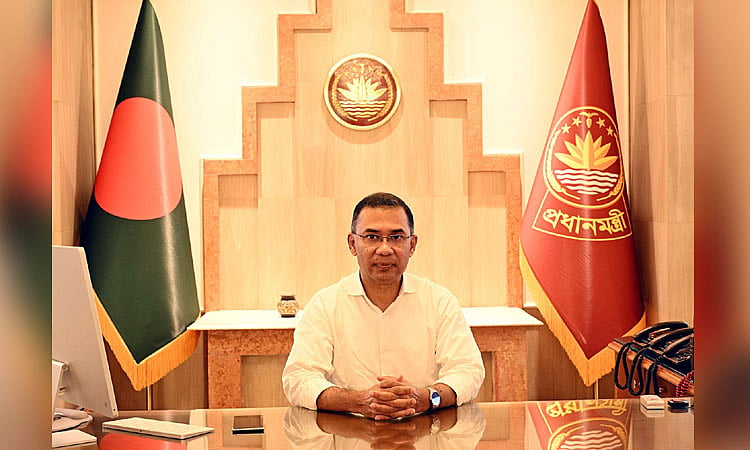
The potential visit of Prime Minister Tarique Rahman to India is becoming an important test of Bangladesh's foreign policy. Shortly after assuming office in February, India's Prime Minister Narendra Modi invited him for a bilateral visit. At the same time, Bangladesh has also been invited to participate in the expanded session of the 18th BRICS Summit, scheduled to take place in New Delhi on 12-13 September, this time as the current chair of BIMSTEC. Thus, the political and diplomatic significance of the two upcoming invitations is not the same: the first is part of bilateral relations, while the second is related to Bangladesh's broader regional responsibilities.
In this context, the issue of Sheikh Hasina's extradition has become intertwined with the India visit. Dhaka has stated that a favourable environment is needed for the Prime Minister's visit to India, and has simultaneously called on New Delhi to expedite the extradition requests of Sheikh Hasina and other fugitives.
India has stated that it has received Bangladesh's request and the matter is under consideration in their legal process. Foreign Minister Khalilur Rahman has also tried repeatedly to clarify the difference between the two types of invitations. However, in public discourse, the bilateral visit, extradition, and regional responsibilities of BIMSTEC often become conflated.
Here arises the main diplomatic question: Will the demand for Sheikh Hasina's extradition be a precondition for the Prime Minister's visit to India, or will the visit itself be used as a diplomatic tool to achieve this demand? The question is not merely about making the visit or not; rather, it is about which course of action can most effectively advance Bangladesh's national interests.
What Bangladesh First means
The phrase "Bangladesh First" is not merely an analytical framework. It is a slogan frequently uttered by BNP Chairperson Tarique Rahman himself, and the party has highlighted it as a guiding principle of their declared foreign policy. Thus, whatever stance the government ultimately takes regarding the visit to India and the extradition issue will be a test not only of diplomatic wisdom but also of the coherence of the government's own declared policy.
To give real meaning to this slogan in foreign policy, it means neither blind allegiance to any country nor blind opposition. It means evaluating every decision based on Bangladesh's sovereignty, security, economic interests, and long-term strategic interests. The same principle applies in the context of relations with India. Therefore, Sheikh Hasina's extradition, the Prime Minister's bilateral visit to India, and Bangladesh's participation in the expanded BRICS session as the chair of BIMSTEC must be viewed not as isolated incidents but in the context of Bangladesh's larger national interests.
Extradition: The demand remains firm, but not a precondition
There is an extradition treaty between Bangladesh and India from 2013. Bangladesh has formally requested Sheikh Hasina's extradition; India has acknowledged receiving the request and stated that the matter is under review within their legal framework. There is no reason for Bangladesh to back down from this demand; it involves questions of judicial accountability, the rule of law, and respect for Bangladesh's own judicial processes.
However, maintaining a legitimate demand and turning it into a precondition for every aspect of bilateral relations are two different things. Bangladesh has the right to stand firm on the issue of extradition; at the same time, determining which diplomatic approach would be most effective in securing that demand is also part of statecraft. This is where the difference lies between an emotion-driven position and strategic statecraft.
If the Prime Minister's visit to India is seen as a concession to New Delhi, then a fundamental reality of diplomacy is overlooked. High-level visits themselves are a tool for negotiation. Through such visits, state leaders convey political messages, prioritise their interests, negotiate demands, and try to define the framework for future relationships.
There are important examples of this in international diplomacy. During Nixon's visit to China in 1972, the Taiwan question was not resolved; rather, the path for dialogue and normalisation of relations was opened while differences remained. In South Asia, despite the unresolved Kashmir dispute in 1999 during Vajpayee's Lahore visit, the Lahore Declaration created a framework for dialogue and confidence-building measures. Although the subsequent Kargil conflict disrupted this process, it proved the necessity for dialogue and the resolution of disputes as separate matters.
The general lesson from these experiences is that not resolving a dispute and not holding discussions on the dispute are not the same things. Often, high-level political communication is most needed amid unresolved disputes, as the purpose of diplomacy is not always to achieve immediate solutions, but rather to break deadlocks, create negotiation opportunities, and place one's interests at the centre of discussions.
Thus, issues should be linked but not tied to a singular demand. Hasina's extradition is an important issue for Bangladesh, so it cannot be removed from the bilateral agenda. However, it would not be diplomatic wisdom to hold long-term issues like water, trade, energy, connectivity, and border management hostage to this one demand. In other words, extradition will be on the table for discussion, but not everything in the relationship will depend on it.
India should be clearly communicated that progress in extradition is essential for political trust, but parallel progress on other issues is also expected. In this approach, Bangladesh can maintain both principled firmness and flexibility in negotiation; because diplomatic influence depends not only on what is being demanded but also when and in what context the issue is brought forward.
Bangladesh's larger interests: Water, trade, and regional leadership
The relationship between India and Bangladesh is not just political; it stands on deep economic and strategic interdependence. Water is its clearest example. The Ganges Water Treaty of 1996 is set to expire next December; bilateral discussions on its renewal have already begun before its expiration. The distribution of water from common rivers, including the Teesta, remains an unresolved issue for a long time.
Trade relations are deep but imbalanced—though the merchandise trade between the two countries is nearly $11. 4 billion in the fiscal year 2024-25, Bangladesh's exports amounted to approximately $1.76 billion while imports were around $9. 62 billion. Mutual interests are also involved in energy, electricity, and connectivity. Therefore, Bangladesh's diplomatic goal should not be limited to whether ‘India will return Hasina’—the bigger question is how this mutual dependency can be directed towards a more reciprocal and balanced relationship.
The broader calculation is also connected with the added responsibility of the BIMSTEC chair. Confusing the invitation to the expanded BRICS session with the bilateral visit would be a mistake. This invitation is not for Tarique Rahman personally but rather for Bangladesh as the current chair of BIMSTEC, an organisation headquartered in Dhaka. Here, Bangladesh is representing a regional alliance of seven nations, not merely acting as a bilateral party.
Absence from this session would not only increase distance from India but also result in losing the opportunity for direct discussions with BRICS leaders and weaken Bangladesh's leadership position as the chair of BIMSTEC. It would inadvertently send a wrong message to Nepal, Sri Lanka, Myanmar, Bhutan, and Thailand, suggesting that Bangladesh is uninterested in fulfilling its regional leadership responsibility. Hence, merging bilateral visits and BIMSTEC-BRICS participation into the same negotiating package is illogical; it is crucial to view them in separate diplomatic contexts—one for bilateral relations and the other for regional leadership.
Strategic firmness: Turning the visit into a diplomatic tool
Hasina's extradition is a highly sensitive issue in the Bangladeshi public mind; thus, the government should stand firm on it. However, firmness and rigidity are not the same. Firmness means not compromising on core interests, while rigidity means adopting a stance that could limit one's path to achieving those interests. A policy of ‘no visit unless extradition happens’ might restrict important diplomatic channels. Conversely, maintaining the demand for extradition while utilising the visit as an opportunity for broader bilateral discussions will be strategically more effective. Here, the visit itself becomes a diplomatic tool, not a concession.
If the visit eventually occurs, it should not be a mere courtesy call. Bangladesh should approach it with a clear diplomatic package at the centre of which should be—Sheikh Hasina’s extradition; fair renewal of the Ganges Water Treaty; water management of common rivers including Teesta; cessation of border killings and border management; additional market access for Bangladesh’s exports and the abolition of land-port-based trade restrictions imposed in 2025; real initiatives to reduce the trade deficit; cooperation in energy and electricity and mutual economic benefits in connectivity. In other words, instead of getting the relationship stuck on a single issue, using that issue to renegotiate the entire relationship afresh—this is the practical application of the ‘Bangladesh first’ policy. The visit should be turned into an effective diplomatic tool.
Final words
There is no reason for Bangladesh to back down from the demand for Sheikh Hasina’s extradition. However, turning this demand into such a stringent precondition that it narrows the opportunity for high-level direct negotiations is not diplomatic wisdom. Bangladesh’s policy should be neither blind loyalty to India nor unnecessary opposition. Similarly, adopting a stance merely to show firmness that shrinks one's negotiating space would also not be right.
"Bangladesh First" means that the ultimate measure of every decision will be the national interest. While extradition is important for that interest, water, trade, energy, borders, connectivity, and regional leadership are equally vital. Therefore, Bangladesh's policy should be: firmness in demands, pragmatism in negotiations, and national interest in outcomes.
If participating in the Prime Minister's visit to India and the expanded session of BRICS as the BIMSTEC chair can be effective diplomatic tools to achieve those interests, then that opportunity should not be missed. The demand should remain firm but keep the doors of diplomacy open because success is not only evaluated by what we demand but ultimately by what Bangladesh achieves from those demands.
#Golam Rasul is a professor in the Department of Economics, International University of Business, Agriculture and Technology, Dhaka.
*Email: golam. grasul@gmail. com
#The opinions expressed here are the author’s own.
#This article, originally published in Prothom Alo print and online editions, has been rewritten in English by Rabiul Islam