Opinion
Will Meta remain unaccountable for killings incited on Facebook?
The first sentence under tech giant Meta’s ‘Violence and Incitement’ section states: “We aim to prevent potential offline violence that may be related to content on our platforms.”
Another line in the same section reads: “We remove language that incites or facilitates violence and credible threats to public or personal safety.”
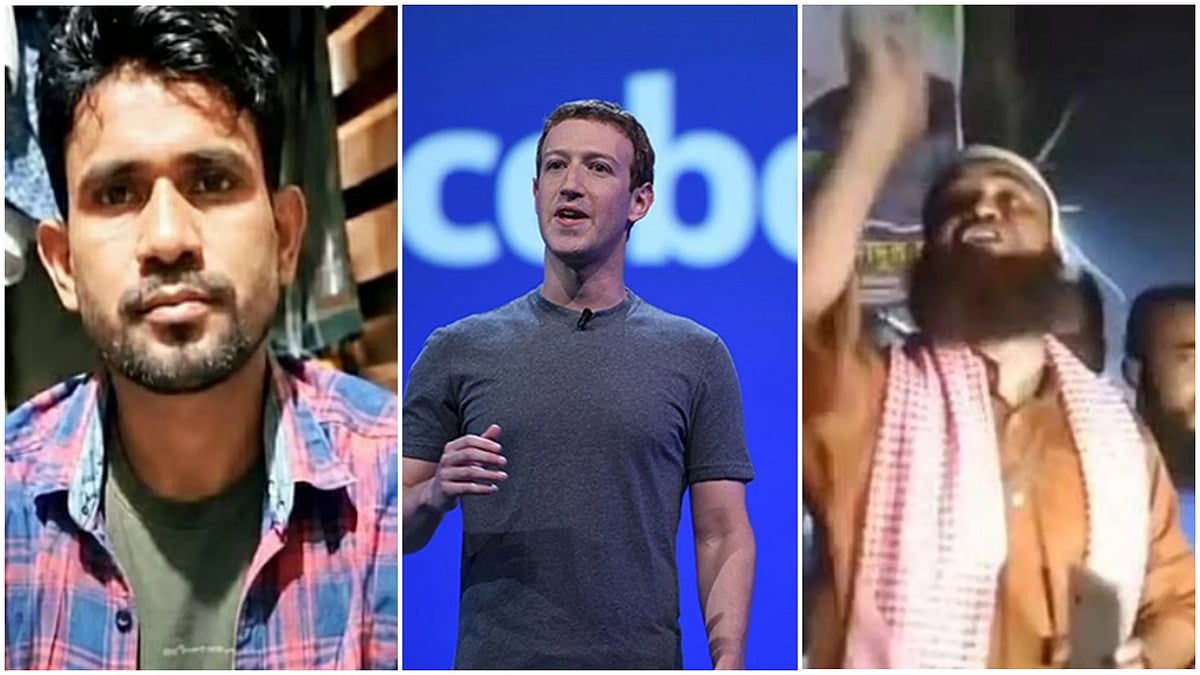
All these conditions applied in the case of Wahiduzzaman Shamim of Debhata, Satkhira. Yet Shamim could not be saved. His killing was orchestrated through Facebook Live broadcasts on two occasions, along with several posts. The live videos were still available even two days after the incident. But Meta apparently still has not considered that such incitement on its Facebook platform could harm someone. Yet Shamim is dead.
People raised an outcry on Facebook itself over Shamim’s death, demanding justice. The person who incited the violence has also been arrested. Before long, images of another Shamim’s body will be circulating across Facebook. There is no need to revisit the administration’s inaction. But when such incidents repeatedly occur in this country as a result of calls for violence spread on Facebook, does the platform bear no responsibility? Should it not be held accountable?
One of the earliest widely discussed incidents of attacks incited through Facebook in Bangladesh took place 15 years ago, in 2012, in Ramu upazila of Cox’s Bazar. The Buddhist community faced a horrific attack. Such incitement has not stopped; rather, it has increased. The most extensive incident occurred in October 2021, when Facebook posts and videos surrounding allegations of desecration of the Holy Quran in Cumilla triggered communal violence in at least 18 districts of Bangladesh. According to Freedom House, at least 11 people were killed and hundreds injured in the violence. At the time, the government even suspended mobile internet services.
Meta continues to violate its own policies, people continue to die, yet the company faces no accountability. Given the behaviour of successive governments in Bangladesh, however, any digital-related policy introduced in the country is a cause for concern not only for citizens but also for these platforms. Before the most recent election, a policy introduced by the interim government effectively prompted Meta to threaten to suspend its services!
Over the past two years, incidents of attacks and killings incited through Facebook have been on the rise. Last December, evidence was found in 958 posts (according to a report jointly published by The Daily Star and DismissLab) of direct calls for attacks on Prothom Alo and The Daily Star or celebrations of such attacks. On the night of 18 December, Prothom Alo and The Daily Star came under attack, with their offices vandalised and set on fire. Udichi and Chhayanaut were also targeted. In April this year, a pir (priest) was killed in Daulatpur, Kushtia, following incitement on Facebook.
Meta’s own policies clearly prohibit incitement to violence, threats, harassment and the disclosure of personal information that could create a risk of physical harm. Its safety policies states they remove contents that include “violent speech targeting a person or group of people on the basis of their protected characteristic(s) or immigration status.” Meta “removes content, disables accounts and works with law enforcement when,” they “believe there is a genuine risk of physical harm or direct threats to public safety.”
They “also try to consider the language and context in order to distinguish casual or awareness-raising statements from content that constitutes a credible threat to public or personal safety. In determining whether a threat is credible, we may also consider additional information such as a person's public visibility and the risks to their physical safety.” Yet in Bangladesh, such contents have been allowed day after day!
Meta’s role came under scrutiny following the attacks on media outlets last December. The accounts of some influencers were shut down, although they have since opened new accounts on the same platform. In March this year, Amnesty International raised concerns about Meta’s role in Bangladesh. It warned that failure to take timely and effective action against harmful online content could increase the risk of real-world violence and serious human rights violations. It also referred to the threats and incitement circulated on Facebook ahead of the December attacks.
This raises the question: what measures are taken in developed countries when Meta violates its own policies? In January 2021, Facebook faced intense criticism following the violence at the US Capitol. Meta founder Mark Zuckerberg had to appear before the US Congress.
In 2024, Meta faced an investigation in the United Kingdom over its delayed response to the riots and the spread of incitement. Meanwhile, under the European Union’s Digital Services Act, social media platforms can be fined up to 6 per cent of their annual worldwide turnover if they fail to prevent the spread of violence or fake news.
The obvious question now is: has the Bangladesh government made any effort to hold these platforms accountable? It has made some efforts and continues to do so. However, while legislation in other countries is intended to prioritise the protection of citizens, in Bangladesh, it is aimed at ensuring the protection of ruling-party figures. As a result, whenever the question of holding giants such as Meta accountable comes to the fore, the issue of ‘restrictions on freedom of expression’ takes centre stage. During the previous Awami League government, such laws were grossly abused.
Recently, the government has taken steps to amend the Cyber Security Act. The proposed amendments include provisions for taking action against incitement to violence, hurting religious sentiments, cyber bullying, spreading false information and issuing threats. However, these provisions primarily concern actions to be taken by the government, not the platforms themselves.
For nearly four years, there have also been discussions about introducing a policy on social media and OTT platforms. During the Awami League government, there was a tussle between the telecommunications and information ministries over which ministry would be responsible for implementing the policy. The issue remained unresolved even under the interim government. Following the BNP's rise to power, there have been discussions about the Information Ministry drafting a law titled the ‘Social Media and Digital Intermediaries Act 2026’.
Meta continues to violate its own policies, people continue to die, yet the company faces no accountability. Given the behaviour of successive governments in Bangladesh, however, any digital-related policy introduced in the country is a cause for concern not only for citizens but also for these platforms. Before the most recent election, a policy introduced by the interim government effectively prompted Meta to threaten to suspend its services!
The interim government had included provisions for mandatory data localisation in Bangladesh and imprisonment for violations in its Personal Data Protection Ordinance, which angered Meta. Ruzan Sarwar, Meta’s Public Policy Manager for the Asia-Pacific region, expressed her displeasure at a conference organised by Digitally Right and EngageMedia last April.
On that occasion, she said Meta had considered suspending its services in Bangladesh because of the data localisation provision. However, the interim government dropped the provision shortly before its tenure ended. At the same conference in April, Ruzan Sarwar faced questions over the use of Meta to incite violence. However, she remarked that preventing offline violence is the responsibility of the government.
There has been criticism of Meta’s discriminatory treatment of countries in the Global South. In 2022, Amnesty International raised concerns about Meta’s discriminatory practices. In a report published at the time, it said Meta’s profit-driven algorithms and surveillance-based business models played a major role in amplifying ethnic discrimination, hate speech and violence in countries across the Global South.
An article published in the Cambridge Forum on AI: Law and Governance journal by Cambridge University Press in May 2025 stated that governments in the Global South have very little influence over social media policymaking. Citing religious tensions and attacks on minorities in Bangladesh, the article also criticised Meta’s “difficulties in identifying content in the Bangla language.”
Yet, is there no way to hold these platforms accountable? Instead of merely repeating the rhetoric of ‘open an office in this country’, can we not sit down and address the real challenges? Can we not find ways to seek redress?
Suhada Afrin is a journalist. The opinions expressed in this article are the author's own.