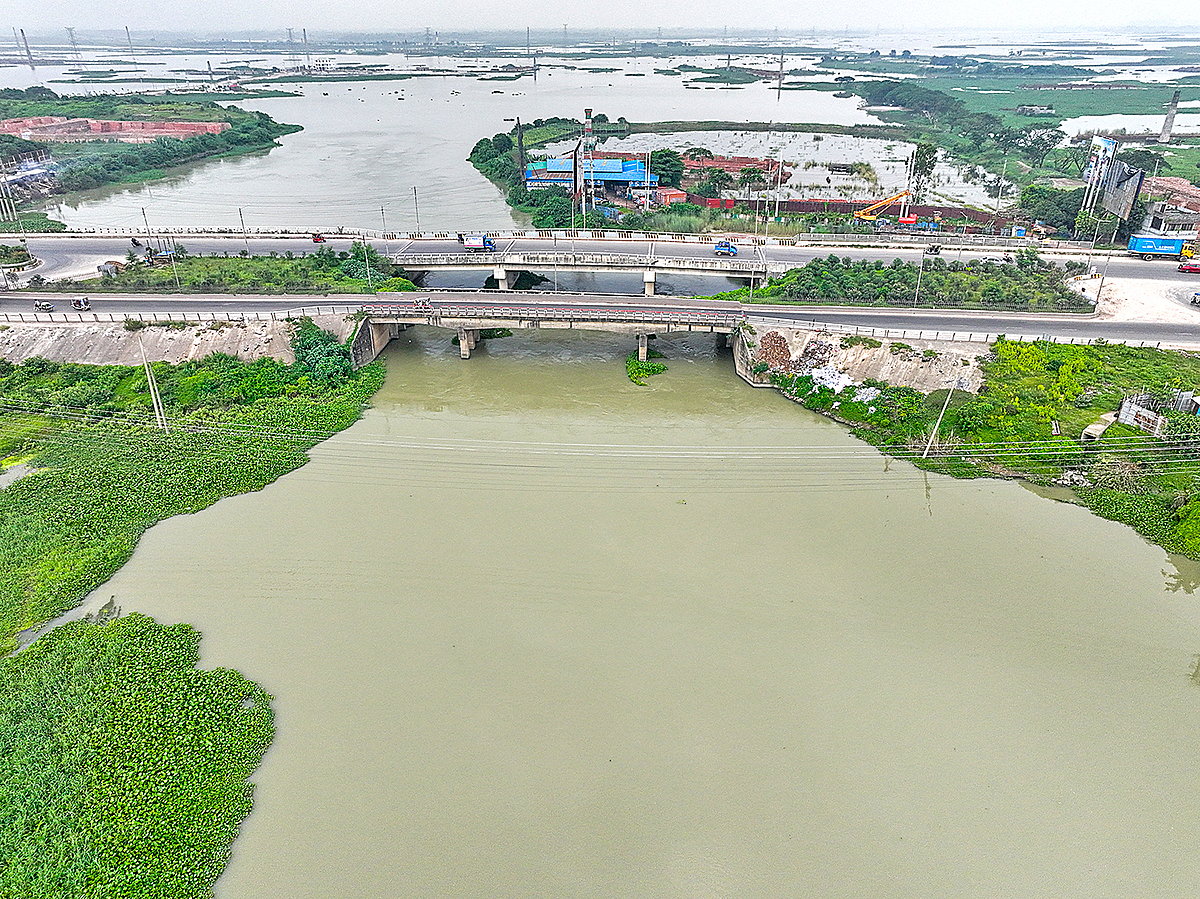
Dhaka is a strangely beautiful city. Many cities around the world have rivers flowing by them, but very few are surrounded by rivers like Dhaka. Buriganga, Turag, Shitalakkhya, Balu. These rivers are not just streams of water; they stand silently around Dhaka as its guardians. For hundreds of years, they have protected this city. They are connected to the people’s lives, trade, culture, songs, stories, and memories. Yet today, a deep melancholy has settled within that relationship.
Sometimes, looking at the river, it seems as if there is some estrangement between us and the rivers. Otherwise, why do we neglect so much those on whose bosom this city has grown?
Once, mornings in Dhaka would begin with the river. Boats would move through the morning mist. The boatmen would sing. People would gather at the docks. From distant villages, rice, jute, vegetables, and fish would come by boat. The river was the road, the market, the livelihood. As the sun leaned west, the river's water would glimmer with a red glow. The smell of water would float in the air. The river then became more than just a river; it became a part of people’s lives.
Today, that scene seems like a distant story. Looking at the Buriganga, it seems very tired. Its water has turned black. Pollution marks have gathered on Turag’s bosom. In many places, Balu is hard to recognise. Shitalakkhya is struggling under various pressures. The rivers are still here, but they are not like before. Just as a tree may stand strong on the outside but withers inside, so too is the state of these rivers.
The saddest part is that the rivers did not reach this state overnight. We have wounded them little by little over the years. Some have dumped factory waste, some have encroached on riverbanks, some have filled them with garbage, and some have turned a blind eye despite being responsible. This destruction has happened gradually, as if every day someone has taken a bit of life from the river’s body.
We often talk about development. New roads, new bridges, new projects are happening. Billions of taka are being spent. But amid this development, the conversation about rivers often gets lost. We forget that a city doesn’t survive on roads and buildings alone. A city is kept alive by its air, its trees, its canals, its rivers. For Dhaka, the river is not just a part of nature; it is part of its history.
Imagining Dhaka without its rivers is difficult. The river was there at the birth of the city. It was there during its growth. The river was part of its success story. If the rivers die today, we will lose not just streams of water, but a significant part of this city's identity.
Often, it seems we have no anger against the rivers. We don’t hate the rivers. Rather, there is a bigger problem. We have forgotten the rivers. And there is no neglect greater than forgetting. Those whom people love, they remember. Those they do not remember, they do not feel their pain. This is exactly what has happened with Dhaka’s rivers. We live beside them, but we do not see them. We use their water, but we do not think of them. We know their names, but we do not understand their pain. Therefore, the sorrow of the river does not become our sorrow.
But the truth is, the death of the river eventually affects human life too. When the river shrinks, waterlogging increases. When the river is polluted, diseases increase. When the river is encroached upon, the environmental balance is disturbed. When the river is lost, the city becomes hotter. Hence, damage to the river is actually our own damage. Nature never argues with humans. It follows its own rules silently. When we break its rules, we ultimately have to suffer the consequences.
Once, the rivers around Dhaka could absorb excess water. Today, many rivers and canals have been filled up. As a result, water accumulates on the streets with even a little rain. At one time, the river was the source of life. Today, in many places, the river itself is struggling to survive. This is not just an environmental crisis, it is a crisis of our conscience.
In Bengali literature, songs, and folklore, rivers have always been given a special place. Poets have called the river a mother, a beloved, a symbol of life. Because a river means not just water; a river means memory, a river means time, a river means the flowing stream of life. But in real life, we have not been as responsible towards these rivers as we should have been. The failure is not just of the government or the industrialists; it's all of ours.
Still, there's hope. Even now, during the rainy season, rivers suddenly seem to come alive. They fill with rainwater. On some mornings, mist still descends upon the river. On some evenings, the setting sun still scatters gold upon the waves. Those moments remind us that the river has not completely vanished. It still wants to return. It still loves this city as it did before.
Maybe the river is even more generous than humans. We have polluted it, yet it wants to provide us with water. We have encroached its banks, yet it wants to protect us from floods. We have wronged it, yet it wants to keep us alive. That's why looking at the river sometimes brings guilt. It feels as if we have betrayed an old friend. A friend who stood by us in difficult times, who was with us in happiness and sorrow, and whom we have forgotten.
Maybe there is still time. Perhaps it is still possible to bring the rivers back. But that wo''t happen only through projects. First, we need to change our perspective. We must understand that a river is not an empty space. A river is not a dumping ground for waste. A river is not a business opportunity. A river is part of life.
Dhaka’s future is also tied to the future of its rivers. If the river lives, the city will live. If the river is healthy, the city will be healthy. And if we lose the river, one day we may realise that we have lost not just a few rivers; we have lost our history, our memories, a part of our soul.
Buriganga, Turag, Shitalakkhya, and Balu still flow silently today. They make no complaints. They just wait. Wait for the day when the people of this city will turn towards them again. Maybe on that day, we will understand that we never had a grudge against the river. The grudge was with our greed, our indifference, our forgetfulness.
And the day that misunderstanding breaks, perhaps by saving the river, we will find ourselves once again.
#Mohiuddin Ahmad is a writer and researcher
*The opinions expressed here are the author’s own.
#This story, originally published in Prothom Alo print and online editions, has been rewritten in English by Rabiul Islam.