Opinion
Tarique Rahman’s ‘London experience’ and Bangladesh reality
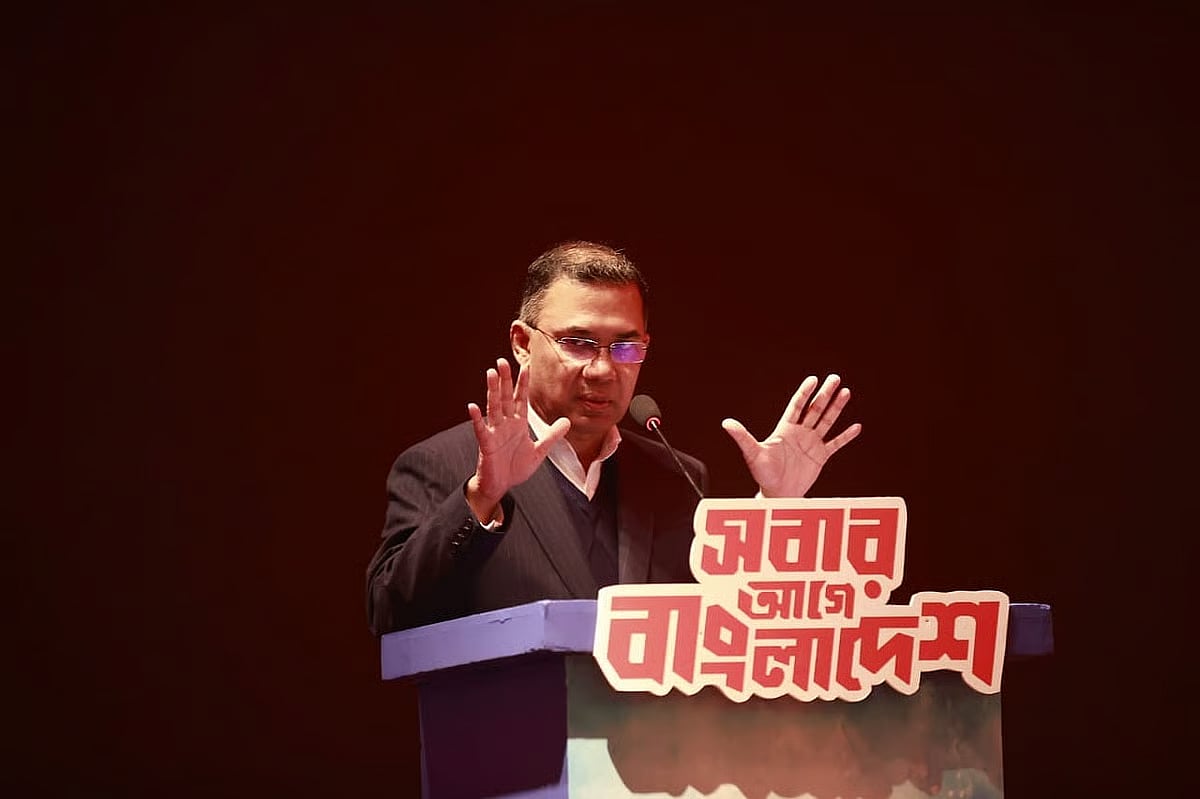
At a discussion meeting with media editors, BNP Chairperson Tarique Rahman appeared as a mature and attentive political leader. He outlined his plans for development in areas such as water management, health, agriculture, women’s rights, vocational education, skilled overseas employment export, and the IT sector.
However, his proposed Agriculture Card and Family Card schemes remain unclear. Questions have been raised about the purpose of these cards, sources of funding, safeguards against political misuse, the absence of expert consultation, and the lack of pilot projects. In particular, there are serious doubts about the rationale for a universal Family Card and the feasibility of financing such a large-scale programme.
Having spent more than a decade and a half in the United Kingdom, Tarique Rahman has closely observed the planning processes and governance mechanisms of the Westminster system. He has directly witnessed the policy formulation and implementation approaches of the two main political parties—the Labour Party and the Conservatives. He has also seen firsthand the workings of a developed economy, where advanced transport infrastructure, health and medical services, quality education, robust social protection programmes, and institutional social values function in a complementary manner.
But it took more than four hundred years for the British state system to reach this stage. Over this long period, a solid foundation was built in its politics and economy. The plans adopted at Westminster today are effective precisely because they rest on that historical and institutional foundation.
Bangladesh’s reality is different. Therefore, planning here must be tailored to Bangladesh’s specific context. Before adopting any project, the first step should be to assess its likely outcomes. This should be followed by consultations with experienced individuals, researchers, and relevant professionals, as well as academic debate.
If state governance in the Westminster style is to be discussed, it must be remembered that no major plan there is adopted without such deliberation. My long experience of living in England, studying there, teaching, and being involved in research projects clearly demonstrates this. Testing effectiveness through pilot projects before implementing any major programme is a widely accepted practice. It remains unclear whether such initiatives have been undertaken for the proposals in question.
Another important question is tied to political reality. After 5 August 2024, the character, competence, and judgment of the people of Bangladesh—or of political party leaders and activists—did not change overnight. In that case, where is the guarantee that any new card or benefit will not be distributed along party lines?
Already, this card has become a tool of confusion in election-oriented politics. In some places, it is being said that the card will not be given if people do not vote; elsewhere, dummy copies of the card are being handed out to voters. If a state social protection initiative turns into a political instrument in this way, its credibility inevitably comes into question.
In this context, clarity is also needed about the future of the VGF card. If the BNP comes to power, it could choose to expand the scope of this card. It could also decide to hand the card to the mother of the household instead of the male family member. If, in the past, cards were distributed on political considerations, then the correct approach would be to rectify that practice, ensure neutrality in distribution, and deliver the cards to the genuinely eligible families.
We must remember that once a party is elected to form the government, it is no longer just the party’s government; it becomes the government of the country and its people. Therefore, the benefits of social protection programmes should reach the right people in the interest of the nation.
Tarique Rahman has spoken about restructuring vocational institutes with modern courses and content. This is undoubtedly a positive plan, as it can help a portion of the youth acquire the skills needed for employment. His proposal to provide training before sending workers abroad is also highly important, as it can enhance both the skills and income of expatriate workers. He has also emphasised making better use of existing IT infrastructure, which could create opportunities for progress in online and technology-based sectors.
However, the people of the country primarily want clear plans from major political parties on three key issues: how unemployment will be reduced, how corruption will be controlled, and how commodity prices will be kept within the purchasing power of ordinary citizens.
Bangladesh’s position on the issue of corruption is particularly worrying. Out of 180 countries, Bangladesh ranks 151st. According to the 2024 Corruption Perceptions Index, nearly 77 percent of government activities in the country involve some form of corruption. There is still no clear outline of how this corruption would be addressed if a new government comes to power.
Due to time constraints, this topic may not have been discussed in detail, but the nation expects that Tarique Rahman, alongside his other plans, will present a clear and realistic strategy for tackling corruption, reducing unemployment, and controlling commodity prices.
The strength of any political program ultimately depends on its feasibility and ethical acceptability. In that regard, clarity and credibility will be its greatest assets.
*Nusrate Aziz is a researcher and academic
#The opinions expressed are the author’s own
*This article, originally published in Prothom Alo print and online editions, has been rewritten in English by Rabiul Islam.