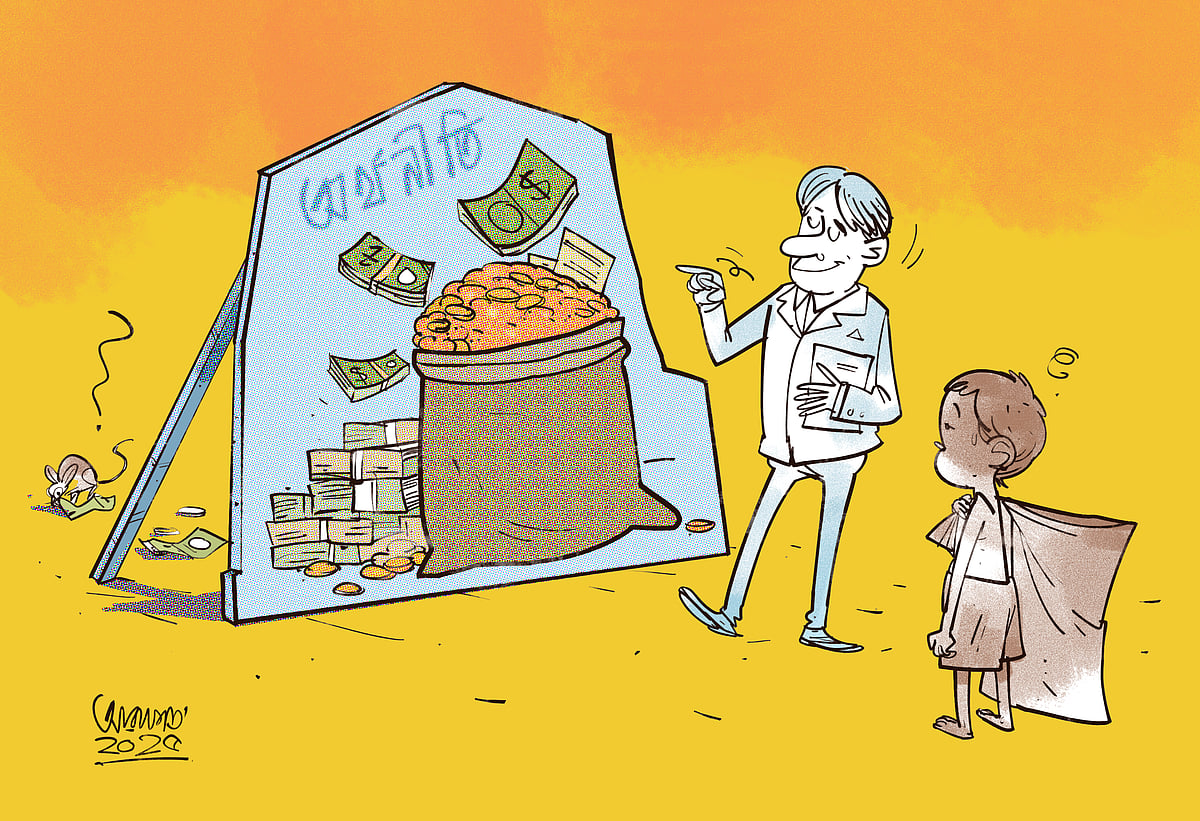
The ousted government left the economy on the brink of collapse. With each passing day, the artificially constructed narrative of “miraculous” development is disintegrating, exposing an extraordinarily fragile socio-economic reality. If political uncertainty over reforms continues to drag on, the wounds to the economy will only deepen. Ordinary citizens are already bearing the brunt of this crisis.
The nation now stands at a critical crossroad. The forthcoming national election must be held within the timeframe announced by the Chief Adviser. Prolonged political rigidity will magnify economic risks and plunge society into despair. Neither domestic nor foreign investors can gather confidence without an elected government; in such conditions, investment will remain paralysed. Only a legitimate, permanent government can create the environment necessary to attract investment, generate employment, and reduce poverty and vulnerability.
What is urgently required now is not intransigence, but national consensus that can move the country from despair to hope. Political confrontation and polarisation must give way to dialogue and reconciliation. Above all, the well-being and prosperity of citizens must take precedence.
Short-term blind partisanship must be abandoned to achieve lasting stability. That means, signing the July Charter without delay and moving towards elections is the only way to remove uncertainty.
Humanitarian crisis, social breakdown
The humanitarian crisis is deepening. Statistics tell their own grim story. According to the Power and Participation Research Centre (PPRC), the poverty rate has climbed to 28 per cent, with extreme poverty nearly doubling to 9.4 per cent. High inflation, the post-pandemic shock, declining real wages and political instability are driving this surge in poverty.
The 2024 Labour Force Survey by the Bangladesh Bureau of Statistics (BBS) delivered bleak news for the youth who spearheaded the July Mass Uprising.
Post-pandemic pressures continue to squeeze household budgets. While inflation has eased somewhat to 8.29 per cent, the 12-month average still hovers near 10 per cent. More than half of monthly household expenditure now goes to food alone. Over 10 per cent of poor households spend more than they earn, increasingly relying on debt. Crucially, wages rose by only 8.15 per cent, lagging behind inflation, eroding real purchasing power. These are not abstract figures, but harsh realities faced by families.
The 2024 Labour Force Survey by the Bangladesh Bureau of Statistics (BBS) delivered bleak news for the youth who spearheaded the July Mass Uprising. Unemployment remains alarmingly high: 1.3 million young people aged 15–24 are jobless, followed by 916,000 in the 25–34 bracket, and 379,000 above 35 years of age. For graduates, the crisis is particularly acute. In 2024, as many as 900,000 of them remained unemployed—the highest among all educational groups, with one in three graduates unable to find work.
Nor is the despair limited to the young. Women’s participation in the labour market remains dismally low at under one-third (33.1 per cent), compared with men at 66.9 per cent. Regionally, Dhaka leads in unemployment, with 687,000 out of work. Yet it must be remembered that the BBS figures, shaped by restrictive definitions of unemployment, may understate the true scale of the crisis.
This joblessness among the youth is a dangerous spark, squandering immense human potential and reflecting broader inequalities, inefficiencies and systemic failures. Let us not forget: it was workers and young people—the very backbone of the future labour force—who made the greatest sacrifices during the uprising.
There is reason for hope. Of the 84 reform proposals made by the National Consensus Commission, 75 have already received full support from all political parties. Only nine remain subject to partial or full reservations, and these from just two to five parties among 32 parties and alliances. In other words, the political forces are already very close to agreement.
The fallen regime left the whole financial system exposed, ignoring institutional accountability. Investment remains stagnant; imports of capital machinery have fallen by 20–25 per cent, directly undermining job creation. Citizens’ savings are now at risk, while the capacity for new investment has been gravely damaged. Opportunities are fast disappearing for the youth and working population.
Meanwhile, society is falling apart. The poor are being driven into destitution, the lower-middle classes are sliding into poverty, and the working poor are being crushed. Yet the oligarchy remains untouched, beyond accountability.
Stability as an imperative
The statistics are clear, the suffering is real, and the diagnosis is precise. The nation faces a choice between two pathways: the continuation of the present order, benefiting only a privileged few, or an alternative vision of hope, dignity and rights. The immediate task is to forge a broad-based national consensus.
The current interim government, by its very nature, is temporary. It cannot provide long-term policy certainty or political stability. Investors, be it domestic or foreign, plan in years, not months. They require confidence and predictability. Only an elected political government can guarantee stability, incentivise private investment and establish a credible business environment. Only then can the vicious cycle of stalled investment, jobless growth and rising poverty be reversed into a virtuous cycle of confidence, capital inflows, employment and shared prosperity.
Political consensus: the only solution
The root of the crisis lies in politics. Division breeds uncertainty, which in turn stalls investment; and, stalled investment worsens unemployment and poverty; despair deepens political conflict. The result is a destructive vicious cycle. To break it, the country must move in the opposite direction: from division to unity, from uncertainty to stability, from despair to hope.
Only an elected government can restore confidence. Popular participation generates legitimacy, and legitimacy, in turn, attracts investment, creates jobs, reduces poverty and fulfils people’s aspirations. Political consensus, therefore, is not a luxury but a life-and-death necessity for the economy.
There is reason for hope. Of the 84 reform proposals made by the National Consensus Commission, 75 have already received full support from all political parties. Only nine remain subject to partial or full reservations, and these from just two to five parties among 32 parties and alliances. In other words, the political forces are already very close to agreement.
History teaches us that unity has been the nation’s greatest strength: in 1971, consensus brought liberation; in 1990, it toppled dictatorship. Today, too, there is only one way forward—not conflict, but consensus.
At this critical juncture, paralysis, uncertainty and decline threaten to consume the economy and society. It is well understood that without elected leadership there can be no investment, no stability, no future. Despair has no place in Bangladesh. Let politics be rebuilt on the foundations of hope, where the economy can once again breathe, and unity can be transformed into strength.
* Rashed Al Mahmud Titumir is Professor of Development Studies at the University of Dhaka
* The views expressed are the author’s own