Opinion
Stop the Burn: Why Bangladesh must act on waste fires and incineration
On many winter mornings in Dhaka, the skyline disappears behind a grey veil. Traffic lights blur, buildings fade into the haze, and the air carries the unmistakable smell of smoke. Public discussion often points to vehicle exhaust, brick kilns, or construction dust as the main culprits. Yet another source of pollution rises quietly from the edges of neighborhoods: burning garbage.
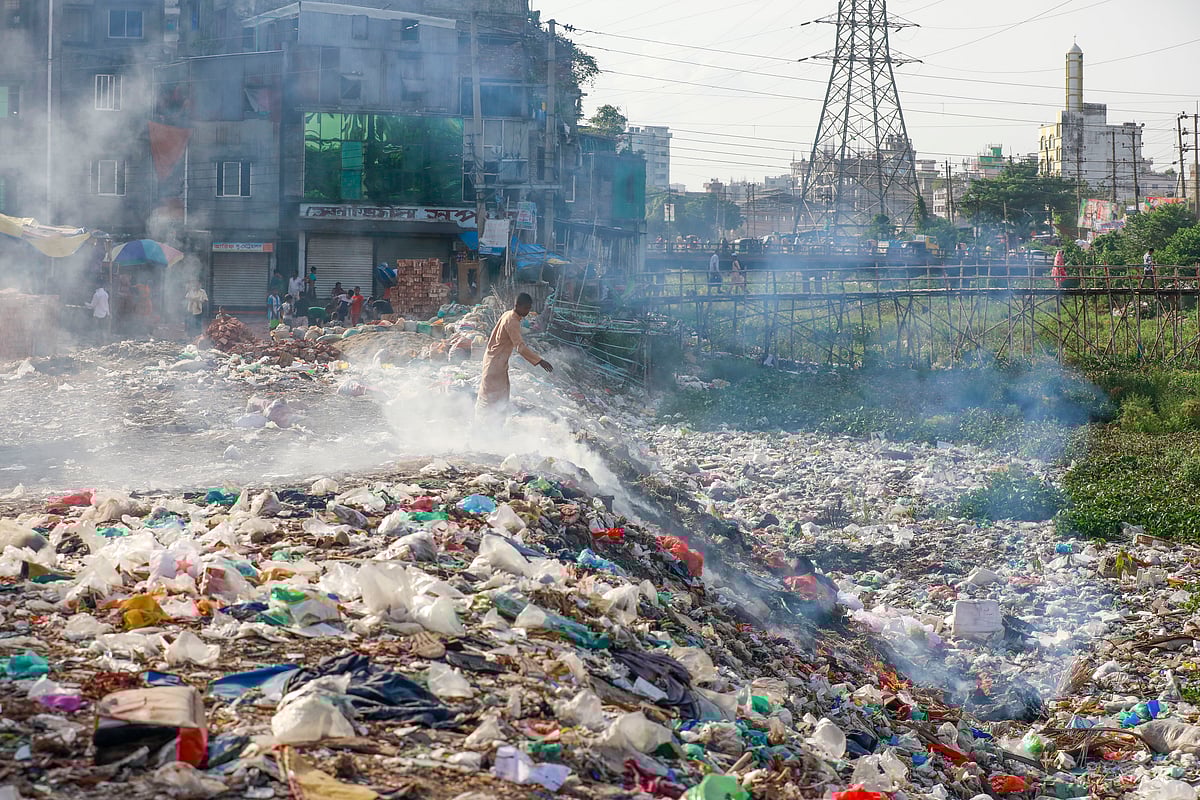
Across Bangladesh, piles of waste are routinely set on fire in roadside dumps, markets, alleyways, and landfill margins. The practice continues despite legal prohibitions. In many communities, it has become routine—a quick way to clear accumulating trash.
But the smoke from those fires carries a hidden cost.
Bangladesh already faces one of the world’s most severe air pollution crises. Studies by the Health Effects Institute and the World Health Organization estimate that between 80,000 and 100,000 premature deaths occur every year in the country due to air pollution. While emissions from transport and industry receive most attention, open waste burning remains a largely unrecognized contributor to toxic air.
What appears to be a small neighborhood fire is, in reality, part of a national environmental emergency.
Why open burning persists
Bangladesh generates more than 25,000 tons of municipal waste per day, according to World Bank estimates. Dhaka alone produces roughly 7,000–8,000 tons daily, a figure expected to grow rapidly as urban populations expand.
Yet municipal systems struggle to keep pace. In many densely populated areas, waste collection services remain inconsistent. Narrow streets impede truck access to households, while informal settlements often lack formal waste services altogether. When garbage accumulates in open spaces or roadside bins, burning becomes the fastest solution.
Another major problem is the absence of source segregation. Most households discard food waste, plastic packaging, textiles, paper, batteries, and electronic scraps together. When this mixed waste is burned, the resulting smoke contains a complex mix of toxic chemicals.
Plastic waste is particularly problematic. Bangladesh consumes hundreds of thousands of tons of plastic every year. When burned in open conditions, plastics release hazardous substances, including hydrogen chloride, benzene, and dioxins.
Landfill conditions also contribute to the problem. At major dumping sites such as the Aminbazar Landfill and the Matuail Landfill, decomposing organic waste generates methane gas. Methane is highly flammable and can ignite when trapped within waste piles, causing landfill fires that may burn for days.
According to research by the United Nations Environment Programme, open burning of waste is responsible for a significant share of urban particulate pollution in many developing countries, particularly where waste management systems are incomplete.
In Bangladesh, weak enforcement of environmental rules and limited public awareness allow the practice to continue.
The toxic toll on health and environment
The smoke rising from burning garbage contains some of the most dangerous pollutants known to science.
Among them are dioxins and furans, highly toxic chemicals classified as persistent organic pollutants. The World Health Organization notes that these substances accumulate in the human body and can cause cancers, hormone disruption, reproductive disorders, and immune system damage.
Burning plastics and treated materials also releases polychlorinated biphenyls (PCBs) and heavy metals such as mercury and lead.
Another major concern is fine particulate matter, known as PM2.5. These microscopic particles penetrate deep into the lungs and enter the bloodstream. Research by the Institute for Health Metrics and Evaluation shows that long-term exposure to PM2.5 significantly increases the risk of heart disease, stroke, chronic respiratory illness, and premature death.
Children face even greater risks. Toxic smoke can impair lung development, weaken immune systems, and affect cognitive development.
Environmental consequences are equally severe. Toxic ash from burned waste settles onto soil and is eventually washed into waterways. Over time, these pollutants contaminate groundwater and agricultural land, entering the food chain through crops and fish.
Climate impacts also deserve attention. Waste fires release black carbon, a powerful short-lived climate pollutant that accelerates global warming. Black carbon also contributes to regional haze and reduces visibility in urban areas.
In short, burning waste does not make garbage disappear. It transforms it into a dangerous mixture of air pollution, toxic residues, and climate pollutants.
The waste-to-energy question
Facing growing waste volumes, Bangladesh has begun exploring waste-to-energy incineration as a potential solution.
One major proposal involves a 3,000-ton-per-day waste-to-energy plant near the Aminbazar Landfill. Controlled incinerators for medical waste have already been introduced in cities such as Chattogram.
Supporters argue that modern incinerators can reduce waste volume by up to 90 percent while generating electricity from combustion heat.
However, the global record is mixed.
Even modern incinerators produce toxic by-products. Around 20–30 percent of burned waste remains as ash, often containing concentrated heavy metals and hazardous compounds that must be disposed of in specially engineered landfills.
Incineration also requires extremely high capital investment and sophisticated emissions control systems. Without continuous monitoring and strict regulation, incinerators can release the same pollutants—dioxins, heavy metals, and fine particulates—that arise from open burning.
Economics present another challenge. Waste-to-energy plants require a constant supply of waste to remain financially viable. This can discourage recycling and composting because waste becomes a fuel source rather than a material to recover.
The economics of waste: Burning vs circular solutions
A growing body of international research suggests that recycling and composting create far more jobs and economic value than incineration or landfilling.
The Air Pollution Control Rules introduced in 2022 prohibit the open burning of waste and allow authorities to impose stricter controls in highly polluted regions
According to studies by the International Labour Organization and the World Bank, recycling systems can generate five to ten times more employment per ton of waste compared to incineration.
Bangladesh already has a vibrant informal recycling sector. Thousands of waste pickers recover plastics, paper, and metals every day, preventing large volumes of materials from reaching landfills.
Integrating these workers into formal waste management systems could strengthen recycling while improving livelihoods.
Circular waste systems also reduce import dependence for raw materials and create local industries around repair, reuse, and recycling.
In contrast, waste-to-energy plants often lock cities into long-term contracts requiring guaranteed waste supply.
Climate commitments and waste emissions
Waste management is increasingly recognized as an important component of climate policy.
Under the United Nations Framework Convention on Climate Change, Bangladesh has pledged to reduce greenhouse gas emissions as part of its national climate commitments. Methane emissions from landfills and black carbon from waste burning contribute directly to climate warming.
Improving landfill management, capturing methane, and expanding composting could significantly reduce emissions from the waste sector.
Reducing waste burning would also improve air quality while helping Bangladesh meet its climate goals.
Policy progress and the enforcement gap
Bangladesh has taken several steps to address air pollution.
The Air Pollution Control Rules introduced in 2022 prohibit the open burning of waste and allow authorities to impose stricter controls in highly polluted regions. Areas around Savar have already been identified as environmentally degraded zones requiring special attention.
City corporations have launched waste management action plans, and international funding is supporting new waste infrastructure.
Yet the reality on the ground remains troubling.
Waste burning continues in neighborhoods across Dhaka and other cities, often within meters of homes and schools.
The challenge is no longer policy design. It is implementation.
The way forward
Addressing the waste burning crisis requires action at several levels.
In the short term, authorities must strictly enforce the existing ban on open waste burning. Rapid response teams should monitor hotspots and extinguish fires quickly. Public reporting systems could allow citizens to report burning incidents.
In the medium term, Bangladesh must expand source segregation of waste and develop community composting systems. Informal waste workers should be integrated into formal recycling programs, improving efficiency while protecting livelihoods.
Landfill methane capture systems can reduce both fire risks and greenhouse gas emissions.
In the long term, Bangladesh should prioritize a circular economy approach built around recycling, composting, and extended producer responsibility for plastics and packaging.
If waste-to-energy incineration is pursued, it must operate under strict emission standards comparable to those used in the European Union, with continuous monitoring and secure disposal of toxic ash.
The choice before Bangladesh is clear.
The country can continue burning waste and breathing its toxic consequences, or it can build a smarter system that protects public health, strengthens the economy, and supports climate goals.
Clean air should not be a privilege reserved for a few cities around the world. It is a fundamental right for every citizen of Bangladesh.
Stopping waste fires is not only an environmental necessity. It is a public health imperative and a moral obligation to future generations.
* Shahriar Hossain is an environmental scientist, journalist, and activist, globally recognised for pioneering Bangladesh’s plastic bag ban and championing action against toxic pollution. shahriar25@gmail.com