Opinion
Climate change: When the ribbon-cutting ends, resilience begins
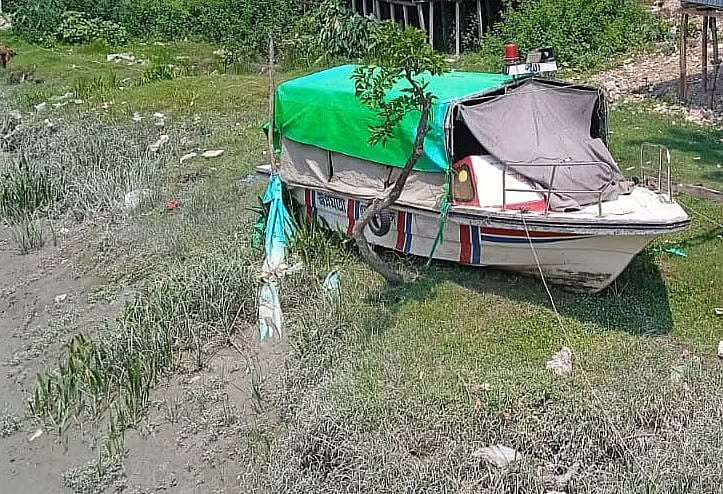
A few years ago, two water ambulances were provided for Sandwip, an island where crossing the channel to Chattogram can mean the difference between life and death for critically ill patients. It was a promising investment. Yet the boats spent much of their lives idle. Reports pointed to familiar reasons: no dedicated drivers, no operational staff, no budget for fuel or maintenance, and eventually deteriorating condition. The boats existed. The emergency service did not.
That story is about much more than two abandoned boats. It exposes a question that Bangladesh must increasingly confront as climate risks intensify: Do we measure success by the infrastructure we build, or by the services that continue to function long after the inauguration ceremony is over?
Bangladesh has rightly earned international recognition for its progress in climate adaptation. Cyclone shelters, embankments, resilient roads, flood protection works and water infrastructure have all contributed to saving lives and strengthening resilience. These investments deserve recognition.
But climate resilience is rarely determined by what is built. It is determined by what continues to work, year after year.
Too often, success is celebrated when a project is completed or a facility is inaugurated. Yet that is precisely when the harder work begins. Infrastructure only delivers value if the people responsible for operating, maintaining, repairing and improving it have the resources, authority and incentive to keep it functioning. If they do not, even the most sophisticated engineering gradually loses its purpose.
The distinction may seem subtle, but it is fundamental. A hospital building is an asset; healthcare is a service. A school building is an asset; education is a service. A water ambulance is an asset; emergency transport is a service. Climate resilience depends not only on the assets we create but also on the services they continue to provide.
Bangladesh's coastal water sector offers an instructive example. Over the years, hundreds of pond sand filters were installed to provide safe drinking water in areas affected by salinity. The technology addressed a genuine need, and many communities welcomed these investments. Yet a large number gradually fell into disrepair after being handed over to community management without long-term institutional and financial arrangements for operation and maintenance.
Broken pumps, clogged filters and missing spare parts often remained unattended because no organisation or individual had both the responsibility and the means to restore the service.
By contrast, many piped water supply systems established in similar coastal settings continue to function years after construction. The difference is not simply the technology. These systems are more likely to have designated operators, user tariffs that contribute to routine expenses, technical oversight, maintenance arrangements and institutions that remain accountable for service delivery. In other words, they were designed not only to build infrastructure but also to sustain a service.
The lesson extends well beyond water. Whether it is a water ambulance, a health centre, a cyclone shelter or a drinking water system, infrastructure lasts only as long as the service arrangements that keep it functioning.
This is why climate adaptation should be viewed not simply as an engineering challenge, but as a governance challenge.
One reason adaptation investments often struggle to realise their full potential is that incentives are concentrated at the beginning of the service chain. Funding is available to construct facilities and celebrate their completion. Far less attention is paid to the people and institutions responsible for ensuring that those facilities continue serving communities over the next ten or twenty years.
The result is predictable. Equipment fails and remains unrepaired. Skilled operators move elsewhere because there are few incentives to stay. Local enterprises capable of providing maintenance services struggle to survive because demand is uncertain or financing is unavailable. Communities gradually lose confidence in the very systems that were designed to strengthen their resilience.
This is not simply a question of financing, although financing is certainly part of the answer. It is fundamentally about how responsibilities, incentives and accountability are distributed across the entire service chain.
Encouragingly, Bangladesh already offers examples of a different approach. In Kushtia, improvements in water and sanitation services (especially for faecal sludge management) have been built not only through infrastructure, but also through stronger local governance. The municipality has brought together local government, communities and private enterprises with clearly defined responsibilities and shared accountability for service delivery. Facilities are operated rather than merely inaugurated, while local institutions continue to oversee performance and respond to changing needs.
The lesson is not that Kushtia has found a perfect model, but that resilience becomes more achievable when institutions are designed around sustaining services instead of simply delivering infrastructure.
As Bangladesh prepares for a future of rising temperatures, increasingly erratic rainfall, sea level rise and growing water stress, adaptation policies must evolve alongside engineering solutions. Every climate investment should answer a simple question: Who will keep this service functioning five, ten or twenty years after the project closes? If that question has no convincing answer, resilience remains incomplete.
This does not require abandoning infrastructure investments. It requires complementing them with equal attention to governance, sustainable financing, operation and maintenance, local capacity and institutional accountability. In short, every actor in the service chain, from government agencies and utilities to communities, technicians and private enterprises, must have both the means and the incentive to keep services running.
Bangladesh's greatest strength has never been simply its ability to build. It has been its willingness to learn, adapt and improve. Climate resilience is not built when the first brick is laid. It is built every day thereafter, by the people who operate, maintain, repair and finance the services that communities depend upon. If any one of them is forgotten, resilience itself begins to erode.
* Digbijoy Dey is an environment professional currently working for IRC Netherlands.