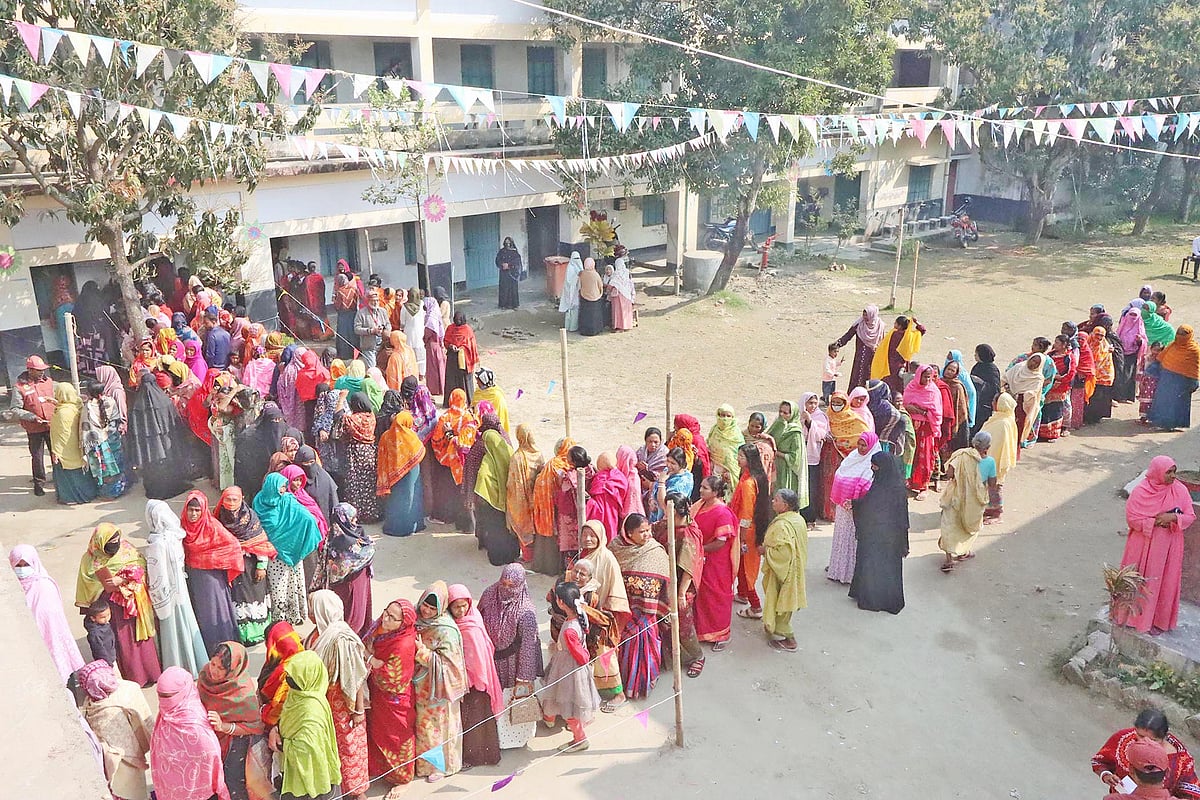
Ending all speculation and even rumours, perhaps the most important election in Bangladesh's history has taken place. Initially, it can be said that, for various reasons, the election exceeded the expectations of many of us. Incredibly, nearly everyone, except a very few, emerged victorious in this election. We'll discuss later who lost in this election (it's not the Jamaat coalition). There is room for a detailed discussion on how different parties won in this election. Let's briefly cover a few points.
BNP
Without the presence of the Awami League (and even if the party had participated), the BNP's victory in this election was expected, so there's little opportunity to view it as a major victory. However, given the eventual state of the election, there were doubts in some surveys whether the BNP would secure two-thirds of the seats. Many analysts were making such forecasts based on those surveys and personal experience. However, the BNP ended up winning a bit more than that. Typically, there is a tendency for political parties to become authoritarian when they come to power with a two-thirds majority. But in the existing situation in Bangladesh, where state institutions have been destroyed due to a long-standing autocratic system, a strong government is necessary. We will discuss this important issue separately later.
During the one-eleven government, Tarique Rahman was forced to leave the country and aided Begum Khaleda Zia in running the party from London. Later, although he served as the ''de facto'' leader, no election took place under his sole leadership until now. Following Begum Khaleda Zia's passing, this was the first time Tarique Rahman officially became the party's head, leading the party into the electoral battle with full power and authority, and needless to say, he achieved remarkable success. The nation's people were impressed by Tarique Rahman's strategy and presentation during the election campaign. His establishment as a leader in this manner is also a huge victory for the party, which will provide many advantages for his party in future politics.
Jamaat-e-Islami
The election results show that Jamaat-e-Islami secured one-third of the BNP's seats. This might give the impression that they were a major loser in the election. Especially since the party attempted to create significant hype online and offline about having a strong chance of winning this election, which many believed. Consequently, those people might consider Jamaat's results to be disastrous.
A coalition, which seeks to fight for power against another coalition in the election, must create such an illusion among the public. Otherwise, they would not have secured the number of seats they did. The number of seats recently secured by Jamaat-e-Islami, and the number of voters supporting them nationwide, is several times greater than any achievements they had previously. Moreover, securing significant seats in Dhaka city is also a major success. Simultaneously, the party has managed to create a perception among citizens that they might come to power. Various reasons contributed to Jamaat's incredible success, including the presence of BNP's rebel candidates in many constituencies and the complacency of many BNP candidates, but these factors do not diminish their achievements.
Government, Election Commission
Even with sufficient constitutional and legal powers, the Election Commission in Bangladesh cannot conduct a good election without full cooperation from the government. Therefore, we agreed upon a caretaker government during the election period in the July Charter.
The interim government showed considerable failure in maintaining law and order throughout its period. Questions about whether Bangladesh had effectively turned into a ‘mobocracy’ arose logically. In this fragile situation, how well the government, which had shown failures in other management areas, would conduct the election was a question among the public.
Even when the Chief Advisor stated that they were going to conduct the best election in history, there was no shortage of people who called it an exaggeration. But in the end, the overall management of the election and the performance of various government institutions in maintaining law and order were, in many cases, astonishing.
However, the two major opposing political parties acted very responsibly. The two main leaders of both parties maintained extreme dignity while criticising each other. For perhaps the first time in the political history of Bangladesh, we saw two top leaders refraining from even mentioning each other's party names while criticising their opposition.
Taking all of this into account, it can be said that the Election Commission did very well in this extraordinary election. And for this, Professor Yunus certainly has a significant claim to credit. This last success of his will surely overshadow many of his past mistakes.
Army Chief, Army
Since the fall of Sheikh Hasina, the Army Chief has been continuously attacked from various quarters, and various labels have been attached to his name. This was understandable—the gentleman had repeatedly expressed his stance on the election. Therefore, he fell out of favour with those wanting an indefinite term for the interim government. But with great patience, he kept the situation under control.
With the help of the interim government, the army actively worked to maintain law and order. Despite some criticisms due to certain shortcomings in daily law and order maintenance, the army played a remarkable role in the election, resulting in very few unpleasant incidents.
In the early days of August 2024, the army, under the current Army Chief's leadership, played a very important role in ensuring Sheikh Hasina's fall on behalf of the people. One and a half years later, they once again performed remarkably, playing a brilliant role in the country's democratic journey. This is surely their victory.
Who was defeated?
Those who wished to delay this election as much as possible were defeated. Having failed in that, those who wished and, in some cases, tried to rig the election in favour of someone were also defeated. From the time the interim government came to power until just a few days before the election, those who spread various misinformation and disinformation to confuse the public and dim the celebration of this election have also been defeated by the people of this country.
#Zahed Ur Rahman is a university teacher and political analyst.
*The opinions expressed are the writer’s own.
#This article, originally published in Prothom Alo print and online editions, has been rewritten in English by Rabiul Islam