I remember the words of a child’s face. A few years ago, I went to a primary school in Chattogram. A third-grade girl was saying, ‘Sir, if there were storybooks in the library, I would read every day. ’ There is no library. There are no storybooks.
There is an allocation for School Level Improvement Plan (SLIP), but there is no provision for purchasing storybooks with that money. The rules dictate buying something else. This single story presents us with the entire crisis of SLIP. The school is told to plan for its improvement. But what to buy, how much to buy, how to buy—everything is predetermined from Dhaka. Is this planning? This is following orders.
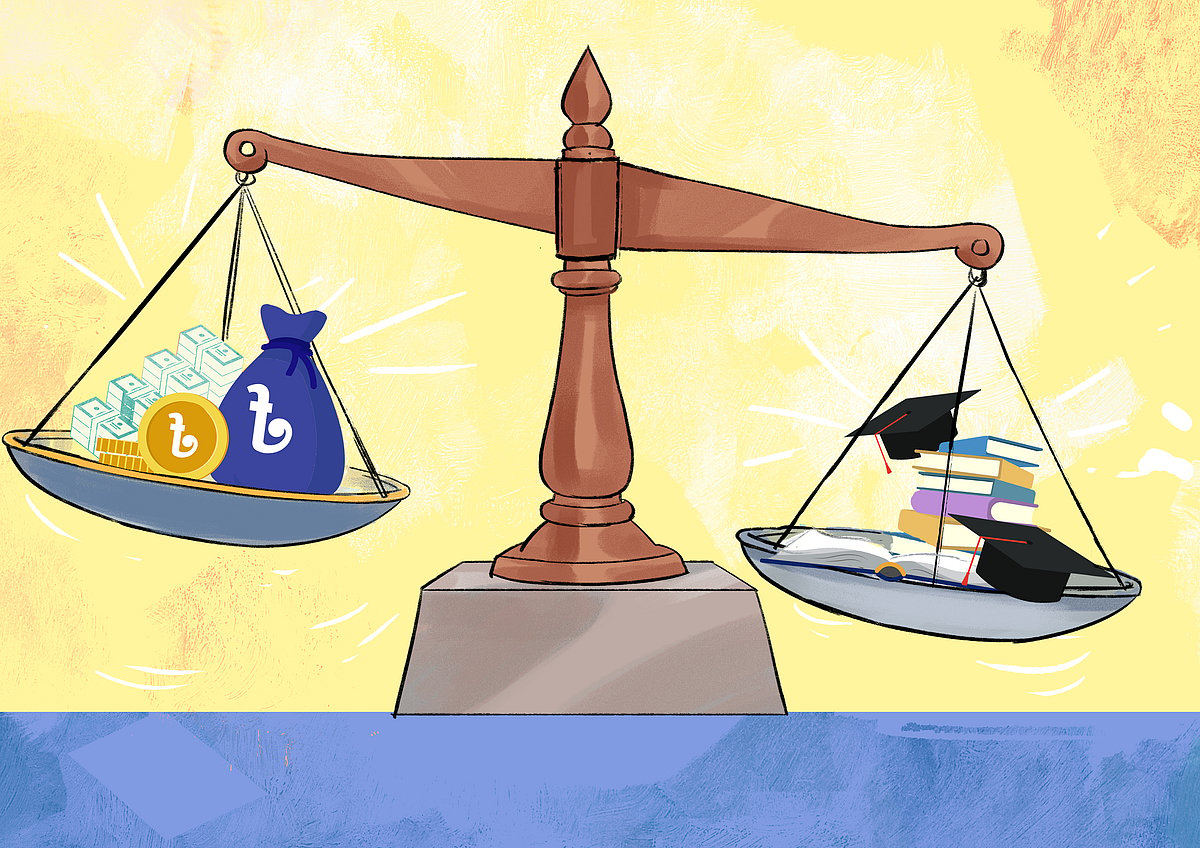
Recent research by PPRC has confronted us with a tough question—how much are we investing in primary education in Bangladesh, and how much of that is truly reaching the students? The number is not small. Every year, allocations are made to each school through SLIP. But VAT is deducted. Income tax is deducted. Transportation costs are incurred. There is a significant gap between what is granted and what reaches the schools. In many schools, out of Tk 30,000 allocation, the amount actually usable is Tk 22,000 to Tk 23,000.
Who tries to fill this gap? The head teacher. From his own pocket. This cannot be described as a normal picture of a system. It is an image of an unjust system. Research in education economics clearly states that how the money sent to the school is used and when it is used is more important than the amount. Harvard researcher Eric Hanushek has repeatedly shown that investment in education is effective only when schools get the flexibility to use that investment. That flexibility is not present in Bangladesh.
Second, one of SLIP's core promises was community engagement. School management committees, parent-teacher associations, social audit committees—these structures have been created. But research shows that in most cases, these have become formalities. Meetings happen. Signatures are recorded. But no one knows how decisions are made, where they are made. Awareness among parents is limited. Research has shown that most parents don’t even know what SLIP is. They are connected with the school, but not with SLIP.
This gap is serious. Because true community participation is not only a question of transparency, but also a question of quality improvement. A parent who knows how much money is coming to his child's school and where it is being spent can be a responsible partner. One who doesn’t know remains a mere spectator. In Brazil’s ‘Conselho Escolar’ or school council, parents truly determine budget priorities. In Indonesia, school annual plans are presented publicly and revised based on community feedback. Such avenues for meaningful engagement are yet to be created in Bangladesh.
Third, a topic that is discussed very little but is a big problem is the deduction of VAT and tax. VAT needs to be paid when purchasing educational materials. Income tax is deducted from the SLIP allocation. Transportation costs are borne by the school. Combined, these three swallow up a significant portion of the actual allocation before it ever reaches the classroom.
In international standards, keeping government investments in education free from taxes is a common practice. In India’s Sarva Shiksha Abhiyan, Sri Lanka, and Nepal, tax exemption is provided for purchasing educational materials. The reason is simple—imposing taxes on educational investments means taking back with one hand what was given with the other. In Bangladesh, at least reconsidering the VAT and tax deductions on SLIP allocations is necessary. The problem is easily solvable but has remained out of focus for a long time.
Fourth, a concept repeatedly emerging in government discussions on education reform now is foundational learning or foundational literacy and numeracy—abbreviated as FLN. In the UN’s SDG-4 and UNESCO’s global education discussions, FLN is at the centre. The core idea is simple—if a child finishes primary education without learning to read, write, and count, the rest of their education stands on a weak foundation. This foundation needs to be strengthened.
But in the current SLIP structure, there is no direct connection to FLN. Educational materials are purchased, but whether they are specifically selected for FLN or not is not observed. Schools submit plans, but those plans lack simple indicators for measuring student progress in learning.
This connection needs to be established. Each SLIP plan can add three to five simple indicators—how many students can read comfortably in the second or third grade, what is the attendance rate, how many teachers are contacting students’ homes if students are absent. These simple indicators can turn SLIP into a learning tool.
Five, smartphones are now readily available even in villages in Bangladesh. The internet has reached remote areas. The Integrated Primary Education Management Information System (IPEMIS) of the Directorate of Primary Education stores much school information. In this environment, creating a SLIP digital dashboard is no longer a fantasy, but a feasible reality.
The dashboard could contain each school’s plan, expenditure information, and attendance rates. Upazila education officers can provide digital approval. Parents could see what is happening in their child’s school on their mobile phones. Policymakers at the national level could know how things are progressing with a single click. Rwanda has done this. Odisha and Maharashtra in India have done this. Bangladesh has the technological capacity. What is needed is the political decision.
Sixth, Bangladesh is one of the most climate-affected countries. Every year, hundreds of schools are damaged by floods, cyclones, and tidal surges. Classes remain suspended for weeks. Students fall behind. Yet, disaster management allocations in SLIP are decreasing. There is no structural provision for creating a climate-resilient educational environment. The idea of a green school exists in policy documents, but it is practically absent from the SLIP expenditure list.
This is a significant gap. The fifth Primary Education Development Programme (PEDP-5) provides an opportunity to fill this gap. Special allocations should be made for climate-vulnerable schools. Disaster preparedness and green school initiatives need to be mainstreamed into SLIP. Bangladesh has its own experience—the multi-purpose cyclone shelter-cum-school model constructed on the coast. This experience can be incorporated into SLIP plans. The country’s knowledge, the country’s problem, the country’s solution.
Finally, I want to end with the words of that girl from Chittagong. She wanted storybooks. This is not a strange request. In any country in the world, a child can ask for storybooks in their school. It is their right. But in Bangladesh, the rule is that this money cannot be used to buy them. This small story illustrates a big failure. We are sending money to schools, but that money is not fulfilling the real needs of the child. This needs to change.
The reform of SLIP is not just an improvement of a programme. It is a specific path to changing the quality of education for millions of children. The government needs to show the courage to walk this path. Decisions need to be made quickly. Because the school year doesn’t stop, children continue to grow, and opportunities keep slipping away. At this moment of creating PEDP-5, student interest should be placed at the centre. All other decisions should be organised around it. Let this be our promise.
#Dr. Hossain Zillur Rahman is Executive Chairman, PPRC, and former Adviser to the Caretaker Government
*Opinions are the author’s own.
#This article originally published in Prothom Alo print and online editions, has been rewritten in English by Rabiul Islam