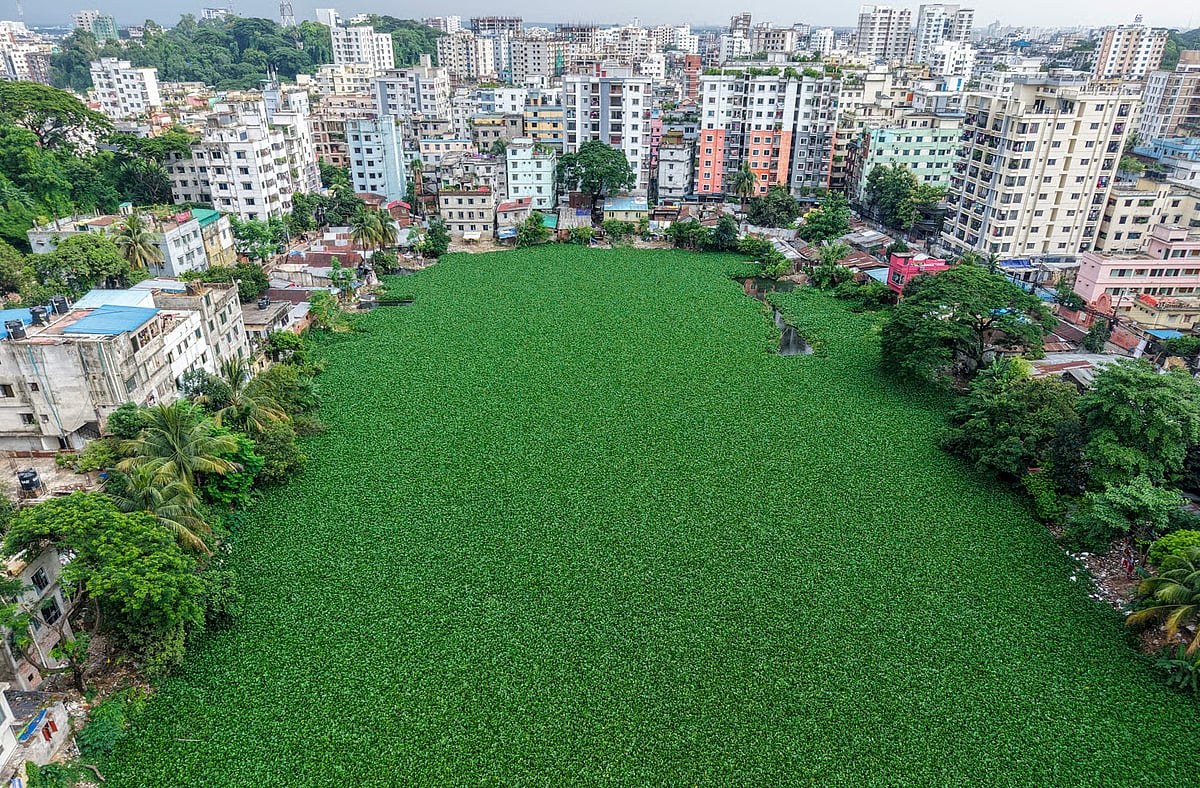
Historic Askar Dighi under threat of encroachment and pollution
Nothing about its current condition suggests that this is the historic Askar Dighi, located in the Jamalkhan area at the heart of Chattogram city. Water hyacinths have spread across the surface, giving the reservoir a blanket of green. Years of dumping plastic, polythene, and household waste have polluted the water and rendered it unsuitable for use. Yet this waterbody, which is more than 350 years old, once served as an important source of water for the city. It represents far more than a pond; it stands as a witness to Chattogram’s history, culture, and urban development. During the Mughal period, authorities named it after Askar Khan, the governor of Chattogram at the time. Environmentalists fear that, without proper conservation measures, one of the city’s most significant historic water reservoirs could lose its distinct identity and existence. The photographs were taken by Sowrav Das on 16 June 2026.