Opinion
School mapping essential to determine where and how many are needed
The government's initiative to establish model schools and colleges is certainly commendable. However, several important issues need to be taken into consideration. Over the years, successive governments have established new educational institutions across the country under the banner of "model" schools or similar initiatives. Before setting up more institutions, it is essential to undertake a comprehensive nationwide school mapping to assess the existing distribution of schools.
In other words, decisions on where new educational institutions are needed and how many should be established must be based on evidence and data. Government policy already specifies, according to population size and geographical distance, where schools may or may not be established. These guidelines are applied when institutions are brought under the Monthly Pay Order (MPO) scheme, although they have not always been followed in practice.
Experience shows that educational institutions have often been established in places where there was little or no need. In many cases, the influence of ruling party lawmakers played a role in those decisions. Such practices should not be repeated.
The needs of students must remain the overriding consideration, and new institutions should be established only where they are genuinely required. Model schools and colleges are undoubtedly necessary, but decisions on their location and number should be guided by the findings of a school mapping exercise. We must avoid a situation where schools are built in areas that do not need them while communities with genuine demand continue to be overlooked.
There are many existing educational institutions that could be transformed into model schools through modest investment, careful planning and effective supervision. Doing so would also represent better value for public money. For example, constructing an entirely new institution might cost Tk 1 billion (100 crore), whereas upgrading an existing one could require only around Tk 500 million (50 crore). School mapping could also help determine which institutions are best suited for such improvements.
Bangladesh could also draw lessons from Thailand. There, schools with poor public examination results receive intensive support and targeted interventions to improve their performance. A similar approach should be adopted here by identifying underperforming institutions and bringing them under structured improvement programmes. A comprehensive school mapping would help identify such schools.
Since the proposed model schools and colleges are expected to be established on a parliamentary constituency basis, it is equally important to ensure that the process remains free from political influence. In particular, members of parliament should have no role in teacher recruitment, student admissions or other administrative functions. As elected representatives, they can certainly contribute to overseeing the overall development and quality of these institutions, but they should not be directly involved in their day-to-day management.
Above all, the quality of these institutions must be sustained through regular monitoring and effective supervision. At the same time, equal emphasis should be placed on improving the standards of the country's existing educational institutions. Ultimately, our aspiration should be for every educational institution in Bangladesh to become a model institution.
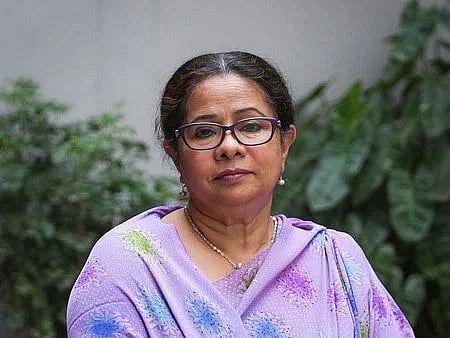
* Rasheda K Choudhury is a former adviser to the caretaker government