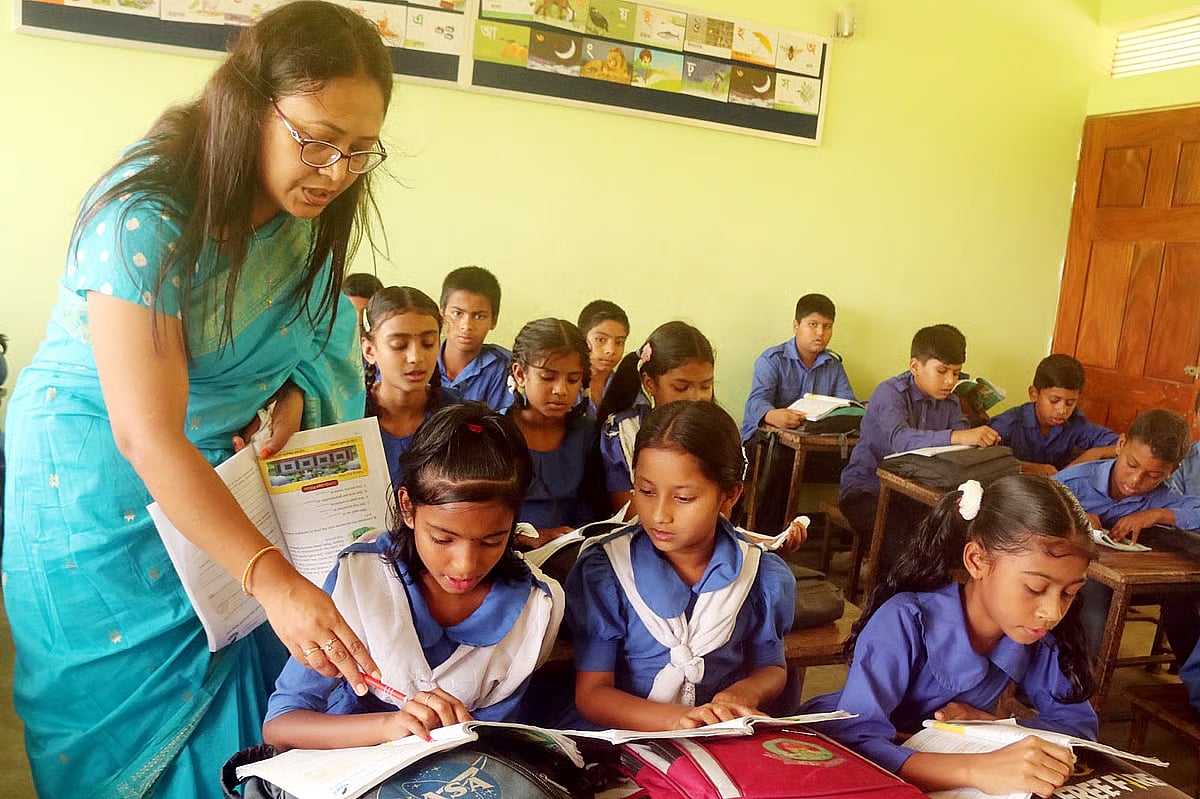
918 candidates did not join govt primary school
Although the employment situation is not particularly favourable in either the public or private sector, 918 candidates, who received appointment letters for the post of assistant teacher at government primary schools, did not join their jobs.
Government jobs have long been regarded as sought after because of intense competition, benefits and job security.
However, the fact that such a large number of candidates did not join despite receiving appointment letters has raised questions.
The post of assistant teacher is at Grade 13 under the government pay scale. Under the new pay structure for 2026, the starting monthly salary, including allowances, will be at least around Tk 36,000. This makes the job more attractive in terms of pay than before.
People familiar with the matter believe that many of those who did not join may already be employed elsewhere or involved in other work. This may be the reason why they did not take up the posts despite receiving appointment letters. However, the specific reasons for their decision are not known.
In Chattogram district, 551 candidates were finally selected and recommended for appointment as assistant teachers at government primary schools. Of them, 24 did not submit the required documents. The remaining 527 submitted the documents needed to receive appointment letters. Appointment letters were issued to 525 of them, while two did not receive letters. But 64 of those who received appointment letters did not join the job.
Like Chattogram, a total of 918 candidates across 61 districts received appointment letters but did not join their jobs. 1 October was the joining date. Orientation programmes on their jobs are now being held at the upazila level for those who joined. The newly appointed teachers will be posted to schools on 11 October. Normally, those who fail to join within the stipulated period are not given another opportunity to take up the job.
Controversy over recruitment
Based on the results of the Directorate of Primary Education’s Assistant Teacher Recruitment Examination 2025, recruitment was conducted for 14,385 posts across 61 districts. A total of 14,384 candidates were finally selected based on the examination results. The Directorate of Primary Education published the final results on 8 February, at the very end of the interim government’s tenure and shortly before the national election.
Under the rules, the candidates were then supposed to undergo verification before receiving final appointments.
Initially, the district primary education offices published the list of appointed candidates on 24 September. However, it was found that the first appointment list did not include the names of a large number of candidates who had previously been recommended. Candidates who had been recommended said at the time that more than 2,000 people had been excluded.
Sources familiar with the matter said a large portion of the recommended candidates did not receive appointment letters in the first list because of negative comments from intelligence agencies. The excluded job seekers then staged protests in Dhaka, including at Shahbagh, and in various districts demanding appointments. Widespread criticism also emerged on social media.
The issue was also covered by the media. The government subsequently began gradually adding the excluded candidates to the appointment lists. Eventually, most of them received appointment letters. However, some remained excluded.
According to sources at the Directorate of Primary Education, more than 80 candidates across the 61 districts have still not been given appointment letters. Some of them are facing complications, including cases filed against them.
Those who received appointment letters were scheduled to join on 1 October. According to data from the Directorate of Primary Education, 13,831 of the selected candidates submitted the documents required for appointment as assistant teachers. Another 553 did not submit the documents. In other words, they decided not to proceed to the next stage of the recruitment process.
Of those who submitted the required documents, 13,748 were issued appointment letters. Of them, 12,830 joined their jobs. This means 918 candidates who received appointment letters did not join. The remaining candidates did not receive appointment letters.
An official of the Directorate of Primary Education told Prothom Alo that the figure could vary by one or two.
New questions amid teacher shortage
Whether someone joins a job is a personal decision. However, the fact that so many candidates did not join could create an additional problem amid the existing teacher shortage in government primary schools. This is because it takes considerable time to complete a recruitment process and bring in new teachers.
There are 65,567 government primary schools in the country, with more than 10 million students. They have around 375,000 teachers. The teacher shortage at these schools is also growing. More than 36,000 posts of headteacher remain vacant. This means more than half of government primary schools do not have a headteacher. At the same time, several thousand posts of assistant teacher are also vacant. The lack of sufficient teachers is disrupting normal classes at many schools.
Meanwhile, following a ruling by the country’s highest court in July, the Ministry of Primary and Mass Education said it would begin the process of promoting teachers to fill the more than 36,000 vacant headteacher posts at government primary schools.
Under the current recruitment rules, 80 per cent of headteacher positions at primary schools are filled through promotion of assistant teachers, while 20 per cent are filled through direct recruitment. Therefore, if assistant teachers are promoted to fill the 36,235 vacant headteacher posts, a large number of assistant teacher positions will also become vacant.
Against this backdrop, the decision by 918 candidates to not join despite being finally recommended and receiving appointment letters adds a new dimension to the teacher shortage in primary education. At the same time, when people are struggling to find jobs amid a downturn in the labour market, the reasons why so many candidates declined government jobs after receiving them have also raised questions.
Mohammad Abdur Rahim, additional director general of the Directorate of Primary Education, told Prothom Alo that the directorate has been affected because more than 900 candidates did not join as assistant teachers.
However, whether to join a job is a matter of individual choice. It can be assumed that these candidates may have received better jobs. Many may have been pursuing several jobs at the same time. Ultimately, they chose the job they considered better. This happens, to varying degrees, in recruitment for almost all types of jobs.