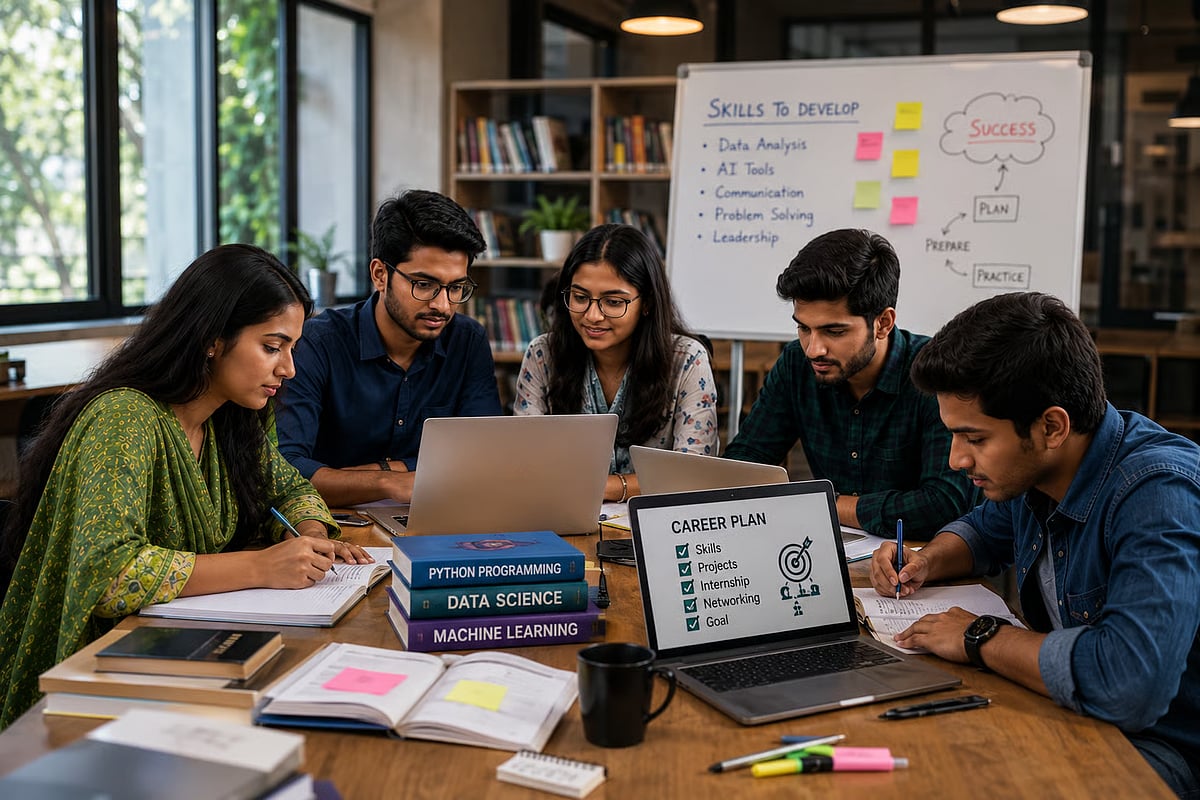
For decades, our universities have provided students with a strong academic foundation. They have nurtured analytical thinking, disciplined learning and self-discipline.
We should not underestimate these contributions in any way. However, the time has come to build a new layer on top of that foundation.
At the beginning of my career, while working in the corporate sector, I spent months conducting field research to understand customers and their needs.
Through that process, I learned how to ask the right questions and identify emerging patterns and trends. Today, artificial intelligence (AI) tools can present the same information within minutes.
As a result, the most important skill has now become the ability to ask the right questions. Human beings must still develop that capability themselves. Universities play a vital role in cultivating this curiosity among young people.
However, students still have some limitations in applying and using AI tools. The more universities expand opportunities for hands-on experience with AI within their curricula, the more quickly students will understand how these technologies work.
During my time in the telecommunications industry, I saw that professionals who relied solely on technical expertise often reached a career ceiling. In contrast, those who combined technical knowledge with emotional intelligence and the ability to think deeply progressed into leadership positions.
Technical skills or human qualities?
Over my 16-year career, I have observed that the person who wrote the best code was not always the most influential person in the room.
Instead, the professional who could transform a complex idea into a compelling story, inspire a team and resolve conflicts effectively was the one who ultimately advanced furthest.
During my time in the telecommunications industry, I saw that professionals who relied solely on technical expertise often reached a career ceiling.
In contrast, those who combined technical knowledge with emotional intelligence and the ability to think deeply progressed into leadership positions.
Artificial intelligence can write code and analyse data, but it cannot genuinely empathise with a grieving customer or exercise sound judgement in such situations.
Nor can it rebuild the confidence of a demoralised team. Technical competence may help you gain entry through the door, but it is your human qualities that will enable you to remain and succeed.
Will AI increase job losses?
I have observed this challenge at close quarters. At our financial technology company, we previously recruited young professionals to carry out tasks such as preparing routine reports and handling meeting and presentation materials. Today, AI can perform those tasks with ease. This is a reality, and there is no benefit in denying it.
Even so, I see a significant opportunity within this challenge. Entry-level jobs once focused mainly on carrying out instructions. Today, they should centre on completing work with the assistance of AI while applying human judgement.
A young professional who can use AI to complete tasks ten times faster while adding their own critical thinking to the final outcome is no longer merely a junior employee, they become a new source of strength for the organisation.
Rather than viewing AI as a threat, students should begin tackling real-world problems while they are still at university.
Through personal projects, voluntary work and creative competitions, they should continue using AI to develop practical solutions to genuine problems.
Artificial intelligence is not an opponent
Let me begin with my own experience. When I first started using artificial intelligence (AI), I also felt a sense of hesitation. I wondered whether AI would diminish my creativity.
However, after working with it for a short time, I quickly realised that it was not replacing my creativity; rather, it was multiplying it several times over.
I now see AI as a brilliant but inexperienced apprentice. It possesses extensive knowledge, yet it lacks practical experience.
Although it has memorised a great deal of information, it has not fully mastered many aspects of real-world application. This creates an opportunity to guide and control AI effectively through clear and precise instructions.
My advice to students is that understanding AI is not simply about treating it as a tool for casual conversations. The greatest advantage today lies in knowing exactly what question to ask and when to ask it.
While studying in Australia, I learned that the time required to master a new skill is steadily decreasing. In the past, it might have taken 10 years to become highly proficient in a particular field. Today, it may take only three years.
During my own 16-year career, I moved from the corporate sector to telecommunications and later from telecommunications to financial technology. Every transition required me to acquire new skills or adapt existing ones to a new environment.
My eagerness to learn made me stronger with every change. I also learned how to turn my fears into motivation for moving forward.
My advice to students is that lifelong learning is not simply about completing a particular curriculum or course. You must make curiosity a permanent part of your life.
Maintain a daily desire to learn something new. You should also learn to challenge your comfort zone repeatedly and make that a regular practice.
Remember one thing: artificial intelligence is not something that belongs to the future, it has already arrived. The real question is: "Will you learn to walk alongside it, or will you simply stand by and watch it move ahead without you?"