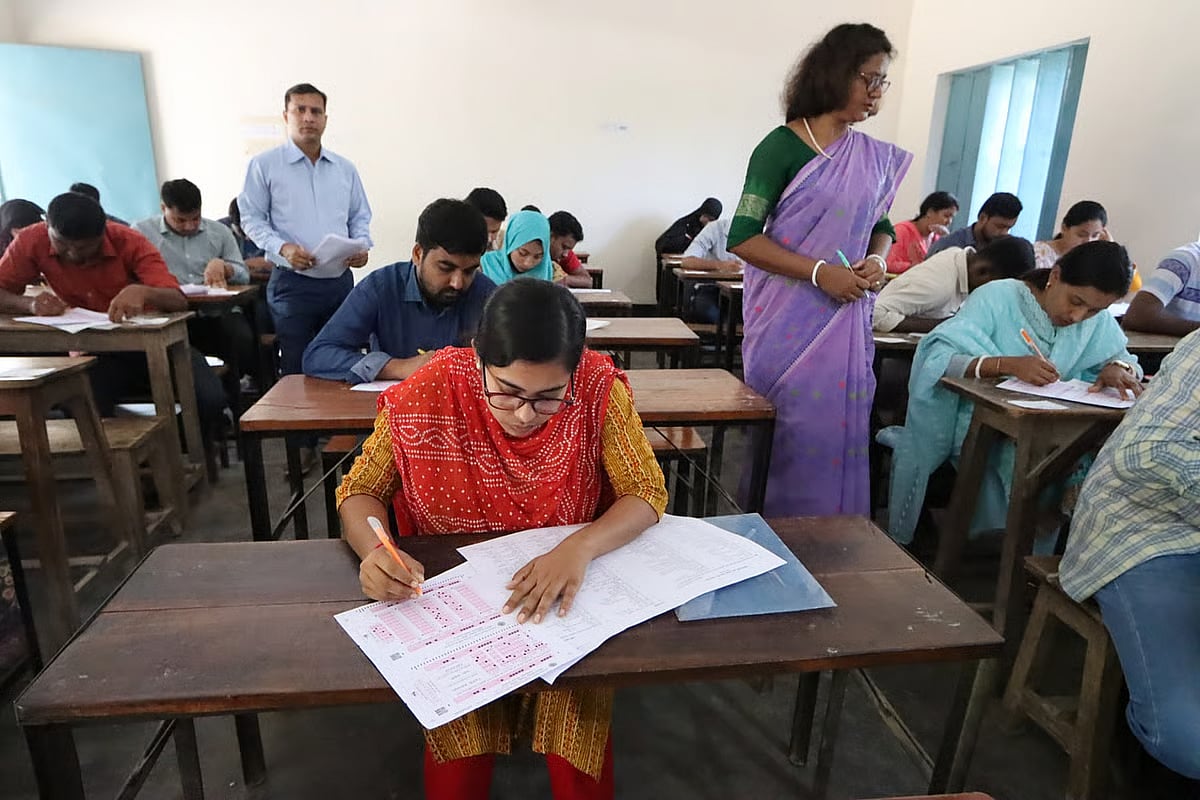
18th Teacher Registration Exam results: Nearly 60,000 teaching positions vacant, what NTRCA will do
The final results of the 18th Teacher Registration Examination have been announced. A total of 1,865,719 candidates applied. After a lengthy process, only 41,000 candidates have been recommended. However, the demand for vacant positions from across the country was 182,200. As a result, nearly 60,000 positions remain vacant in private educational institutions.
People involved in education expressed surprise at the failure to fill such a large number of vacancies. They said qualified candidates are not being found comparing to the vast number of applicants, and that raises new questions about the quality of the education system.
From preliminary to viva: Dropout in phases
According to the information from the Non-Government Teacher Registration and Certification Authority (NTRCA), a total of 1,340,833 candidates participated in the preliminary examination of the 18th Teacher Registration. Among them, 479,981 candidates passed. A total of 348,680 candidates took the written exam and 83,865 of them passed. 81,209 candidates participated in the viva examination, and ultimately 60,634 candidates passed.
However, despite passing the examination, it was not possible to recommend everyone for recruitment. The NTRCA has stated that approximately 20,000 successful candidates were not included in the list of recommendations due to failure to meet the recruitment conditions. Consequently, in the end, 41,000 individuals were recommended for employment.
Unavailability of qualified candidates
NTRCA member (joint secretary) Iradaul Haque told Prothom Alo. “We are not finding qualified candidates under. In many cases, candidates cannot even meet the eligibility requirements for teacher registration. There are nearly 8,000 vaccines for Moulvi posts at ibtedai level, but only 900 candidates have passed. Similarly, for the Assistant Teacher (Fine Arts) position, there are almost 9,000 vacant posts, but only 500 candidates have qualified. The biggest challenge right now is not being able to find qualified candidates.”
Education experts say that the failure to fill such a large number of vacant posts raises questions about the quality of education in the country. They believe that a significant portion of highly educated young people are unable to survive in the competition of the job market.
Similar reflection in previous examinations
The results of the previous examinations by NTRCA are also indicating similar trends. In the 16th Teacher Registration Examination, about 950,000 candidates participated, out of which only 18,500 were finally successful. In the 17th Teacher Registration, 2,410,962 candidates applied, but only 23,000 candidates ultimately passed. Although the pass rate in the 18th registration is somewhat higher, it is still insufficient to meet the demand for filling the positions.
Unemployment among the highly educated
A recent report from the task force on inclusive and sustainable development said the unemployment rate is highest among the highly educated in the country. Among every 100 unemployed individuals, 28 are highly educated. The results of the teacher registration exam also clearly reflect that reality.
Professor S M Hafizur Rahman of the Institute of Education and Research at Dhaka University told Prothom Alo that there have been questions about the quality of education for many years. The inability to find qualified candidates for teacher recruitment is exacerbating this issue. For 182,200 positions, only 41,000 recommendations have been received. So, 60,000 positions remain vacant. In the 16th and 17th Teacher Registration Examinations, there were also vacant positions. How can our educational institutions function with such a large number of vacancies? This is currently a big question. A special teacher recruitment exam should be conducted on an urgent basis to fill all vacant positions. However, before that, teachers’ salaries, promotions, transfers, and other benefits need to be increased. If steps are not taken to improve teachers’ living standards, talented individuals will not join the teaching profession. Every year, positions will remain unfilled.
Quality education and challenges
Academicians believe that the high number of applicants for the teacher registration exam, reaching into the hundreds of thousands, without a corresponding number of qualified candidates, serves as a major warning for the country's educational system. According to them, merely possessing a degree is not sufficient to become a teacher; one also needs the right skills, subject-specific knowledge, and systematic teaching abilities. A senior official from the Ministry of Education, speaking on condition of anonymity, stated, ''The challenges we face in teacher recruitment are actually a reflection of the entire educational system. If we fail to ensure quality education from primary to university level, this crisis will only deepen.''
What would happen next?
It is feared that many institutions will face a shortage of teachers in the upcoming academic year due to nearly 60,000 vacancies remaining unfilled in the 18th Teacher Registration Examination. However, the NTRCA has stated that efforts will be made to gradually fill these positions through the next registration examination and special recruitment programs.
The Chairman of the NTRCA, Mohammad Aminul Islam, told Prothom Alo, ‘Due to the lack of quality candidates, many positions are left vacant every year. This disrupts the educational process. To resolve the crisis, we are preparing a set of recommendations, which will be sent to the Ministry of Education soon.’
Experts suggested that merely increasing recruitment activities will not solve the problem. Initiatives for quality improvement must be taken at the stage of teacher training. Otherwise, there will be a significant number of vacant positions every year, and questions regarding the quality of education will inevitably arise.