Barbed-wire fencing along the border
This Bangladesh is no longer Bangladesh of the Past: Humayun Kabir
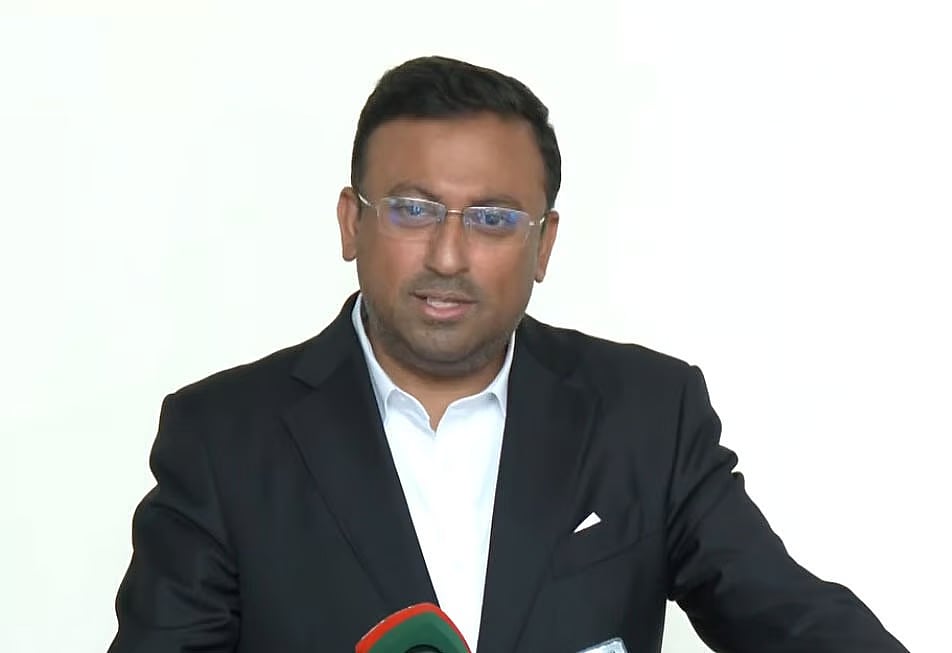
Prime Minister Tarique Rahman’s foreign affairs adviser Humayun Kabir has said Bangladesh will no longer bow down over border issues. “This Bangladesh is not the same Bangladesh of the past,” he said.
He added that neither the people nor the government of Bangladesh is afraid of barbed-wire fencing. Bangladesh, also has its own plans regarding the border, he said.
Humayun Kabir made the remarks while responding to questions from journalists at the Ministry of Foreign Affairs on Monday afternoon.
The newly elected BJP government in West Bengal has announced that it will hand over land to India’s Border Security Force (BSF) within 45 days for the construction of barbed-wire fencing along the international border with Bangladesh.
West Bengal Chief Minister Suvendu Adhikari made the announcement Monday after the first cabinet meeting of the new government at the state secretariat in Howrah.
“The necessary land will be handed over to the BSF within 45 days. The chief secretary and the land and revenue secretary have been assigned responsibility for this,” he said.
When asked about the West Bengal government’s new decision, Humayun Kabir said, “A new government has now been formed in West Bengal. Election rhetoric can often be extreme, and people sometimes make inappropriate or even vulgar remarks to win votes. But governing in reality is a different matter.”
“Let us wait and see whether the BJP government in West Bengal wants to pursue the same approach in governance as in its rhetoric. Our relationship is primarily with the central government. We do not want to interfere in their internal politics,” added he.
Humayun Kabir further said, “There is no longer any scope to intimidate a country like Bangladesh with barbed-wire fencing. If anyone wants to build relations with the people, they should know that the people of Bangladesh are not afraid of barbed wire. Do you understand? The government of Bangladesh is not afraid of barbed wire either. Where we need to speak, we will speak.”
Of course there will be challenges, and in some cases major ones. But, when the door to dialogue remains open, some initiatives can be taken to resolve them. Some issues will be resolved quickly, while others will take time.Humayun Kabir, Foreign affairs adviser to Prime Minister Tarique Rahman
The adviser also said Bangladesh wants regional stability and peace and seeks dialogue with neighbouring and regional countries, while all sides wish to maintain a sincere relationship.
Challenges, he said, will always remain.
“Hasina, a terrorist who fled after killing 1,500 people, is now in India, on sovereign Indian territory. It must also be ensured that no instability is created from Indian soil and that she is not given any such opportunity. We hope, and we have also been assured by the Indian government, that they will not allow that scope,” Humayun Kabir stated.
Emphasising the commitment of the leaderships of both countries to advancing bilateral relations, Humayun Kabir said, “If we want to move bilateral relations forward, then the leadership of both countries must have that mindset and commitment. Despite the challenges, there is a commitment to move forward with this.”
“Of course there will be challenges, and in some cases major ones. But, when the door to dialogue remains open, some initiatives can be taken to resolve them. Some issues will be resolved quickly, while others will take time,” he added.
When asked about Bangladesh’s position regarding India and China in the Teesta project, Humayun Kabir said the BJP has now formed the government in West Bengal. India’s central government had long maintained that the Teesta water-sharing agreement could not be signed because of the Trinamool Congress government in West Bengal.
China is an important bilateral partner of Bangladesh. We will further strengthen this relationship. A new opportunity has emerged to take ties to a new height. China is also interested in working with Bangladesh under the leadership of Prime Minister Tarique Rahman.Humayun Kabir, Foreign affairs adviser to Prime Minister Tarique Rahman
“Now the Trinamool Congress is no longer in power there, and the BJP is in power both at the centre and in the state. We hope there will now be fewer obstacles to advancing discussions on the issue,” he said.
China’s Exim Bank to finance Teesta project
When asked about the foreign minister-level meeting between Bangladesh and China, Humayun Kabir said Bangladesh’s relationship with China is historic, adding that it was initiated by former president Ziaur Rahman. He said this was the first visit to Beijing by the new government.
“China is an important bilateral partner of Bangladesh. We will further strengthen this relationship. A new opportunity has emerged to take ties to a new height. China is also interested in working with Bangladesh under the leadership of Prime Minister Tarique Rahman,” he said.
When asked what kind of assistance Bangladesh had sought during the meeting, he said, “We discussed all aspects of the relationship. There were positive discussions on the Teesta issue as well, though not in detail. China’s Exim Bank will finance the project.”
When asked when work on the Teesta project would begin, the adviser said the survey report and its recommendations now needed to be reviewed, while further discussions were still pending. He said more time would be needed for detailed talks.
Responding to a question about the prime minister’s possible visit to China and the prospect of signing a Teesta agreement during the trip, Humayun Kabir said the visit had not yet been finalised.
“It has not yet been decided where the prime minister will visit first or when. It will be announced once finalised. As China is an important partner, the prime minister will certainly visit Beijing. The visit will be finalised at a convenient time through future discussions,” he said.