CPD Study
Student enrolment declining at primary and secondary levels
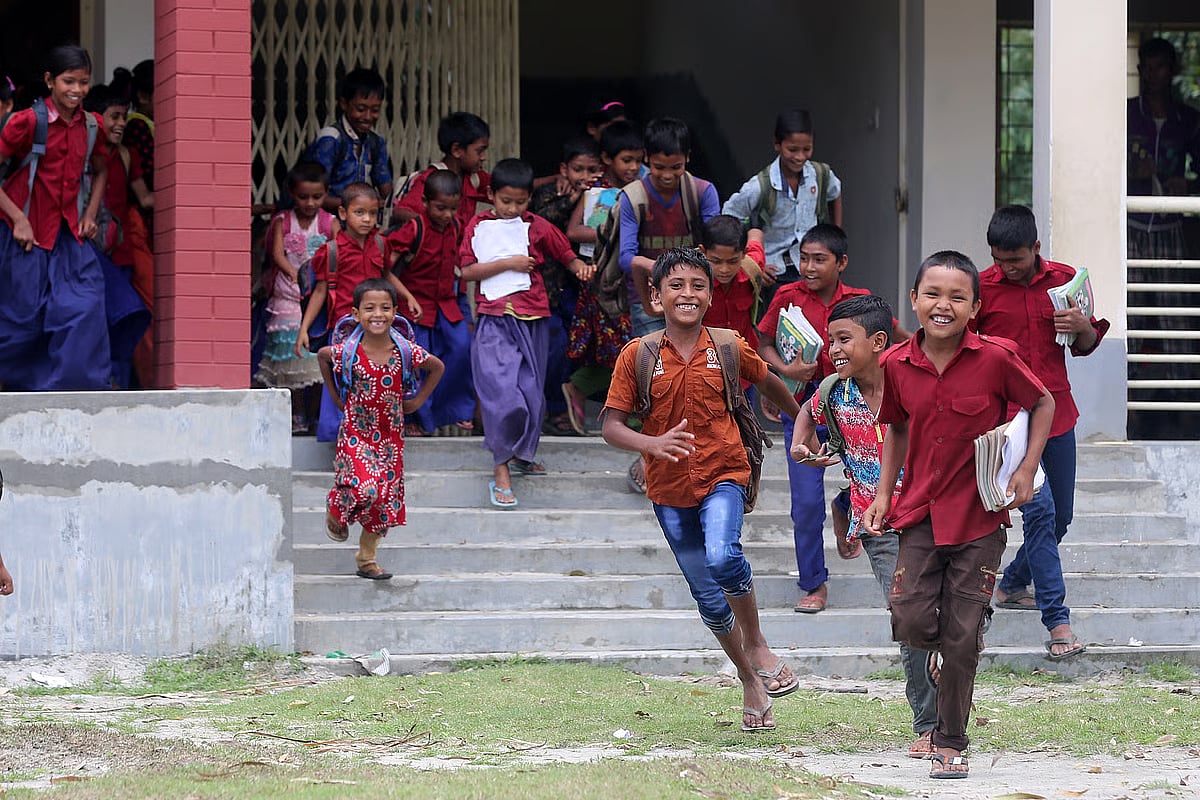
Student enrolment at both primary and secondary levels is declining in Bangladesh. Compared with 2024, enrolment at the primary level fell by seven per cent in 2025. Meanwhile, between 2019 and 2022, enrolment in secondary schools dropped by 21.5 per cent compared with the number of students completing primary education.
These findings have emerged from a new study conducted by the research organisation Centre for Policy Dialogue (CPD). The results of the study titled 'The Education Sector in the Coming Days in Light of the Election Manifesto: New Thinking, New Structure and New Steps'. were presented Monday morning, at a dialogue held at a hotel in Gulshan, Dhaka.
The research paper was presented by Towfiqul Islam Khan, additional research director at CPD. Presenting the findings, he said that the dropout rate among boys is higher due to a rise in child labour in the country caused by financial pressures. The dropout rate due to child labour has risen to 9.2 per cent. The study also found that child marriage is increasing the dropout rate among girls. Currently, the dropout rate linked to child marriage stands at 38.9 per cent.
The dialogue was chaired by Debapriya Bhattacharya, convenor of the Citizen’s Platform and distinguished fellow at CPD. In his welcome remarks, he said that achieving Bangladesh’s development goals, reducing poverty and inequality, and keeping pace with the technology-driven global order require a modern education system of international standards. Ensuring access to education for disadvantaged groups in society is particularly important.
Speaking as the chief guest, state minister for primary and mass education Bobby Hajjaj said the government plans to introduce pilot projects in phases to bring reforms to the education system and later implement them on the national level. Decisions in this regard will be taken through consultations with teachers, educational institutions and all other stakeholders concerned.
He added that before implementing any reform in the education sector, the government will consult all relevant stakeholders. Some initiatives will then be introduced experimentally as pilot projects and, if successful, expanded nationwide. For an example, Bobby Hajjaj said that several pilot projects aimed at regulating the coaching industry will be launched within the next six months. If successful, the government aims to reduce reliance on coaching within the next three years.
The government plans to introduce pilot projects in phases to reform the education system and later implement them on national level.Bobby Hajjaj, state minister, Ministry of Primary and Mass Education
Pass rates rising but skills lacking
While presenting the research paper, Towfiqul Islam Khan said that students’ learning outcomes declined in 2022 compared with 2013. Although GPA scores and pass rates have increased in the country, the study found a significant lack of real skills and creativity among students.
The research also highlighted inadequate investment in education. According to recommendations by the United Nations Educational, Scientific and Cultural Organization (UNESCO), countries should allocate 4-6 per cent of GDP to the education sector. However, Bangladesh’s allocation has declined to 1.7 per cent, while actual expenditure stands at only 1.3 per cent. The study also identified deficiencies in quality and governance within the education sector.
Towfiqul Islam Khan said the crisis in Bangladesh’s education system is not only about resources or funding but also about perspective and proper planning. To meet future demands, education should not merely be a means of obtaining certificates but should be developed as a platform for critical thinking and skill development.
Mahdi Amin, adviser to the prime minister on the Ministry of Education and the Ministry of Primary and Mass Education, said that reducing inequality in the education system and expanding access to quality education are among the government’s key goals.
Speaking as a special guest at the dialogue, he noted that alongside the three streams of education- Bangla medium, English medium and madrasa- the limited number of seats in good government schools has created intense competition for admission. Changes in the admission policy are being considered as part of broader educational reforms.
Education has still not been recognised as a citizen’s right in the Constitution. It needs to be established as an enforceable right for citizens.Rasheda K Chowdhury, executive director, Campaign for Popular Education
Education should not become a partisan agenda
Taking part in the dialogue, Rasheda K Choudhury, executive director of Campaign for Popular Education (CAMPE), called for keeping the country’s education sector free from partisan interests. She said education may certainly be a political priority, but it should by no means turn into a party agenda.
Rasheda K Choudhury, a former education adviser to the caretaker government, also emphasised the need to ensure quality education for all. Calling for education to be recognised as a citizen’s right, she said it is still not acknowledged in the Constitution as a basic right of citizens. Rather, it is mentioned as a responsibility of the state. In her view, education should be established as an enforceable right of citizens.
Mustafizur Rahman, distinguished fellow at the Centre for Policy Dialogue, urged policymakers to view education not merely as a political agenda but as the foundation of the country’s future economic capacity. He said that without developing a skilled workforce, Bangladesh will fall behind in global competition.
Referring to the need to increase investment in the education sector, Mustafizur Rahman said it is not enough simply to mention spending a certain percentage of GDP. The overall size of the economy must also be taken into account. As the size of GDP grows, investment in education will naturally increase. At the same time, he added, how much can be reallocated from other sectors is also an important policy question.
Four recommendations to address the crisis
The study presented four recommendations to address the existing crisis in the country’s education sector. These include gradually increasing the allocation for education to five per cent of GDP, improving core textbooks and classroom teaching to reduce reliance on guidebooks and private tuition, participating in international assessments to keep pace with global standards, and placing the highest priority on teacher recruitment and training.
Shafiqul Islam Masud, a member of the central executive council of Bangladesh Jamaat-e-Islami and member of parliament for Patuakhali-2, said that even more than five decades after independence, the country has not been able to establish a long-term and stable education policy.
As a result, changes in government are often accompanied by shifts in education policies and structures, which destabilise the entire system. He therefore called for the formulation of a permanent national education policy.
Others who spoke at the dialogue included Syed Rashed Al-Zayed Josh, senior economist (education global practice) at the World Bank; Munia Islam Mozumder, chief executive officer of Teach For Bangladesh; Samir Ranjan Nath, programme head at the BRAC Institute of Educational Development; Nadia Rashid, development and education expert; Asif Ibrahim, core group member of the Citizen’s Platform for SDGs, Bangladesh and vice-chairman of New Age Group of Industries; and Rubaiya Morshed, assistant professor of economics at the University of Dhaka.