Energy crisis
Fish catch declines by at least 10pc
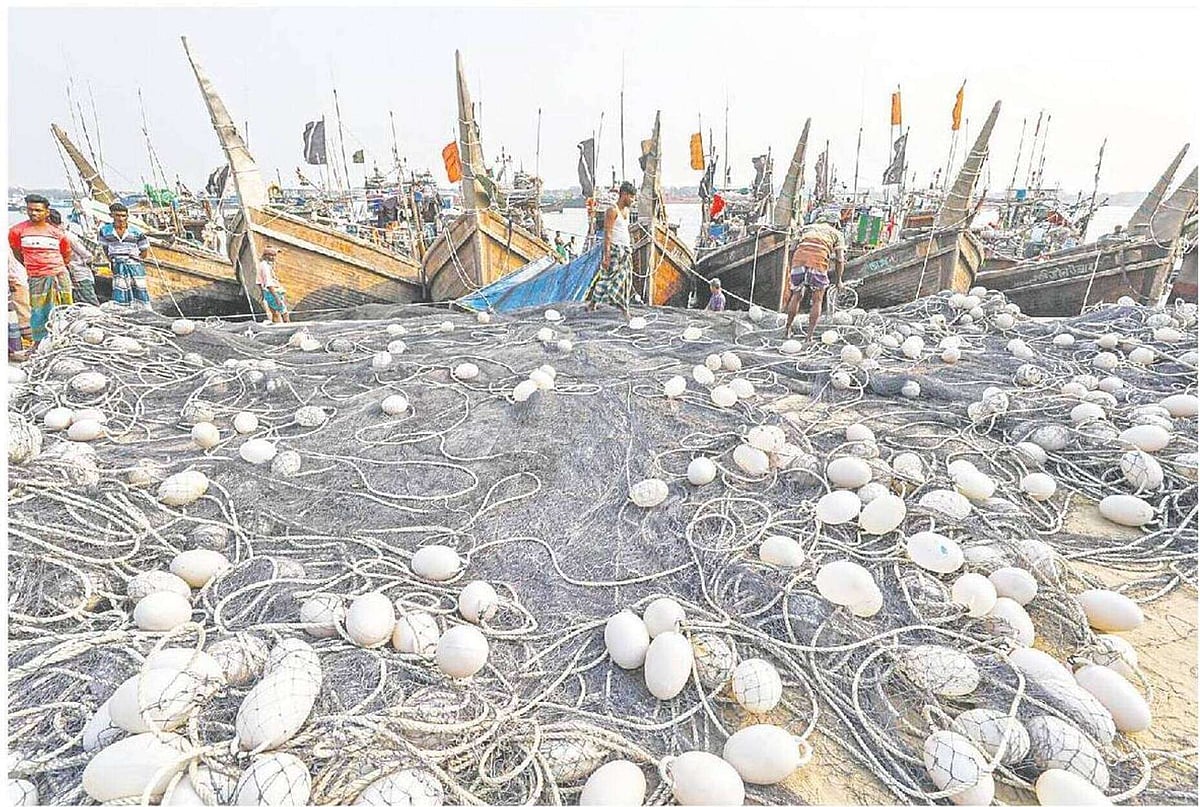
Due to the shortage of fuel, many commercial vessels and wooden fishing vessels (trawlers) operating in the country’s maritime zones are unable to go to sea regularly. As a result, fish catches have declined for both coastal fishermen and commercial vessels.
Since the fuel crisis began in February, fish harvesting from the sea has dropped by 10–15 per cent, according to the Marine Fisheries Office and concerning officials.
According to the Marine Fisheries Office, around 30,000 boats and commercial vessels are engaged in marine fishing in the country. On average, these vessels catch about 10,000 tonnes of fish and shrimp per month.
However, due to the recent fuel shortage, many vessels are unable to go to sea regularly. Even those that do are spending less time at sea. Additionally, increase in jellyfish, rough seas and adverse weather conditions have also contributed to the decline in fish catches.
There are two types of fishing vessels operating at sea in the country: relatively small, coastal “artisanal fishing boats” and large commercial vessels operating in deep waters. There are 29,671 registered artisanal boats and 268 commercial fishing vessels.
Since the fuel crisis began in February, fish harvesting from the sea has dropped by 10–15 per cent, according to the Marine Fisheries Office and concerning officials.
According to coastal fishermen and the Marine Fisheries Office, artisanal boats have a fish-holding capacity ranging from 500 to 5,000 kilograms. These vessels typically stay at sea for 12 to 15 days and require between 200 and 1,000 litres of fuel per day.
Md Zaherul Haque, statistics officer at the Marine Fisheries Office, said that statistics for February and March are yet to be compiled. However, fish catches during these two months may have declined by 10 to 12 per cent compared to normal times.
Fishing halted
The United States and Israel started the attack on Iran on 28 February. In response, Tehran launched retaliatory strikes, leading to rising global fuel prices. This has also caused instability in the domestic fuel market, with long queues forming at filling stations.
Due to the fuel shortage, coastal fishermen in districts such as Chattogram and Cox’s Bazar are now unable to go to sea regularly. According to fisheries officers and fishermen in the respective districts, these relatively small vessels are diesel-powered, and the lack of fuel is forcing them to remain idle even at the peak of the fishing season.
Statistics for February and March are yet to be compiled. However, fish catches during these two months may have declined by 10 to 12 per cent compared to normal times.Md Zaherul Haque, statistics officer, Marine Fisheries Office
Delwar Hossain, general secretary of the Cox’s Bazar Fishing Boat Owners’ Association, said that at least 4,000 trawlers in the district have halted fishing due to insufficient diesel supply.
The limited fuel available only allows boats to travel 10 to 12 kilometres from the coast, whereas fishing typically requires travelling 40 to 50 kilometres offshore, he added.
The Chattogram District Fisheries Office reported that 5,000 to 6,000 vessels in the district are currently unable to go to sea. These non-mechanised vessels require 120 to 150 litres of diesel daily, but are receiving only 25 to 30 litres.
Amid this situation, a 58-day ban on fishing in the sea will begin on 15 April. During this period, all types of fishing in the Bay of Bengal will be prohibited to conserve marine resources, ensure breeding and promote sustainable harvesting.
Reduced fuel supply
According to the Marine Fisheries Office, commercial vessels caught more than 12,000 tonnes of fish per month on average in the 2022–23 fiscal year. This declined to between 9,500 and 9,700 tonnes in the following two fiscal years.
In the first six months of the current (2025–26) fiscal year, average monthly catches exceeded 10,800 tonnes. However, over the past three months, this has dropped to around 8,000 tonnes.
According to the Marine Fisheries Office, commercial vessels caught more than 12,000 tonnes of fish per month on average in the 2022–23 fiscal year. This declined to between 9,500 and 9,700 tonnes in the following two fiscal years.
Currently, 268 commercial vessels are engaged in marine fishing in the country, including 35 shrimp trawlers. The rest operate in mid-sea and deep-sea areas.
These vessels have a capacity of 100 to 200 tonnes and undertake fishing trips lasting 24 to 26 days. Each vessel requires at least 3,000 litres of diesel per day. Due to the fuel crisis, fishing trips have been reduced to around 20 days.
Enam Chowdhury, president of the Bangladesh Marine Fisheries Association, said that fuel supply is lower than required. Some fuel is being rationed, but it is insufficient compared to demand.
“If 80 tonnes are needed, only 50 to 60 tonnes are being supplied. As a result, fishing trips have been reduced from 24 days to 18–20 days, leading to a significant drop in total catch,” he said.
Shawkat Kabir Chowdhury, deputy director of the Marine Fisheries Office, told Prothom Alo, “We have heard about the issue. We have asked the associations to submit their problems in writing. Meetings have also been held at the ministry level. The matter is being taken into consideration.”