13th JS election
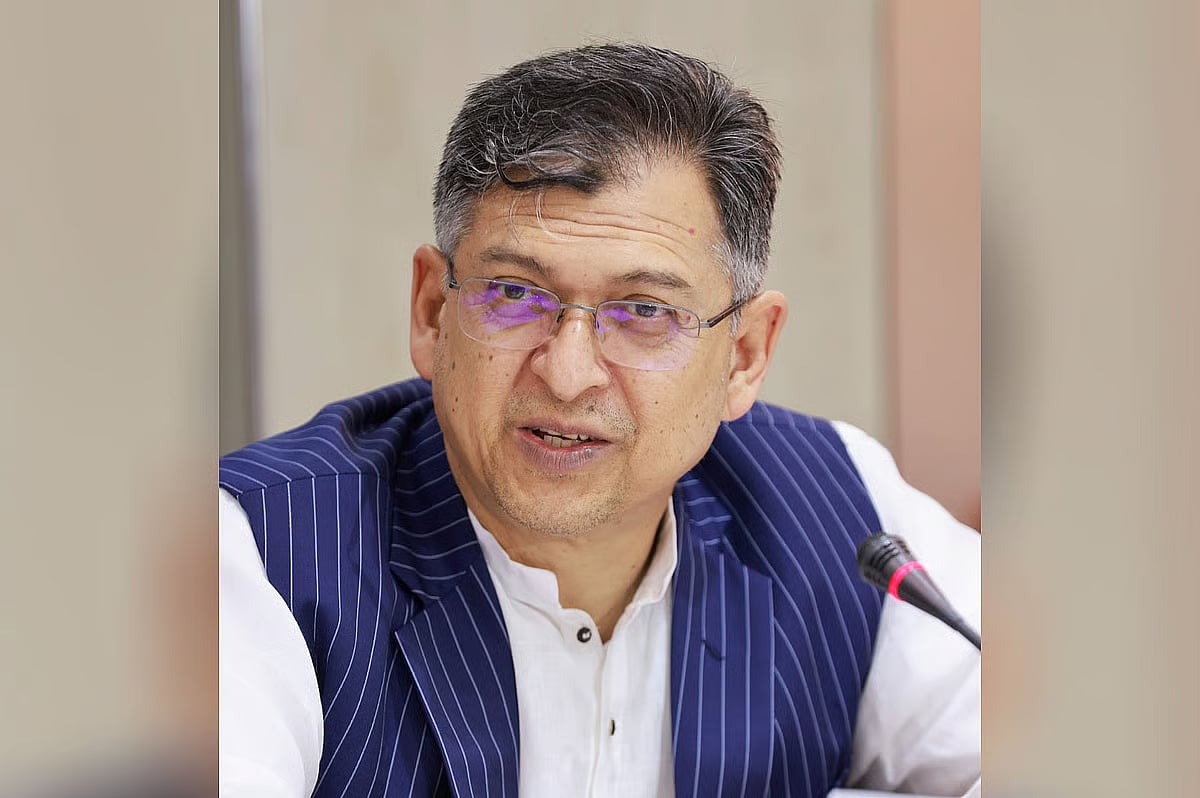
People themselves to guard ballot this time: Salahuddin Ahmed
Bangladesh Nationalist Party standing committee member Salahuddin Ahmed has said that, after many years, the people of Bangladesh are finally getting an opportunity to vote freely and in a festive atmosphere. Therefore, this time it is the people themselves who will ensure a fair election; they will guard the ballot.
In this process, the role of law enforcement agencies will be secondary, while that of the voters will be paramount, he stated.
Salahuddin Ahmed made these remarks at a roundtable titled “Inclusive and Fair National Election: Citizens’ Expectations from Political Parties” on Monday evening.
Jamaat-e-Islami’s naib-e-ameer Syed Abdullah Mohammad Taher, among other political leaders, also attended the event, jointly organised by ActionAid Bangladesh and Prothom Alo at the newspaper’s Karwan Bazar office in Dhaka.
Speaking at the discussion, Salahuddin Ahmed further said that political parties and the people are the main stakeholders in any election. The election commission’s role is limited to conducting the election, while law enforcement agencies maintain order and the government carries out its normal administrative duties.
“Everyone is committed to ensuring that the upcoming election is free, impartial, and internationally acceptable. The BNP will play its full role towards that goal,” he said.
Salahuddin Ahmed stated that the BNP had pledged that, once fascism was overthrown, the parties that took part in the movement against fascism and won the election would form a national government based on consensus. Through this process, the BNP would implement its 31-point programme, which includes the formation of several commissions.
“Many of those commissions have already been formed by the interim government,” he said. “However, the issues identified by these reform commissions are not sufficient. Therefore, if the BNP assumes responsibility, it will reconstitute the commissions it has pledged under the 31 points — including commissions on constitutional reform, judicial reform, media reform, and administrative reform. These commissions will serve as vehicles for reform, but even beyond that, much deeper changes will be necessary,” he added.
The senior BNP leader added that once these reform commissions are formed, they will remain open to the entire nation, inviting proposals from people of all walks of life. “If any proposals come from citizens that are beneficial to the state, to society, or to democracy, those will be adopted,” he said.
Earlier in the programme, ActionAid Bangladesh’s Women’s Rights Lead, Morium Nesa, presented recommendations derived from similar roundtable discussions held in nine districts on the theme of inclusive and fair elections. The session was moderated by ActionAid Bangladesh’s country director, Farah Kabir.
In addition to BNP leader Salahuddin Ahmed, the discussion featured Akhter Hossen, member secretary of the National Citizen Party (NCP); Abdullah Kafi Ratan, general secretary of the Communist Party of Bangladesh (CPB); AB Party chairman Mojibur Rahman Monju; Taslima Akhter, president of Garment Workers’ Solidarity; former adviser to the 2007–08 caretaker government Rasheda K. Choudhury; professor Kazi Maruful Islam of the University of Dhaka’s Department of Development Studies; Prashanta Tripura, country director of The Hunger Project; Mahrukh Mohiuddin, organiser of the Women’s Political Rights Forum; and Nazifa Jannat, East West University student and former coordinator of the Anti-Discrimination Student Movement.