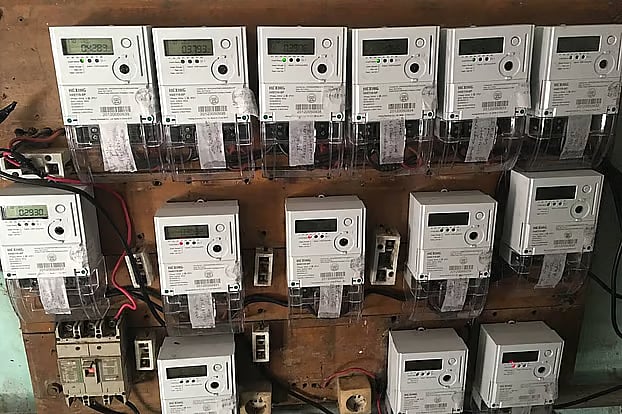
Hexing moves to re-enter power meter business, despite official warnings
A powerful syndicate emerged during the previous government over the supply of power meters in Bangladesh’s electricity sector. China-based company Hexing made millions of taka by embedding itself in that network.
Through a joint venture with the government, it sold meters directly without tenders. The company is now once again moving to regain control over the meter business.
On 19 October, the Power Division issued a letter warning six electricity distribution companies across the country. The letter said Hexing, a prepaid meter manufacturer, has been blacklisted in several countries including India, Nepal and Kenya, and is involved in controversial activities and corruption. Distribution companies were advised to exercise caution and avoid any form of transactions or business relations with Hexing.
The letter also stated that recommendations to grant Hexing relief despite specific allegations of money laundering through fake billing must be halted. It further said that the withdrawal of all cases filed by the West Zone Power Distribution Company (WZPDCL) and the process of withdrawing allegations lodged by the Anti-Corruption Commission (ACC) should be suspended.
On 12 November 2024, Prothom Alo published a report titled “Power sector: Ex-minister’s ‘friends and family’ in meter business.” Following the report, the interim government formed a committee in March last year to investigate allegations related to prepaid meter procurement.
The committee found the allegations against Hexing to be valid and made several recommendations in its investigation report, including advising caution in doing business with the company.
Despite this, Hexing has been participating in multiple tenders for meter procurement. Sources at WZPDCL said the technical evaluation of a tender to procure 138,000 meters—covering the Khulna, Barishal and Faridpur zone—is nearing completion.
Six companies participated in the tender, including Hexing. In a second phase, bids for an additional 51,000 meters are also under evaluation, with Hexing again among the bidders. Technical evaluations for both tenders are now close to finalisation.
The decision to allow a controversial company to participate in tenders has drawn criticism from consumer rights groups. M Shamsul Alam, energy adviser to the Consumers Association of Bangladesh (CAB), told Prothom Alo that issuing a “warning” is merely an attempt to evade responsibility.
“Until Hexing is cleared through a legal process, it remains an offender. Allowing it to do business is against public interest,” he said, urging the ministry to formally blacklist the company through legal channels.
Power, Energy and Mineral Resources Adviser Muhammad Fouzul Kabir Khan told Prothom Alo that a syndicate had controlled the meter business during the previous government. “The investigation has revealed all the details. Distribution companies have been warned accordingly, and action will be taken if these directives are violated,” he said.
How Hexing is still participating in tenders
Two senior officials of WZPDCL said that although the Power Division issued a warning, Hexing has not been officially blacklisted. As a result, there is no direct legal barrier preventing the company from participating in tenders.
Hexing is also bidding in tenders floated by other distribution companies, which has created confusion within those organisations as well.
On 23 November, Hexing sent a letter to the Power Division claiming it has not been blacklisted in India, Nepal or Kenya. The company said geopolitical factors were behind restrictions faced by Chinese firms in India. It also claimed that all allegations and cases against it had been withdrawn by WZPDCL.
Hexing attached copies of decisions taken at WZPDCL board meetings during the previous government and requested the withdrawal of the Power Division’s directive advising caution against doing business with the company.
WZPDCL Managing Director Sheikh Zakiruzzaman told Prothom Alo that there is no legal bar to Hexing’s participation in international tenders. “However, the Power Division’s instructions will be considered during tender evaluation,” he said.
He added that the money laundering case against Hexing was withdrawn during the previous government, though the ACC’s investigation is still ongoing. “Further action will depend on the court’s verdict once the investigation concludes,” he said.
What the investigation report says
The interim government’s investigation report states that allegations against Hexing—including interference in tender document preparation, influencing evaluation processes, and involvement in various financial irregularities—are widely known across electricity distribution companies. The company became controversial after securing a gas meter project at Jalalabad Gas Company.
Money laundering cases were filed against Hexing based on specific allegations. Later, a committee formed with the WZPDCL chairman as convener unjustifiably recommended granting relief to the company, after which WZPDCL withdrew all cases and initiated the process to withdraw ACC complaints. Funds allegedly laundered through corruption remain frozen at Bangladesh Bank.
During the Awami League government, two new state-owned companies were formed at the direction of then state minister for power Nasrul Hamid. One of them was Bangladesh Smart Electrical Company Limited (BSECL), in which WZPDCL holds a 51 per cent stake and China’s Hexing owns the remaining 49 per cent.
After the change of government following the mass uprising, Hexing cut off communication with its local representatives. Government authorities also suspended BSECL’s operations from March last year. However, sources say Hexing has recently contacted several leaders of a powerful political party and is attempting to rebuild its influence network.