News analysis
As governments change, so does the president’s speech
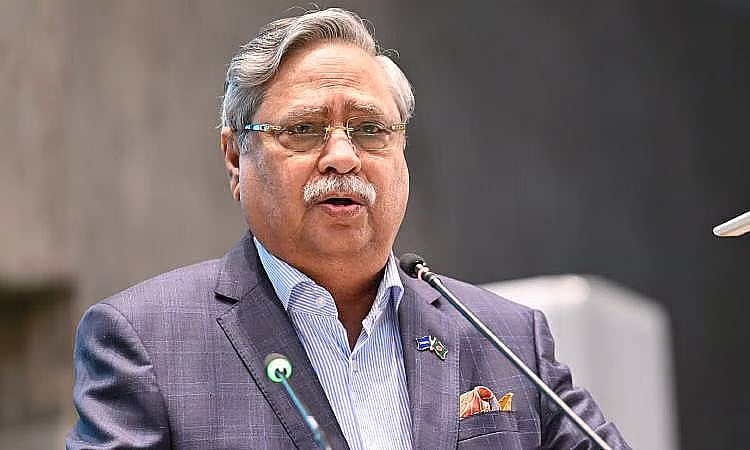
President Mohammed Shahabuddin may represent a rare example. Within three years, he has served as president under three different governments—and in each period he has delivered speeches praising the respective administrations. Yet the governments themselves do not belong to the same political lineage.
Shahabuddin was made president by the Awami League government led by Sheikh Hasina. Later, that government fell amid a bloody movement and a mass uprising. Even during the interim administration that followed, he remained president under constitutional continuity.
He administered the oath to the advisers of the interim government, including its chief adviser. He even administered the oath to student leaders who had led the anti-fascist movement and later became advisers in the interim government—despite the fact that those student leaders had demanded his removal from the very beginning.
When President Shahabuddin referred to the fascist government in his speech, Prime Minister Tarique Rahman and BNP lawmakers were seen thumping their desks in support. However, MPs from Jamaat-e-Islami and the NCP staged a walkout during the speech.
In the 2026 Bangladeshi general election held on 12 February, the Bangladesh Nationalist Party (BNP) formed the government with a landslide victory. The opposition benches in parliament are now occupied by Bangladesh Jamaat‑e‑Islami and the National Citizen Party (NCP), a party formed by student leaders who led the July uprising.
Meanwhile, the activities of the Awami League—the party that elected Shahabuddin president three years ago— is now banned.
Within this new political reality, the president’s address at the first session of the Jatiya Sangsad has become the centre of discussion.
A president long seen as loyal to the Awami League government adopted a different tone in his latest speech. He described Ziaur Rahman as the proclaimer of independence and paid respectful tribute to the uncompromising role of Khaleda Zia in the struggle to establish democracy.
The same president who once actively praised the Sheikh Hasina government also referred to the 2024 student-public uprising as a significant event in the country’s democratic history. He described Hasina’s rule as fascist, saying the fascist government had fallen and that a new democratic Bangladesh had begun through the blood of thousands of martyrs.
His speech also mentioned enforced disappearances, killings, extrajudicial executions and repression during more than a decade and a half of that government’s rule.
When President Shahabuddin referred to the fascist government in his speech, Prime Minister Tarique Rahman and BNP lawmakers were seen thumping their desks in support. However, MPs from Jamaat-e-Islami and the NCP staged a walkout during the speech.
His current remarks stand in sharp contrast to his position two years earlier. On 30 January 2024, he delivered the address at the first session of the 12th parliament.
Regarding that controversial election, Shahabuddin had said it was successful due to spontaneous participation by the people and that the steps taken by the government and the Election Commission had been effective. At that time he ended his speech with the slogan “Joy Bangla.” This time he concluded with “Bangladesh Zindabad.”
At that time, he sharply criticised parties that had boycotted the 2024 Bangladeshi general election held on 7 January. Alluding to the BNP and Jamaat, he said a certain group had attempted to obstruct the country’s democratic journey through violence.
Regarding that controversial election, Shahabuddin had said it was successful due to spontaneous participation by the people and that the steps taken by the government and the Election Commission had been effective. At that time he ended his speech with the slogan “Joy Bangla.” This time he concluded with “Bangladesh Zindabad.”
One reason for the controversy surrounding the president’s speech is its nature. Traditionally, such an address is not written by the president himself; it is prepared by the government or the cabinet. The president reads it in parliament, after which it becomes the subject of parliamentary discussion.
But the current parliament has been formed in a very different political context. The fall of a fascist regime came at the cost of many lives, and the parliament has begun its journey amid expectations of fundamental changes to the state.
Parliament leader Tarique Rahman has also said that the national parliament will be the centre of all state activities. This raises the question: will the president’s address remain merely a government-written statement, or will it also reflect the personal position of the holder of the country’s highest constitutional office?
One reason for the controversy surrounding the president’s speech is its nature. Traditionally, such an address is not written by the president himself; it is prepared by the government or the cabinet. The president reads it in parliament, after which it becomes the subject of parliamentary discussion.
There had been debate from the outset about Shahabuddin’s appointment as president. He took oath as the country’s 22nd president on 24 April 2023.
Earlier, he retired as a district and sessions judge in 2006 and served as a commissioner of the Anti‑Corruption Commission (ACC) from 2011 to 2016.
Questions were raised about his role during his tenure at the commission. Later he became a director and vice-chairman of Islami Bank Bangladesh Limited as a representative of JMC Builders, a company linked to the widely discussed S Alam Group, which has been associated with financial scandals in the country.
After the fall of the Awami League government, the shares of JMC Builders were seized by the Bangladesh Bank. Shahabuddin also served as an adviser to NRB Global Bank, another institution linked to the S Alam group.
As a result, when he was made president, discussions emerged in some circles describing him as “S Alam’s president.” His appointment even surprised ministers and leaders within the Awami League. Senior leaders of the party were reportedly unaware of the decision beforehand. Later discussions within the party suggested that Shahabuddin had been chosen by the preference of two sisters—Sheikh Hasina and Sheikh Rehana.
Because of constitutional continuity, Shahabuddin remains in office as president. However, questions have arisen about how long the BNP government will keep him in the post. Even before the new parliament convened, the National Citizen Party demanded his impeachment.
The president’s address usually marks the formal opening of parliament. But this time it has also become the centre of political debate. Questions are being raised: will the president’s speech remain merely a formality? Will this pattern continue? And does it enhance the dignity of the national parliament?
Speaking in parliament yesterday, NCP convener and opposition chief whip Nahid Islam said no fascist or their accomplices should be allowed to tarnish parliament with their statements.
However, different reactions have appeared on social media. Media personality Abdun Noor Tushar posted on Facebook yesterday a photograph of Nahid Islam and Asif Mahmud Shojib Bhuyain taking oath as advisers before President Shahabuddin and wrote, “When becoming advisers, the ‘accomplice’ seemed acceptable—now he does not.”
Earlier, Jamaat-e-Islami amir Shafiqur Rahman had described the president as an “accomplice of fascists” and an “accomplice of killers.” He noted that Shahabuddin addressed the nation on 5 August 2024 and said in that speech that the then fascist prime minister had resigned and that he had accepted the resignation.
However, in later interviews with two media outlets, the president denied that claim and presented a different account. According to Shafiqur Rahman, this made him appear as someone who had misled the nation.
The president’s address usually marks the formal opening of parliament. But this time it has also become the centre of political debate. Questions are being raised: will the president’s speech remain merely a formality? Will this pattern continue? And does it enhance the dignity of the national parliament?