The proposed budget appears fundamentally as a clash between two perspectives. On one side there is pragmatism, and on the other, optimism. There is no major disagreement over the policy framework itself. The difference arises in terms of timing, capacity, and expectations.
One side argues that, given the current state of the economy, the inherited challenges, and international realities, the primary task in the first year should be to stabilise the economy. This view is consistent with the government's declared three-phase action plan, whose first stage is recovery. In other words, the foundation must first be strengthened before moving toward more ambitious goals.
On the other hand, another group, which includes politicians and parts of the administration, believes that even within this year of stabilisation, the new government has certain political commitments to fulfill. As a result, it is necessary to present some tangible achievements to the public in the very first year. This is where the optimistic position originates. Here, political considerations carry the greatest weight.
Conflict between demand and supply
On the other hand, professional economists place greater importance on the fundamentals. Those who take a political perspective, meanwhile, want to highlight targets and visible achievements. The difference has emerged over the timing of policy implementation. One group focuses on time, while the other focuses on goals. One emphasises consolidation of the current situation, while the other stresses not only consolidation but also a degree of recovery and resurgence. This is a major point of divergence between the optimists and the realists.
The problem is that achieving the ambitious targets set by the optimists requires institutional reforms. This is not just a question of banking or the financial sector; it also involves energy, education, healthcare, and administrative efficiency. Such reforms take time. There is doubt about whether they can be accomplished within a single year. As a result, the rapid turnaround being anticipated may not materialise so quickly.
Another noteworthy point is that although the budget speaks of reforms, it does not clearly present a coordinated and detailed implementation plan for carrying them out.
An optimistic approach generally places emphasis on spending. If resources are available, the central question becomes how effectively those resources can be spent. A pragmatic perspective, however, begins by asking where those resources will come from.
In a country like Bangladesh, resource mobilisation itself is the major challenge. During the first ten months of fiscal year 2025–26, the revenue collection target for the National Board of Revenue (NBR) was 4.31461 trillion taka. The NBR managed to collect only 3.26928 trillion taka during that period, leaving a shortfall of more than 1 trillion taka.
Implementing the budget also requires heavy reliance on foreign assistance and budget support. If the necessary funds could be raised domestically, that would be a different matter. However, the government has set a target of securing $9.5 billion in foreign loans, primarily as budget support rather than project assistance. Obtaining budget support makes reform efforts especially important, because development partners want to see progress on reforms before providing financing. Therefore, implementation capacity and the credibility of reforms become critically important.
This is another point of difference, which is why the debate is essentially one between optimism and reality.
There is also a more fundamental distinction. Politicians generally focus on the demand side of the economy. They are concerned with what people need and which allocations will produce visible results. Professional economists, by contrast, tend to place greater emphasis on the supply side. In this context, it appears that the politics of optimism has prevailed.
When the budget was presented in the Jatiya Sangsad (National Parliament), one thing was particularly noticeable. When the finance minister discussed the policy framework, the response was relatively muted. But when allocations for different sectors were announced, members of parliament from across party lines enthusiastically thumped their desks. This suggests that there is broad political consensus around spending and budget allocations. By contrast, our primary concern remains the underlying economic fundamentals.
Because optimism has prevailed, its advocates have, in many cases, used data rather creatively to support their arguments. In several instances, projections were based on revised budget figures. Yet over the past few months, some economic indicators have deteriorated, including exports, revenue collection, private investment, and credit growth in the private sector. It appears that, rather than updating the data, comparisons were made using figures from the middle of the outgoing fiscal year.
Questions also arise regarding the timing of the data used in the medium-term macroeconomic framework. A footnote states that the impact of the ongoing conflict in the Middle East was not taken into account. It seemed to me that there was a degree of lack of coordination between the team that prepared the budget and the team that developed the macroeconomic framework.
In other words, different groups of optimists advanced their own versions of optimism. One group did so in the revenue framework, another in the growth framework. The growth framework, for example, assumes that public investment will grow faster than private investment, despite the many challenges surrounding public investment itself.
From that perspective, the realists appear far more unified and cohesive. Just as there are differences between the Ministry of Finance and the Planning Commission, there are also differences within the Ministry of Finance between those responsible for preparing the budget and those responsible for developing the macroeconomic framework.
The government had an opportunity to demonstrate political boldness. It had the chance to start afresh. Yet the political narrative needed to move the economy forward appears to be missing.
The government has increased allocations for social protection, education, and healthcare. This was necessary. However, it remains comparatively weak in addressing two major challenges: inflation and investment. It is in these areas that cracks begin to appear in the optimistic outlook.
An even more important issue is that a large share of the additional revenue is expected to come from value-added tax (VAT). In other words, reliance on indirect taxation is increasing. As a result, the very groups receiving support through social protection programs may end up bearing some of the burden again through higher tax collection.
The bottom line is that we need a form of realistic optimism, a balance between the two approaches. The budget has now been passed. The key question from this point forward is implementation.
Transparency of data and accountability
To make this form of realistic optimism work, the first essential requirement is transparency in data and information. The second is accountability in implementation. The most important tool for achieving this is the rapid implementation of the capacity-building measures proposed to improve public investment management—from project formulation to project completion. This falls under the responsibility of the Planning Commission.
After that, the Implementation Monitoring and Evaluation Division (IMED) should be empowered, with a stronger focus on ensuring value for money in public spending. To achieve this, government databases, including iBAS, must be updated regularly.
Under the Financial Act of 2009, the government is required to present a report on economic progress every three months. This practice should be initiated, as it would allow parliamentary oversight of public expenditure. It has not been done so far, but the government could begin doing so from September onward if it chooses.
Over the next few years, three issues should be monitored with the greatest attention: inflation, the budget deficit, and external debt. These three indicators are deeply interconnected. They should serve as guiding stars. If an imbalance emerges in any one of them, the other two will also come under pressure.
Another important issue is that the government must quickly announce a comprehensive reform agenda, including a detailed roadmap for implementation. While considerable effort has gone into preparing the budget, there is no similarly clear roadmap for the reforms required to implement it. The government may recognize this challenge, but it has not yet fully addressed it.
The risk of repeating old policies
If there is no transparency in data, no regular accountability, and no disclosure of implementation progress, then this government will inevitably end up following the path of the government of Sheikh Hasina.
We have seen that path before: grand announcements, claims of high growth, underreporting inflation, presenting data that do not align with reality, diverting public attention through large-scale projects, and increasing spending on projects whose benefits are not clearly visible to ordinary citizens.
We also witnessed inconsistencies between investment figures and growth statistics, discrepancies between investment levels and imports of capital goods, and many other mismatches. Alongside this came the accumulation of large amounts of debt, which later became difficult to repay.
The government has spoken about reconstruction over a five-year period. However, it should avoid taking short-term measures for immediate gains if doing so risks creating future problems related to inflation, debt repayment, and budget deficits by the time the next election approaches.
The current government had an opportunity to begin from a clean slate, to present the true state of affairs openly and announce a comprehensive reform strategy. We have not yet seen the full expression of that political courage.
The government had an opportunity to demonstrate political boldness. It had the chance to start afresh. Yet the political narrative needed to move the economy forward appears to be missing. There is optimism, but there is no clear narrative of how that optimism will translate into achievement. There is no clear explanation of what the country should expect one year from now or where the government ultimately intends to go.
The government must provide that political explanation and strengthen accountability within its own ranks.
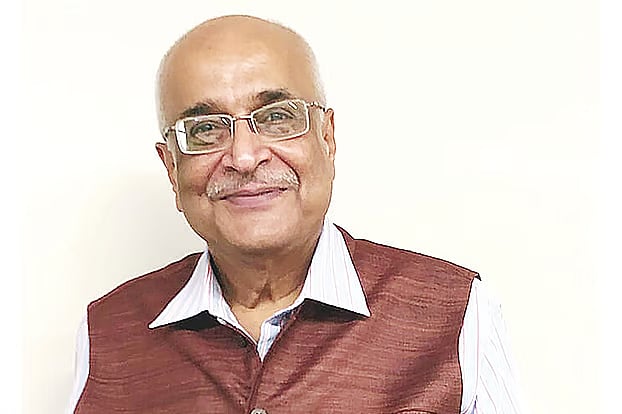
* Debapriya Bhattacharya is a Distinguished Fellow, Centre for Policy Dialogue (CPD).
* This opinion was published in Bengali for Prothom Alo print and online and has been translated by Ayesha Kabir for Prothom Alo English online