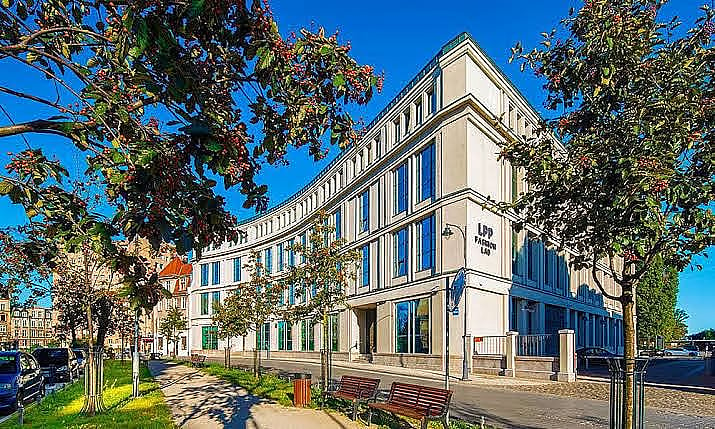
Uncertainty over LPP’s $700m garment purchase orders from Bangladesh
Polish buyer LPP S.A. has suspended orders from Bangladesh following alleged police harassment and lawsuits against several officials at its Dhaka office. As a result, Bangladesh’s annual garment exports worth around $700 million (Tk 86.1 billion) to the company are now facing uncertainty. LPP’s garment suppliers are worried about the situation.
Several LPP suppliers said that if a major buyer like LPP suspends its orders, many garment factories could be forced to shut down. They said it would not be reasonable to hold LPP responsible for the liabilities of Russian buyer FES Retail.
On the other hand, affected exporters claim that FES Retail owes them nearly $40 million in unpaid dues. Since LPP did business with FES Retail on the basis of assurances, they argue that LPP must take responsibility.
An investigation found that last month, the owners of two buying houses filed separate cases in the High Court against several officials of LPP’s Dhaka office over efforts to recover unpaid dues from FES Retail. Following the lawsuits, police also conducted nighttime raids at the homes of several LPP officials.
On 21 July, LPP sent letters to the Bangladesh Garment Manufacturers and Exporters Association (BGMEA), the Bangladesh Knitwear Manufacturers and Exporters Association (BKMEA) and the Bangladesh Garments Buying House Association (BGBA).
The company said in the letters that disputes over payment involving several Bangladeshi factories had been continuing for several months. It said LPP was not the party actually responsible for those payments. Nevertheless, its employees had faced police harassment. Against this backdrop, the company had decided to gradually reduce its orders from Bangladesh.
On 31 July, LPP informed its Bangladeshi suppliers by letter: “Unfortunately, despite explaining our position and trying to find constructive solutions, the concerns have not been resolved. Therefore, new orders and new product development work with suppliers will remain suspended. We will communicate the next steps within the next two weeks.”
Buying house Ensa Clothing exported trousers worth $52,000 in April last year against an order from FES Retail. The shipment reached Russia two months later. FES Retail has yet to take delivery of the goods by making the payment. After failing to recover the outstanding amount, Ensa Clothing filed a lawsuit at the end of last month, naming several LPP officials as defendants.
Enamul Kabir, managing director of Ensa Clothing, told Prothom Alo, “Initially, FES Retail placed the orders, but after the garments were exported, LPP made the payments. Therefore, they cannot avoid responsibility in any way. We filed the case only after all our efforts had failed. Several factories could be forced to close if we do not receive the export proceeds.”
Four suppliers who are owed money by FES Retail, speaking on condition of anonymity, said FES Retail placed the orders and was responsible for making the payments. They said FES Retail should also settle the outstanding dues. According to them, LPP can only facilitate communication with FES Retail in this matter.
These four suppliers also supply garments to LPP. They said LPP purchased garments worth $700 million from Bangladesh in the last fiscal year. For the current fiscal year, LPP had planned to import garments worth $770 million from Bangladesh and had already started placing orders accordingly.
It is learnt that after the Russia-Ukraine war began, LPP faced difficulties in operating its retail outlets in Russia. In May 2022, LPP sold its Russian business. Garments from Bangladesh subsequently began to be shipped to Russia under the KCS brand.
In mid-2024, LPP’s Dhaka office introduced FES Retail to Bangladeshi suppliers as a replacement for KCS. LPP provided assurances regarding payment in this arrangement. Although everything initially went smoothly, FES Retail’s payments became irregular from last year.
Asked about the matter, BGMEA president Mahmud Hasan Khan told Prothom Alo, “We have held several meetings with all the parties. We have found no legal liability on LPP’s part. We hope the matter will be resolved very soon. We have also written to the inspector general of police requesting that LPP officials not be harassed.”
LPP S.A. operates 3,700 retail outlets in 46 countries. It sources products from at least 43 suppliers in Bangladesh, including buying houses and garment factories. In total, around 250 factories in Bangladesh supply garments to LPP.
When contacted by email for comment, LPP Bangladesh country director Anna Stashkevich said the matter had been brought to the attention of the company’s headquarters and that an official statement would be issued soon.
Mohammad Fazlul Haque, administrator of the Federation of Bangladesh Chambers of Commerce and Industry (FBCCI), told Prothom Alo, “Those doing business with the Russian company should have been more cautious. Perhaps they were conducting business relying on LPP’s assurance. Therefore, LPP has a moral responsibility.”
“LPP is one of our major buyers. A high-level settlement is needed to resolve the matter, so that affected exporters are protected and LPP’s sourcing from Bangladesh continues. At the same time, we must consider ensuring that the country’s image abroad is not damaged,” he added.