Spanish filmmakers Javier Calvo and Javier Ambrossi’s ‘La Bola Negra’ has won the People’s Choice Award, the main audience-voted honour at the 51st Toronto International Film Festival (TIFF), bringing the curtain down on 11 days of cinema from around the world.
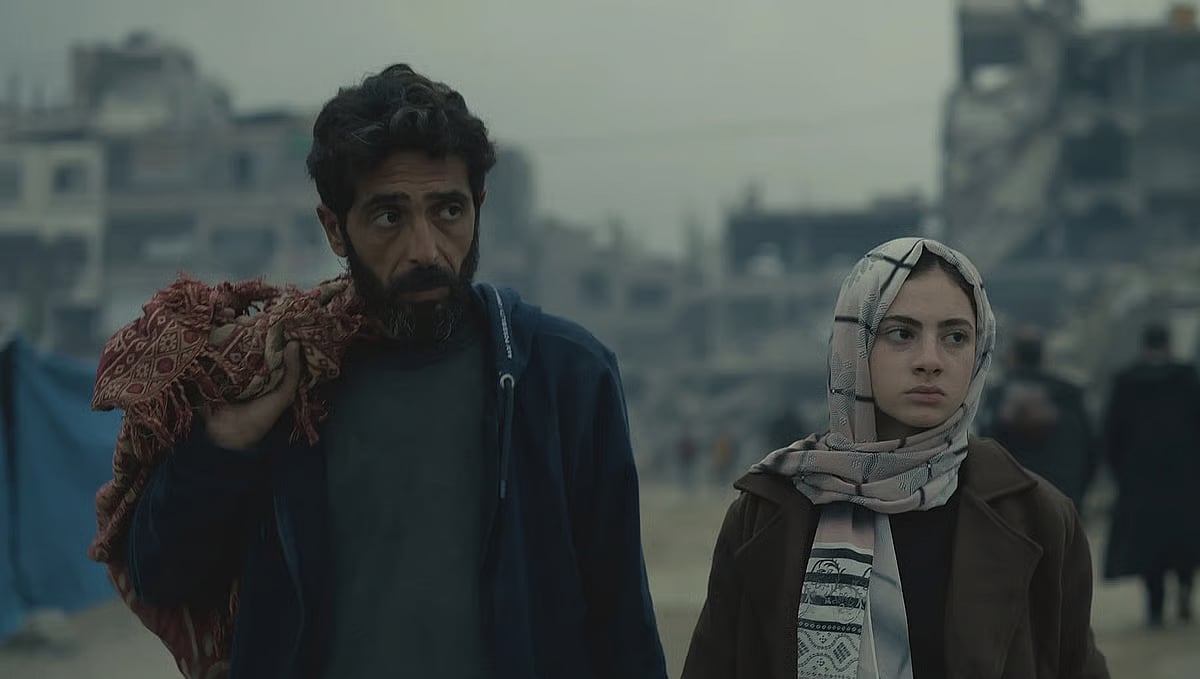
But among the winners announced on the festival’s final day on Sunday was another film carrying a story from one of the world’s most devastated places. Palestinian filmmaker Hosam Abu Dan’s ‘Thirteen in Gaza’, centred on a 13-year-old girl growing up amid war and displacement in the Gaza Strip, won the NETPAC Award.
Indian filmmaker Theja Rio’s ‘Angh’ also emerged as a major winner, taking the Platform Prize, TIFF’s juried competition award. In all, 12 awards were announced at TIFF Lightbox on Sunday as the festival concluded its 51st edition.
A busy final day at TIFF
TIFF Lightbox remained busy on Sunday as the 11-day festival entered its final stretch. The winners were announced at a live press conference, but the awards did not bring an immediate end to the screenings. From noon, audiences were invited to free screenings of the People’s Choice Award winners at the Lightbox, while other scheduled screenings continued.
TIFF CEO Cameron Bailey said the audience turnout over the course of the festival had been particularly encouraging.
“I think the main takeaway for me is that the TIFF audience is as strong as ever, if not stronger,” Bailey told The Canadian Press after the awards announcement. He said audiences had come out “in great numbers.”
The scale of this year’s festival reflected that activity. Over 11 days, TIFF screened 294 films from 72 countries. More than 800 artists and filmmakers took part in 98 red-carpet events, while 2,000 accredited media and 279 directors attended. The inaugural ‘TIFF: The Market’ drew close to 7,000 delegates.
Toronto audiences choose ‘La Bola Negra’
‘La Bola Negra’ unfolds across three periods — 1932, 1937 and 2017 — connecting the lives, desires, loves and struggles of three men in Spain. The film was inspired by an unfinished work by Spanish poet and playwright Federico García Lorca.
Unlike the top prizes at Cannes, Venice and Berlin, TIFF’s main award is decided by festival audiences rather than a jury. The People’s Choice Award has been presented since 1978 and has developed a strong association with the subsequent awards season.
Calvo and Ambrossi were not in Toronto to receive the award. They were in Spain promoting the film, and Bailey read out their message at the ceremony.
The filmmakers described ‘La Bola Negra’ as a deeply personal work that also speaks about the importance and necessity of expressing who one is. Knowing that Toronto audiences had connected with the film and made it their own, they said, was “the greatest gift” they could receive.
Peter Farrelly’s ‘I Play Rocky’ was the first runner-up for the People’s Choice Award, while Siân Heder’s ‘Being Heumann’ was second runner-up.
The award also continues TIFF’s close association with the Oscar race. Previous People’s Choice winners that later won the Academy Award for Best Picture include ‘12 Years a Slave’, ‘Green Book’ and ‘Nomadland’.
Gaza story earns NETPAC recognition
Amid the headline awards, ‘Thirteen in Gaza’ brought a story from Gaza to the winners’ list.
The film is Hosam Abu Dan’s first narrative feature. It follows Raghad, a 13-year-old girl living with her father in a camp for displaced people in Gaza. Her experience of adolescence — physical and emotional change, a growing need for privacy — unfolds against the insecurity and displacement of war.
The 77-minute film was shot entirely in Gaza with a local Palestinian cast and crew and had its world premiere in TIFF’s Centrepiece programme.
In explaining its decision, the NETPAC jury praised ‘Thirteen in Gaza’ for refusing to reduce suffering to spectacle or victimhood. Instead, the jury said, the film captures life in all its complexity through powerful images. It described the work as a “brave, intimate film” and said it announced an important new voice in cinema.
The NETPAC — Network for the Promotion of Asian Pacific Cinema — Award recognises films from the Asia-Pacific region by filmmakers presenting their first or second feature. This year’s three-member jury was chaired by Mara Matta, associate professor of South Asian Studies at Sapienza University of Rome. She was joined by artist and writer Richard Fung and film critic Panagiotis Kotzathanasis.
Following the award, Abu Dan said in a statement that it was a source of deep pride that a voice from Gaza had reached audiences. Amid the many painful stories emerging from Gaza, he said, the filmmakers had been able to share one human story with the world.
India’s ‘Angh’ takes Platform Prize
India also had a significant win on the final day, with Theja Rio’s ‘Angh’ receiving the Platform Prize.
Set in Nagaland near the India-Myanmar border, the film revolves around the last surviving chief of a village. Much of its dialogue is in Konyak.
After the award announcement, Rio told The Canadian Press that he had first and foremost wanted to make a film about where he came from. His goal was to bring the stories and voices of his community to the screen. To take that film to Toronto and win an award, he said, felt like a dream come true.
The Platform Prize carries additional significance this year. For the first time, a non-English-language winner of the award gains direct eligibility for consideration in the Academy Awards’ Best International Feature Film category, subject to the Academy’s other requirements. With most of its dialogue in Konyak, ‘Angh’ meets the relevant language requirement.
An emotional tribute to a filmmaker’s mother
One of the emotional moments of the awards announcement came when Canadian filmmaker Cody Lightning received the Best Canadian Discovery Award for ‘Smudge the Blades’.
Lightning revealed that his mother, filmmaker Georgina Lightning, had died unexpectedly only weeks earlier. Fighting back tears, he said he had inherited his sense of humour from his father and his storytelling ability from his mother before dedicating the award to her.
He later said his mother had frequently been on set during the making of the film and would have been proud of the work.
‘Sunburn’ named Best Canadian Feature
Serville Poblete’s ‘Sunburn’, a coming-of-age story about a group of young people in Toronto’s Bleecker Street area, won Best Canadian Feature Film. The jury described the film as lively, funny and deeply human.
Simon Stone’s ‘Elsinore’, starring Andrew Scott, won the International People’s Choice Award. Lee Chang-dong’s ‘Possible Love’ was the first runner-up and Hur Jin-ho’s ‘The Assassin(s)’ the second runner-up.
Barry Avrich’s ‘Darlene Love: I Know Where I’ve Been’ won the Documentary People’s Choice Award, while Matthew Rankin’s ‘Ladies and Gentlemen, Brian Mulroney’ took the Midnight Madness People’s Choice Award.
The FIPRESCI Prize, selected by an international jury of film critics, went to Irish writer-director David Turpin’s ‘Ancestors’, which follows an Irishman living in London in the 1980s.
294 films over 11 days
The awards brought an end to an 11-day festival that drew filmmakers, stars, industry professionals, journalists and moviegoers from around the world to Toronto.
Yet the films continued after Sunday’s awards announcement. Free screenings of the People’s Choice winners began at TIFF Lightbox at noon, giving audiences another opportunity to see the films they had helped propel to the top of the festival.
By the time the 51st edition came to an end, TIFF had presented 294 films from 72 countries, welcomed hundreds of filmmakers and artists and launched its first official film market.
And the final list of winners reflected the international character of this year’s festival: Toronto audiences chose Spain’s ‘La Bola Negra’, India’s ‘Angh’ took the Platform Prize, while ‘Thirteen in Gaza’ brought international recognition to the intimate story of a 13-year-old Palestinian girl growing up amid war and displacement.