Environment
Air pollution raises dengue death risk, fuels diabetes, other chronic diseases
On a mid-February morning this year, 65-year-old Abul Kashem stood in the outpatient department of the 250-bed TB Hospital in the capital’s Agargaon. A long-term asthma patient, he found his condition worsening toward the end of winter.
Speaking to this correspondent, Abul Kashem, a resident of Adabar, said, “Winter has become milder than before, but the coughing does not stop.” Physicians told him his condition was not due to age alone; polluted air was also a significant factor.
The number of patients like Kashem is rising. Hospital data show that 9,072 people sought treatment at the TB Hospital in January this year, compared to 8,611 in January last year. That represents an increase of more than 400 patients within a year.
Physicians say the upward trend in chest and respiratory illnesses is not an isolated development; the role of air pollution is becoming increasingly evident.
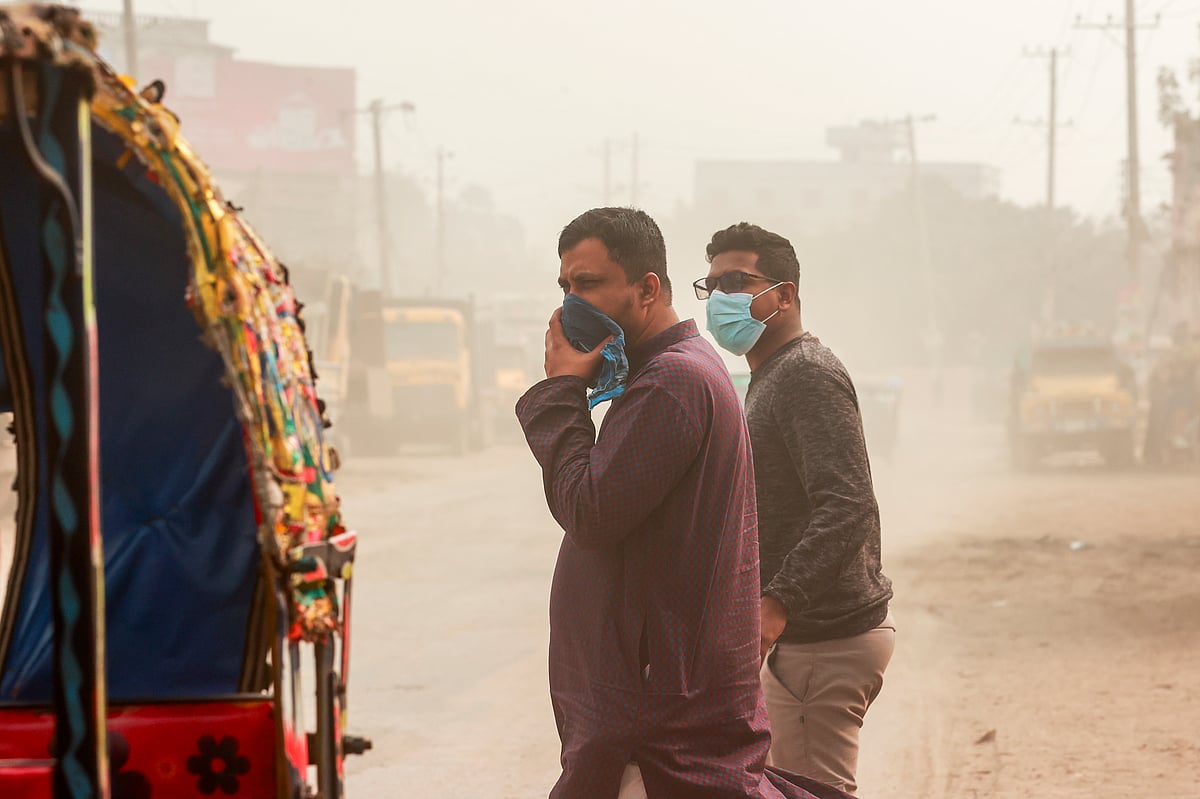
Air pollution is not only a cause of lung disease. Research shows it is also linked to an increased risk of heart disease, a greater likelihood of diabetes, higher mortality from dengue, and even the shadow of depression. Air pollution has been is discussions in Bangladesh for many years. But recent international studies indicate that it is not merely an environmental crisis. It is a deep public health crisis.
Research conducted across different contexts in Dhaka, Rajshahi, and rural areas paints a worrying picture. Pollution is rising. Pollution-related illnesses are increasing as well. Its effects are also felt on the economy.
Amid various projects on pollution and their repeated failures, the suffering of people is being overlooked. Moreover, the light rainfall that used to occur during the winter season is diminishing, reducing even the limited opportunity for rain to mitigate dust and pollution.
Risk of diabetes rises with airborne dust
In Bangladesh, the rapid rise in diabetes is usually attributed to diet, lack of physical activity, obesity, genetic factors, and mental stress. But a new study suggests that fine particulate matter in the air could be another major, ‘invisible’ driver of the increase.
The research was conducted using nationwide demographic and health survey data from 2022. The results show that the longer fine particulate matter, or PM 2.5, remains at high levels in the air, the greater the risk of diabetes. Specifically, if PM 2.5 rises by 10 micrograms per cubic metre, the risk of diabetes increases by an average of 10 per cent.
When polluted air is inhaled, it triggers a form of inflammation within the body. This reduces the effectiveness of insulin produced by the body. When insulin function is impaired, blood sugar levels become uncontrolled, and this uncontrolled glucose contributes to the development of diabetes.Juwel Rana, Epidemiologist or doctoral researcher in Epidemiology, McGill University, Canada.
The researchers calculate that if Bangladesh could clean its air to some extent—that is, reduce PM 2.5 levels throughout the year—the population-level risk of diabetes could be lowered from around 4.6 per cent to 7.5 per cent.
What PM 2.5 actually is
PM 2.5 refers to fine particles in the air with a diameter of 2.5 micrometres or less. These are many times smaller than human hair and cannot be seen with the naked eye. However, they can enter the lungs with each breath and affect the bloodstream. Researchers explain that these particles can trigger inflammation, oxidative stress, and disrupt the body’s insulin function. Over time, this can increase insulin resistance and raise the risk of diabetes.
What the research found
The study was conducted by researchers from Bangladesh and several international institutions, led by Juwel Rana, Epidemiologist or doctoral researcher in Epidemiology, McGill University, Canada.
He told Prothom Alo that the survey was carried out in two phases. A total of 15,249 adults participated in the survey. In the second phase, those without data on diabetes medication were excluded, leaving 13,965 participants for the final analysis (7,712 women; 6,253 men).
Juwel Rana explained to Prothom Alo that the study determined how much exposure to air pollution these individuals with diabetes had experienced over the three years following 2022. The air pollution situation was measured in the areas and homes where they lived.
Biological basis of air pollution’s impact on diabetes
The question was raised as to the biological mechanism behind the impact of air pollution on people with diabetes. Jewel Rana told Prothom Alo that when polluted air is inhaled, it triggers a form of inflammation within the body. This reduces the effectiveness of insulin produced by the body. When insulin function is impaired, blood sugar levels become uncontrolled, and this uncontrolled glucose contributes to the development of diabetes.
The research shows that if PM 2.5 in the air rises by 10 units, the risk of developing diabetes increases by roughly 10 per cent. In areas with the highest air pollution, the prevalence of diabetes is also highest. Women, people with higher body weight, those with high blood pressure, older adults, and city residents face an even greater risk of pollution-related diabetes. In districts such as Dhaka, Narayanganj, Gazipur, and Narsingdi, both air pollution and diabetes prevalence are simultaneously high.
Experts say that without coordinated efforts such as controlling vehicle emissions, enforcing industrial standards, modernising brick kilns, promoting clean fuel, and urban greening, the situation cannot be reversed. At the same time, climate adaptation and pollution management during the dry season need to become part of the national health policy.
If the Bangladesh government can achieve the World Health Organization’s recommended air quality standards, the rate of diabetes in the country could be reduced by 5 to 8 per cent. Women, older people, city residents, individuals with higher body weight, and those with high blood pressure would benefit the most.
If the government’s target air quality (15 micrograms per cubic metre) is reached, reductions in diabetes could exceed the national average rate of 6.6 per cent in 25 districts. The greatest benefits would be seen in districts where both diabetes prevalence and air pollution levels are extremely high. For example, in Narayanganj, the potential reduction in diabetes could reach around 16.7 per cent.
In these districts, the sources of air pollution are diverse, including vehicle and industrial emissions, brick kilns, port-based pollution, mining activities, coal-fired power plants, and ship-breaking yards. In some areas, even if air pollution levels are close to the national average, the health benefits could still be significant.
Over 26 million workdays lost to air pollution
The international research organisation, Center for Research on Energy and Clean Air (CREA), has published a report on air pollution in Bangladesh. The report titled Public Health Impacts of Fine Particulate Pollution in Bangladesh was released on CREA’s official website on 18 January last year. The research was conducted by Daniel Nesan, Hubert Thieriot, and Jamie Kelly, with Jonathan Sydeman serving as editor.
The study shows that current PM 2.5 pollution causes around 102,456 premature deaths each year in Bangladesh. The majority of these deaths are linked to heart disease, stroke, chronic respiratory conditions, lower respiratory infections, and lung cancer. Among children under five, approximately 5,258 deaths per year are due solely to lower respiratory infections.
The research also found that fine particulate pollution is associated with roughly 668,000 annual emergency admissions for asthma-related illnesses, over 26 million lost workdays, more than 900,000 premature births, and about 700,000 low-birth-weight newborns.
The report indicates that if Bangladesh could achieve its own national air quality standard of 35 micrograms per cubic metre, premature deaths could fall by nearly 19 per cent. Achieving the World Health Organization’s 2021 guideline of 5 micrograms per cubic metre could reduce the mortality rate by around 79 per cent.
The study emphasises that although the health risks from pollution are highest in the Dhaka and Chittagong divisions, no region in the country falls within safe limits. Therefore, without strict air quality control and the implementation of effective policies, this public health crisis cannot be addressed.
Air pollution and mental health risk: A tale of two cities
It is already established that air pollution increases the risk of respiratory and heart disease. However, a recent study has shown that fine particulate matter (PM 2.5) also has a profound effect on mental health, particularly in highly polluted cities like Dhaka.
Patients are coming, and we are treating them. We have medicine, but what about the air? Who will purify it?Ayesha Siddika, Director, 250-bed TB Hospital in Agargaon, Dhaka
The study, titled Air Pollution and Mental Health in Dhaka and Rajshahi, examined the relationship between air pollution and depression, anxiety, and stress through a comparative analysis of the two cities.
The research was published in the internationally renowned journal Nature on 26 January this year.
The study was a cross-sectional observational survey conducted from January to December 2022. Adult participants from both cities were selected according to specific criteria, and mental health data were collected through face-to-face interviews.
Air pollution data were obtained from government environmental monitoring centres. The average annual PM 2.5 level was approximately 76–82 micrograms per cubic metre in Dhaka and 42–48 micrograms per cubic metre in Rajshahi. This means that the concentration of fine particulate matter in Dhaka was about 1.7 times higher than in Rajshahi.
The study found that 46–50 per cent of participants in Dhaka exhibited moderate to severe symptoms of depression. In Rajshahi, this rate was 28–32 per cent, indicating that depression was at least 15–18 per cent more prevalent in Dhaka.
According to the research, anxiety was observed in 40–44 per cent of participants in Dhaka, whereas in Rajshahi, depression affected 25–29 per cent of individuals. Regression analysis showed that for every 10 microgram per cubic metre increase in PM 2.5, anxiety scores increased by 0.8–1.2 points, even after controlling for other social and economic factors.
Stress was reported in 35–38 per cent of people in Dhaka, compared with 20–23 per cent in Rajshahi. Multivariate regression models used in the study revealed that residents of highly polluted areas were 1.6–1.9 times more likely to experience moderate to severe depression.
This relationship remained significant even after controlling for age, income, education, and smoking. Women, low-income individuals, and older adults were found to be disproportionately affected.
The study clearly shows that high levels of air pollution in Dhaka are increasing not only physical health risks but also mental health risks. Compared with Rajshahi, rates of depression, anxiety, and stress in Dhaka are significantly higher, and this difference is statistically confirmed.
Based on World Health Organization data, a report published in the United Kingdom’s The Guardian on 16 June 2016 stated that the concentration of airborne fine dust (10-micrometre particles) in Rajshahi was 195 micrograms per cubic metre of air. This had fallen by about two-thirds to 63.9 micrograms per cubic metre in 2016. Two years earlier, the concentration of even finer dust (2.5-micrometre particles) in the city had been 70 micrograms per cubic metre of air. By 2016, this had dropped by almost half to 37 micrograms.
Air pollution weakens human immunity and increases inflammation in the lungs and blood vessels. Researchers explain that this can make dengue infections far more severe.
The report noted that among the 10 cities in the world where airborne fine dust declined over the two previous years (2014 and 2015), Rajshahi saw the largest reduction. The rate of decrease was 67 per cent.
The assistant professor of the respiratory medicine department at Rajshahi Medical College Hospital, Rezaul Islam, believes that air pollution in this exemplary city is now severe, with widespread effects on people.
He told Prothom Alo, “From my experience, the number of patients with breathing difficulties or asthma has increased significantly over the past two to three years due to pollution. The numbers keep rising.”
The risk of death from heart disease is increasing
Research titled Effects of Fine Particulate Matter Air Pollution on Cardiovascular Mortality in Dhaka 2002–2024 has shown that as fine particles (PM 2.5) in Dhaka’s air increase, the risk of death from heart disease rises.
This is the first global research to demonstrate that air pollution not only spreads dengue but also increases the risk of death. We have observed that in pollution-prone countries, dengue is comparatively far more lethal. Until now, dengue control efforts have focused primarily on mosquito management. However, this study shows that reducing air pollution could also be an important strategy for lowering dengue-related deaths.Shakirul Khan, Lead author and teacher at the Global and Local Infectious Diseases Centre, Oita University, Japan
Analysing data over five years from 2020 to 2024, the researchers found that for every 10 micrograms per cubic metre increase in PM 2.5, cardiovascular deaths in the same month increase by an average of 3.1 per cent. About 16 per cent of total cardiovascular deaths could be linked to this pollution. The risk is highest in winter, when approximately 28.7 per cent of cardiovascular deaths are associated with PM 2.5. In other words, air pollution is a major and immediate risk factor for heart disease in Dhaka.
The researchers collected monthly data on cardiovascular deaths from four major government medical college hospitals in Dhaka between 2020 and 2024. During the same period, PM 2.5 measurements were obtained from the Department of Environment. Weather-related information, including temperature and humidity, was gathered from the NASA Power Project to control for the effects of weather in the analysis.
Total deaths and extent of risk
A total of 17,531 cardiovascular deaths were recorded over the study period. Analysis shows that for every 10 micrograms per cubic metre increase in PM 2.5, cardiovascular deaths in the same month rise by 3.1 per cent (95 per cent confidence interval: 1.1 per cent to 5.2 per cent). This indicates that the relationship is statistically significant.
According to the study’s estimates, about 16 per cent of total cardiovascular deaths are linked to PM 2.5 exposure. In other words, reducing pollution levels could prevent a substantial number of premature deaths.
Seasonal analysis shows that the effect of PM 2.5 is more pronounced in winter. During this season, 28.7 per cent of cardiovascular deaths are associated with PM 2.5, compared with just 7.15 per cent in summer. This means that the combined effect of pollution and lower temperatures greatly amplifies health risks in winter.
Air pollution is increasing dengue mortality
The link between air pollution and dengue deaths has emerged in a recent global study. This research paper was published in the Environmental Pollution journal on 29 January. Bangladeshi scientist Shakirul Khan led the study. He teaches at the Global and Local Infectious Diseases Centre of Oita University in Japan. The study involved 12 scientists from Bangladesh and Japan.
The research shows that in countries with high air pollution, including Bangladesh, dengue mortality rates are much higher than the global average. Furthermore, within these countries, areas with the highest pollution also have the highest mortality rates.
The study found a statistically strong association between fine particulate matter in the air, or PM 2.5, and other pollutants, with dengue patient complications and death risk. Air pollution weakens human immunity and increases inflammation in the lungs and blood vessels. Researchers explain that this can make dengue infections far more severe.
Between 2020 and 2024, the study was conducted across 20 dengue-prone countries in Asia, Africa, and Latin America. It combined national-level dengue data with PM 2.5 measurements obtained via satellite and socioeconomic and climatic indicators. To analyse the relationship between long-term PM 2.5 exposure and dengue mortality, a generalised linear mixed-effects model was used.
The lead author of the study, Shakirul Khan, told Prothom Alo, "This is the first global research to demonstrate that air pollution not only spreads dengue but also increases the risk of death. We have observed that in pollution-prone countries, dengue is comparatively far more lethal. Until now, dengue control efforts have focused primarily on mosquito management. However, this study shows that reducing air pollution could also be an important strategy for lowering dengue-related deaths."
Decreasing rainfall and warmer winters
It is not only pollution; climate change is also complicating the situation. Long-term analyses by the Bangladesh Meteorological Department show that over the past decade or more, rainfall during the dry season has declined, the intensity of winter has reduced, and seasonal patterns are shifting.
Recent data indicates that in November 2025, rainfall measured 37 millimetres, whereas the typical amount for this month is 42.4 millimetres. In December 2025, rainfall was 3 millimetres, while the normal level is 9 millimetres. In December 2024, rainfall was 98 per cent below normal. January 2026 saw no rainfall, whereas normally 9 millimetres would occur.
Reduced rainfall during winter limits the opportunity for polluted particles in the air to be washed out, allowing high levels of pollution to persist for longer periods. According to experts at the Bangladesh Meteorological Department, western winds, vertical temperature layering, and low humidity combine to trap pollution during winter.
Mohammad Bazlur Rashid, a meteorologist at the BMD, has been studying the impacts of climate change in Bangladesh for a long time. Drawing on research data, he said that for the past two decades, the number of cold winter days has been decreasing, particularly in the central, north-eastern, and northern regions of the country, while temperatures are rising. This is affecting air pollution levels.
This report began by depicting the scene at the 250-bed TB Hospital in Agargaon, Dhaka. The hospital director, Ayesha Siddika, told Prothom Alo, ‘The patient admitted this time is unlike anything we have seen in the past five years. The number of patients is increasing day by day. The patients coming here are from nearby areas, but this situation exists across the capital. From experience, I can say it is the same across the country.’
Renowned chest specialist professor Asif Mujtaba Mahmud said that polluted air goes directly into the lungs. The lungs have a natural defence system, composed of many cells that maintain this coordinated protection. When PM 2.5 and other pollutants enter the lungs, they damage these active cells. The normal process of oxygen intake and carbon dioxide expulsion is disrupted. As a result, not only the lungs but also the heart and pancreas are harmed, while the risk of diabetes increases. This also affects the brain.
Pollution is not merely an environmental issue; together with respiratory disease, it now creates a complex health picture involving heart disease, diabetes, and mental stress.
Experts say that without coordinated efforts such as controlling vehicle emissions, enforcing industrial standards, modernising brick kilns, promoting clean fuel, and urban greening, the situation cannot be reversed. At the same time, climate adaptation and pollution management during the dry season need to become part of the national health policy.
Ayesha Siddika said, "Patients are coming, and we are treating them. We have medicine, but what about the air? Who will purify it?"
This question belongs not to a single physician—it belongs to a city, to a country. If invisible risks enter every breath, no matter how strong the healthcare system is, the crisis will not lessen. Considering both pollution and climate change, necessary measures must be taken.