Interview
Schools for girls will open in Afghanistan; it has been paused, not stopped
Since the return of the Taliban-led government in 2021, the rights of Afghan women and girls have been affected. By February 2026, the restrictions escalated further with the enactment of new legal provisions that formalised limited domestic violence – permitting some physical punishment of a wife by her husband – while restricting freedom of movement and stripping women of some basic rights as citizens.
Ironically, as recently as last October, senior officials within the Ministry for the Propagation of Virtue and the Prevention of Vice struck a more conciliatory tone. In conversations with this correspondent, they suggested that some of the restrictions, particularly regarding the education of girls, might only be temporary measures.
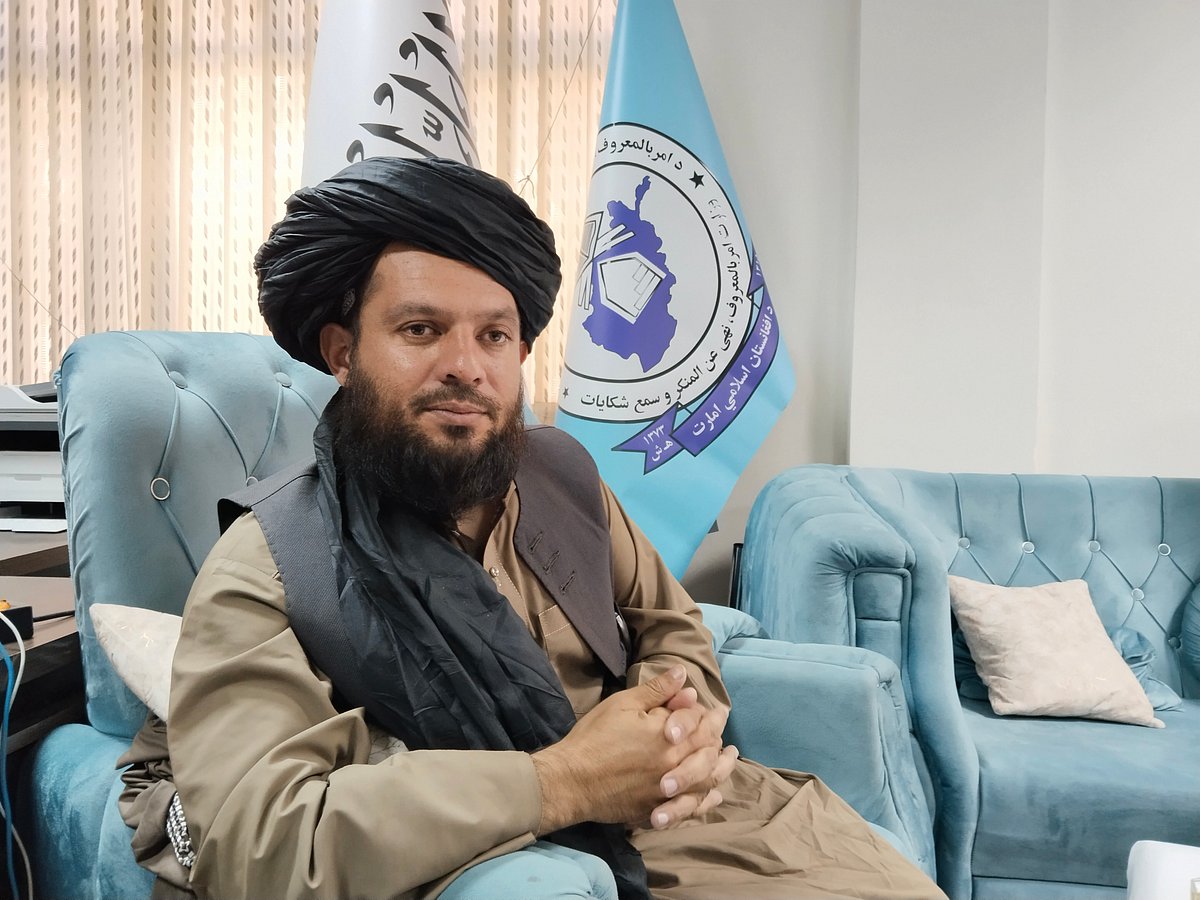
Among those offering this perspective was Saiful Islam Khyber, the spokesperson for the Ministry. A young Mujahid from Kandahar who participated in the 20-year war and survived torture, Khyber spoke with Suvojit Bagchi to justify the current mandates. He detailed the Taliban's rationale for these restrictions while claiming the administration intends to eventually reintegrate women into society in a phased manner.
Your ministry decides what is right and wrong. How do you make those decisions?
All our regulations are in the Holy Quran and Hadith. Killing, drinking alcohol, or taking interest—these are all wrongs. Our goal is to explain this to people. If someone continues after repeated warnings, it is our job to bring them to justice.
What happens if they still do not listen?
We have our own laws (35 articles). They provide guidance on hijab, not exposing the body, avoiding music, and not consuming drugs. If someone fails to follow these, we first talk to them and explain the right path. If they persist, they are sent for ‘Tajiri’ (discretionary) detention for an hour or two. If that fails, they are jailed for three days. If they still do not reform, they are arrested and presented to the court.
Can you make arrests?
We can after the third stage, but it is done in coordination with the police.
Do you carry weapons?
No, we do not have weapons.
So, your ministry governs based on one set of laws, while the judiciary has another?
The law is one: Sharia. However, different ministries have different policies. The Ministry of Health has its own; we have ours.
Can you arrest people yourself?
Neither the police nor my ministry has the power of final judgment. Like in other countries, that right belongs to the court. People say there are conflicts between us and the police, but that is not true. Our roles are different. The police handle violence, theft, and security. We handle immoral relationships, women's issues, hijab, and music. However, if a policeman oppresses someone, we can bring him to court.
You have a ban on music. I saw faces erased from paintings. What is the logic?
According to Sharia, taking photos is haram (forbidden). However, some of the scholars disagree. Some say only wall-mounted photos are forbidden; others say mobile photos are forbidden too. Because of this disagreement, there is no ban on mobile photos yet. But regarding music, there is no disagreement – it is haram everywhere.
Who makes these decisions?
The Islamic Emirate.
Why are these things considered ‘bad’?
It is written in the Quran. Allah has said it is haram, so it is haram. We do not have the right to question it.
But I saw – rather heard – music playing in vehicles in various parts of Afghanistan…
That does not make it permissible. It is like saying because there are more thieves in Kolkata or Mumbai than in Delhi, (so) theft is legal there (Kolkata or Mumbai). Not everyone follows the rules everywhere, but we hope people will gradually adopt Islamic manners.
Regarding women, some cover their faces in Kandahar, but not in Herat or Kabul. How do you explain this?
It is the same thing…just because they do not cover their faces in some places does not make it (uncovering the face) legal. It is necessary everywhere.
Girls cannot study past the sixth grade. In 20 years, who will treat female patients if there are no new female doctors?
That is a matter for the Ministry of Education. However, medical colleges are open in Kabul, Herat, and Kandahar.
Can girls go there?
Yes, of course. Each college can accommodate hundreds of girls.
But if they cannot study past sixth grade, how will they reach medical college?
There is plenty of time. It will take 50 years for current female workers to retire. We have enough female doctors for now.
So, you are saying there would not be a crisis?
No such situation will arise. A plan may emerge this year or next. Perhaps a law will be passed so all schools open, Insha'Allah. It’s not that education is stopped; it’s a temporary pause. It might open in a month or a year, but it will open.
I heard your ministry helped 8,000 women. What is that about?
Yes, we helped nearly 8,000 women with marriage rights. In Islam, a woman has the right to choose her husband. We also ensure they receive their Mahr (dowry). Often, fathers or brothers take that money; we intervene and stop that. In four years, we have helped nearly 60,000 women secure their rights – something that didn't happen under US-backed rule.
Can people complain against powerful officials?
Anyone can come to us without fear. Whether it’s a Minister, a General, or a Governor—we take action. Just today, we arrested a GDI (intelligence) officer and a police officer. We will send them to court.
As the interview drew to a close, Saiful Islam Khyber spoke of a different side of his ministry – one that acted as a shield for women against their own families, ensuring that women’s property and resources are not snatched away by greedy – and often close – relatives.
In Khaibar’s world, the Ministry was the ultimate balancer – a place where the ancient laws of the desert met the administration of a modern state – where the ‘pause’ on a young girl's future was merely a footnote in a much longer, divine story.