What to do if you have a heart attack while alone at home
You’re alone at home when you suddenly notice symptoms of a heart attack. In that moment of intense pain and panic, it’s hard to think clearly about what to do, or not to do.
That’s why it’s essential to know the right steps in advance. Saif Hossain Khan, medicine consultant at Popular Diagnostic Centre in Dhanmondi, explains the measures to Rafia Alam.
Recognise the symptoms
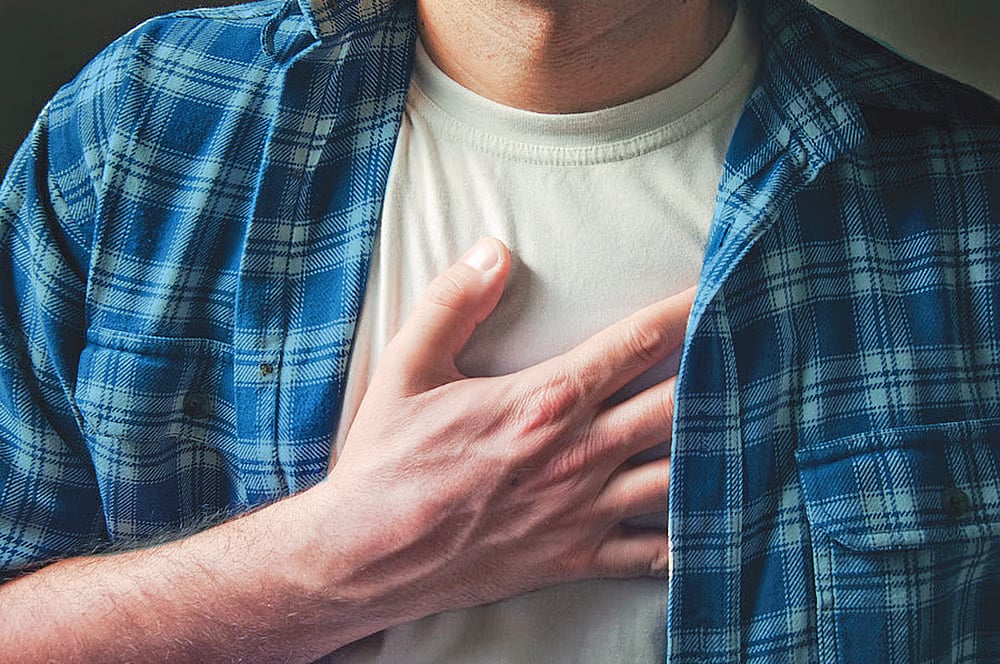
Many believe that heart attack pain occurs on the left side of the chest, but that’s not always true. The pain usually centres in the middle of the chest and feels extremely intense, as though there’s pressure or squeezing inside.
In some cases the pain is felt just below the chest, in the upper abdomen. The pain can radiate from the chest or abdomen to the arms, neck, jaw, or to the back. Along with the pain there could be shortness of breath and excessive sweating as well.
You may feel nauseated or vomit. Some people might feel dizzy or light-headed and experience sudden weakness or fatigue. A fear of impending death might also be common.
Seek immediate help
If you notice symptoms of a heart attack, you need to get medical help as quickly as possible. So, call an ambulance and arrange to go to the nearest hospital without delay.
However, before that you can use a nitroglycerin spray under your tongue. Two puffs of the spray may provide temporary relief. If you can, inform someone nearby and ask them to stay with you. If there’s no nitroglycerin spray at home, ask that person to bring one.
Why you shouldn’t go out alone
Some might think it’s faster to drive themselves to the hospital instead of going through all of that. However, that can be even more dangerous.
Because, during a heart attack a person can lose consciousness at any moment and that can happen while on the way. So, it’s safer to stay where you are and wait for help to arrive. Keep the door unlocked so rescuers can reach you easily.
Additional tips
Try not to panic. Keep calm and stay seated instead of moving around.
You may lie down also, especially if you are feeling dizzy or light-headed.
If you have difficulty breathing, raise your head slightly with a pillow to ease your breathing.
Avoid eating or drinking anything during a heart attack. Attempting to swallow food or water at that moment could worsen the situation.