Growing up, Rabindranath Tagore was a familiar presence to me. His poems appeared in textbooks, his songs echoed at cultural events, and his name seemed woven into the very fabric of Bengali identity. Yet, until last month, Tagore was nothing more than a name and a picture to me.
That changed the moment I stepped into Jorasanko Thakur Bari.
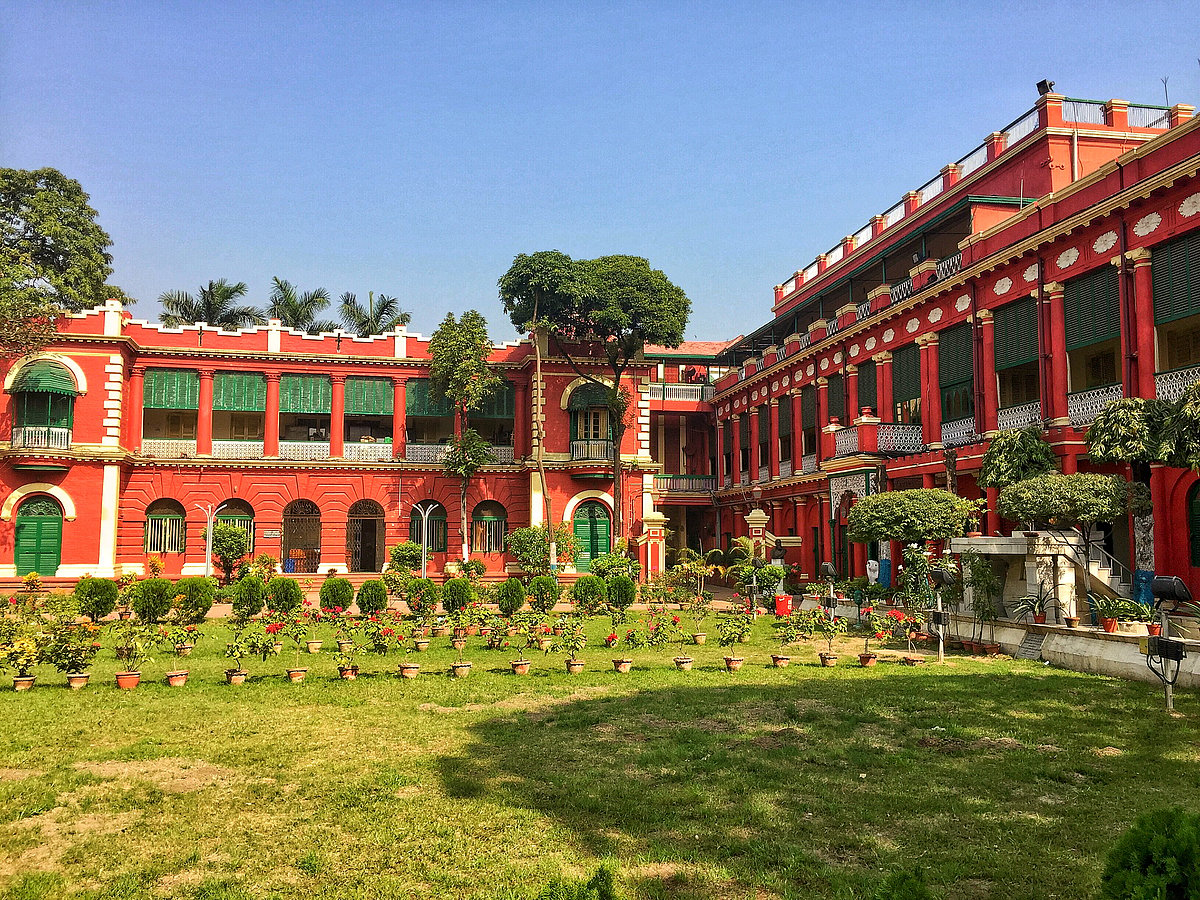
Tucked away amid the chaos of Kolkata, the red-brick mansion stands in quiet dignity. At first glance, it is beautiful. But the longer I spent there, the more I realised that its true beauty lies in its stories.
As I walked through the corridors, everything felt strangely intimate. These were not just museum halls; they were once spaces where a child ran through courtyards, where ideas were exchanged, where poems were written, and where one of the world’s greatest literary minds spent much of his life. For the first time, Tagore did not feel like a distant icon. He felt human.
I paused in front of old photographs, handwritten manuscripts, paintings, and personal belongings, imagining the lives behind them. Each room seemed to unfold a different layer of history. The house was not silent; it spoke through its walls, its windows, and the countless memories it holds.
What fascinated me most was how alive the place felt. Despite being a historic site, it did not feel trapped in the past. Instead, it felt as though creativity still lingered in the air. I found myself wondering what conversations once filled those rooms and how many dreams were born within those walls.
One of the most memorable parts of the visit was standing on the balconies overlooking the courtyard. The afternoon sunlight fell softly on the red walls, and for a moment, the noise of the city felt distant, almost unreal. It was easy to imagine a young Tagore observing the world from these very spaces, quietly gathering impressions that would later find their way into his poetry, songs, and stories. The house did not merely preserve the memory of a great writer; it offered a glimpse into the environment that nurtured his imagination.
What struck me most was how deeply intertwined the personal and the historical felt at Jorasanko. Every photograph, piece of furniture, and handwritten page seemed to bridge the gap between the ordinary and the extraordinary. Great literary works often feel larger than life, yet here I was reminded that they were created by a person who lived, learned, and dreamed within these very walls. That realisation made Tagore’s achievements feel even more remarkable. Rather than diminishing his legacy, it made it more human, and therefore more inspiring.
Before visiting Jorasanko Thakur Bari, I admired Rabindranath Tagore. After visiting it, I felt connected to him. And perhaps that is the magic of the place: it does not simply teach history, it makes history feel real.
Among the many thoughts that crossed my mind during the visit, I kept returning to Shesher Kobita. It has long been one of my favourite works by Tagore, not only for its lyrical beauty, but also for its exploration of love, individuality, and emotional complexity. Walking through the rooms of Jorasanko Thakur Bari, I could not help thinking about the mind that created Amit and Labanya, characters who still feel strikingly modern, even after nearly a century.
There was something surreal about standing in the home of a writer whose words had once made me pause, reflect, and see the world differently. The distance between reader and author suddenly seemed much smaller. The house transformed Tagore from a celebrated literary figure into a person: someone who observed, questioned, imagined, and turned those impressions into stories that continue to resonate today.
As I wandered through the mansion, I realised that the visit was not only about learning history. It was also about reconnecting with the books and ideas that have shaped me as a reader. For me, Jorasanko Thakur Bari was not merely the birthplace of Rabindranath Tagore, it was the birthplace of worlds I had already visited through the pages of Shesher Kobita.
The visit also made me think about the richness of our culture and heritage. In an age of fast-moving trends and short attention spans, places like Jorasanko Thakur Bari remind us of the enduring power of art, literature, and ideas. They remind us that culture is not something we inherit passively; it is something we must continue to cherish and preserve.
As I walked out of the mansion, camera roll full and feet tired from exploring, I realised I was taking home something far more valuable than photographs. I was leaving with a deeper appreciation for the history that has shaped us and for the man whose words continue to cross borders, generations, and languages.