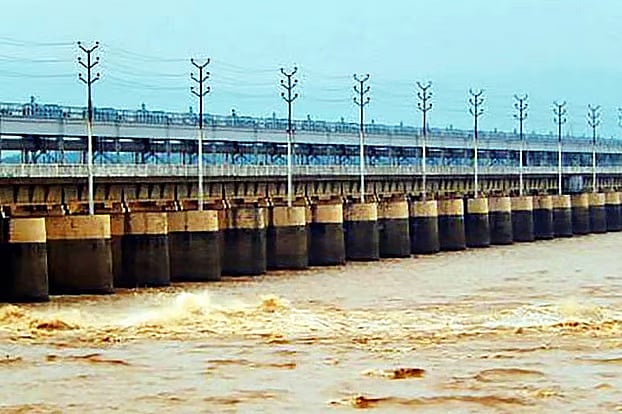
Recently I read several writings expressing differing opinions about the Padma Barrage project. In reality, any infrastructure built over water can have harmful effects on the environment and human life, especially when one lives in a delta region. However, in this case, an analysis of the pros and cons must be made based on practical reality.
On 31 August 2024, I wrote in Prothom Alo, “Why is a solution not possible through agreements with India, and what would happen if we build dams ourselves?” It included a detailed explanation of what a dam is, its definition, and types. In addition, I have at least five articles in Prothom Alo on water issues, including two on international water treaties.
I believe that every citizen of Bangladesh should have some basic knowledge about water-related issues. This topic should be given greater emphasis in our textbooks too. More in-depth, knowledge-based discussions on this issue are needed within civil society.
Compared to the thousands of years of rivers flowing naturally, the history of river management and modern infrastructure on rivers is relatively very recent, only a few hundred years old. Among the most debated and controversial structures are dams built across rivers to generate electricity and control floods, and barrages constructed to divert the flow of water.
These technologies were developed to meet human needs, but in many countries they are now being dismantled as their necessity declines.
The United States has already removed about 2,400 dams and barrages.
Even after that, around 92,000 dams and barrages still remain there. It is said that around the 1920s, nearly 40 percent of total electricity production in the United States came from hydropower. Flood control and irrigation systems were also built based on these infrastructures.
Japan, for example. is a narrow and elongated island nation with mountains running through the middle. Rivers originate in those mountains and flow into the sea, but they are very short in length. Since water naturally flows downward, most rivers would dry up completely within a week without rain.
To solve this problem, Japan built around 3,000 dams in the mountains to store rainwater and gradually release it later, thereby managing its water needs. These structures are also used for flood control. And China has around 100,000 such dams.
Even in neighboring India, there are about 5,300 dams and barrages still in operation.
Compared to that, how many dams and barrages does Bangladesh have? In total, only five. The two major ones are the Teesta Barrage and the Kaptai Dam. So can it be said that river management in Bangladesh is excessively dependent on infrastructure? Perhaps not. However, the real question remains whether the right infrastructure is being built in the right place.
In particular, these questions are being widely asked about the current “talk of the town”—the Padma Barrage project. It is true that we are not yet in a position to make fully serious judgments about it, because we do not know its detailed design. So only the limited information available can be discussed. Broadly speaking, in light of Bangladesh’s water management reality, it is hard to deny that the project is necessary. A few key points are mentioned briefly below.
1. Environmental impact of the barrage
Environmentalists worldwide generally do not prefer building structures on rivers unless absolutely necessary. However, for Bangladesh there was no real alternative. The Padma Barrage is being constructed because upstream India has reduced water flow through the Farakka Barrage. Without the Farakka Barrage, there would actually be no need for the Padma Barrage. A detailed environmental assessment of this project would have been helpful.
However, it has been scientifically proven that in recent years, due to the impact of the Farakka Barrage, water levels in southern rivers have decreased and salinity has increased. The Sundarbans—the world’s largest mangrove forest—is the most affected by this salinity intrusion. The “top dying” disease is killing sundari trees there. The Padma Barrage is expected to improve this situation. Moreover, the barrage includes modern technologies such as navigation locks, fish passes, and silt flushing systems, which can significantly reduce environmental damage caused by the structure.
2. Location of the barrage
There is not much flexibility in choosing its location. It must be built between the border and the confluence of the Jamuna and Padma rivers. If built too far upstream, the reservoir capacity will decrease. It must also be downstream of the source of the Gorai–Madhumati rivers, because water must be raised by the barrage and then allowed to flow through the Gorai system. On the other hand, if built too far downstream, the barrage would need to be much higher; otherwise, upstream tributaries would not receive water.
Therefore, the current location has been selected after extensive studies. It has long been considered the most suitable site.
3. “Positive-sum game” vs “zero-sum game”
After Farakka, Bangladesh is a downstream country; therefore, upstream benefits only India while downstream losses are borne by Bangladesh—a “positive-sum game” in that context. But in the case of the Padma Barrage, both upstream and downstream are within Bangladesh itself. So both benefits and losses occur within the same country. Moreover, water is being stored and released within the same river system. This makes it a “zero-sum game.”
Upstream of the Ganges in India, there are about 300 additional small and large dams. Likewise, as mentioned earlier, thousands of dams and barrages around the world are located within countries themselves, functioning as zero-sum systems. This is how dams and barrages operate: they store water during the wet season and release it during the dry
4. Salinity in the downstream area:
A misconception has developed that constructing a barrage will dry up the Padma downstream. As a result, it is believed that a new salinity problem will arise at the Meghna estuary due to lack of water. The Padma eventually meets the Jamuna. In the dry season, the Jamuna still carries a good amount of water. Therefore, even if the Padma’s flow decreases, there should not be significant downstream damage. Some water will also be available through the “backwater effect.”
According to renowned Indian water expert Kalyan Rudra, neither the Farakka nor the Gajoldoba barrage is economically beneficial for India. So why were they built? Were they constructed merely as political tools?
Again, the water stored in the barrage during the wet season and released in the dry season will not only be for the Padma’s distributaries but also for downstream areas. So in the dry season, downstream water availability should actually increase. Moreover, for about six to eight months of the year, most gates of the barrage will remain open and the river will flow naturally.
However, how efficiently monsoon water can be stored and used in the dry season will depend on the “reservoir regulation rules” being developed to operate the barrage.
Today, modern technologies such as artificial intelligence can be used to help make decisions regarding these regulation rules, ensuring optimal use of water from the barrage.
5. Sediment deposition
Yes, this can be a problem. However, detailed studies and surveys have likely been conducted on this issue. It should be noted that keeping the barrage gates closed during the dry season may increase sedimentation problems. But in reality, there is very little rainfall in this region during the dry season, so sediment issues are less significant.
Large rivers like the Padma at that time are mainly fed by groundwater seepage, known as “base flow,” or by meltwater from glaciers. Such large rivers are called “perennial rivers.” There are also two other types of rivers—“intermittent” and “ephemeral” rivers—which generally do not have base flow.
Sediment enters rivers mainly during the monsoon season, when rainwater flows over land carrying soil into the river. During that time, most barrage gates remain open. Yes, occasionally gates may be closed to store water, which can increase sediment accumulation.
However, one advantage is that because of the Farakka Barrage upstream, a large portion of sediment is already being deposited above Farakka, reducing sediment flow downstream into Bangladesh. After Farakka, very little new water and sediment are added in the Bangladesh section of the Ganges system. However, the situation is complex: sedimentation is not the only issue—barrages can also cause riverbank erosion downstream.
If properly designed and if “reservoir regulation rules” are developed intelligently, many of these negative impacts can be significantly reduced.
Finally, in reality, the entire process is also linked with politics. Many argue that the Farakka Barrage is no longer truly necessary for India. Similar views are also expressed about the Gajoldoba Barrage.
According to renowned Indian water expert Kalyan Rudra, neither the Farakka nor the Gajoldoba barrage is economically beneficial for India. So why were they built? Were they constructed merely as political tools?
For several months, I have been watching multiple YouTube videos made by Indians about the renewal of the Ganges Treaty. In one of them, a statement by India’s foreign minister regarding the renewal of the Ganges or Indus treaties is noteworthy. The English statement translates as: “Neighbouring countries that do not wish to cooperate with India will have to pay the price.” Water withholding is considered one such form of pressure.
It should be understood that requesting water from a shared river under a treaty is not simply like begging with an outstretched hand. For example, if a neighboring country has oil, asking for it freely is not guaranteed—they may or may not give it. But in the case of international rivers, the downstream country’s right to water is internationally recognized, and the upstream country is obliged to ensure its fair share.
The diversion of water upstream has already been prohibited under international law. Therefore, such actions go against established principles. An international legal framework has also been developed on this issue.
Unfortunately, neither Bangladesh nor India has signed it. However, even without signing, its guidelines can still be used as reference points in discussions and arguments, because the law was adopted by the United Nations based on the consensus of most member states worldwide. Long before this law, there were also numerous examples of fair water-sharing agreements between countries based on customary international law.
Finally, I will end with a story. During 1999–2000, while I was studying for my master’s degree at the National University of Singapore (NUS), a major research project on desalination came to the Civil Engineering Department. Singapore had been importing drinking water from Malaysia at a very low cost. As an island nation, it had limited freshwater resources. But suddenly, it decided to produce its own drinking water by desalinating seawater—even though it would cost several times more than importing water from Malaysia.
When asked why this is being done, a professor replied, “to ensure water security.”
Singapore’s relationship with Malaysia is not bad, but even so, in case of any unexpected situation or global instability leading to a dispute, Malaysia would not need to fire a single shot—simply shutting off the water supply pipeline would be enough to end the situation. They are not willing to remain in such a state of uncertainty.
Bangladesh also needs to start planning with “water security” in mind. In this regard, there is no alternative to the Padma Barrage project.
* Dr. Md. Sirajul Islam is Professor, Department of Civil and Environmental Engineering, North South University and a water and environmental expert.
* The opinions expressed here are the author’s own
* This article appeared in Bangla in Prothom Alo online and has been translated here by Ayesha Kabir for Prothom Alo English Online