Opinion
Ashulia’s toxic burden: Workers face growing environmental health crisis
For thousands of workers and residents living beside Bangladesh’s rapidly expanding textile and industrial belt, pollution is no longer an abstract environmental issue. It is becoming a daily health reality.
Factories provide employment, income and foreign exchange for the country, but in communities surrounding the industrial centres of Ashulia and Savar, the environmental cost of production is increasingly visible.
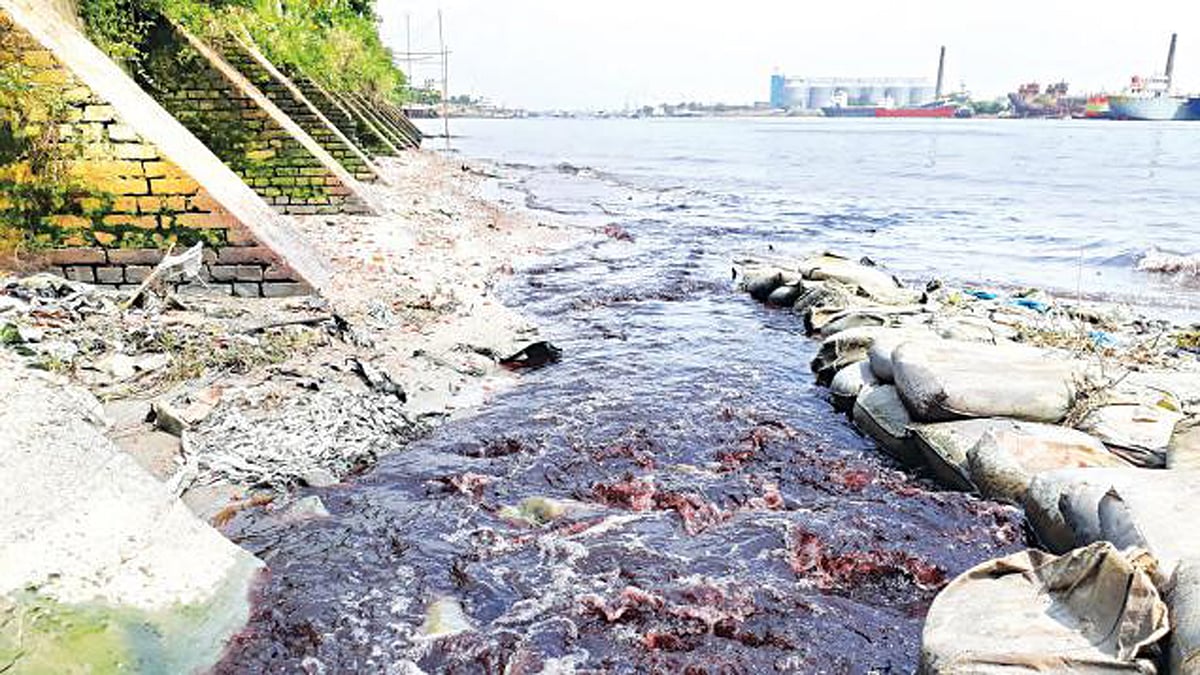
Rivers and canals receive industrial discharges, agricultural soils are exposed to contaminated water and sediments, and communities living close to factories face repeated exposure to substances that can persist in the environment and accumulate in people.
A new community-based monitoring study conducted by the Environment and Social Development Organization (ESDO) in cooperation with Health and Environment Justice Support (HEJSupport), under a multi-actor partnership involving FEMNET, Südwind, INKOTA, BILS and other partners, has brought this hidden crisis into sharper focus. The study analysed soil, water, wastewater and human-hair samples and combined laboratory findings with interviews and focus-group discussions involving affected communities. (HEJ-Support)
The findings are deeply concerning. The research identified PFAS, chlorinated paraffins, nonylphenols, heavy metals and other hazardous chemicals in environmental samples collected from textile-producing communities in Ashulia. PFAS contamination in some water samples was extraordinarily high compared with international drinking-water benchmarks. PFOA was detected at concentrations of 2.13 and 2.99 micrograms per litre, while PFOS reached 2.78 micrograms per litre.
Compared with the US Environmental Protection Agency's current drinking-water limits cited in the report, some of these concentrations were hundreds of times higher. (HEJ-Support)
These represent a warning about the environmental conditions in which workers, children, women and other residents are living.
A chemical cocktail in the environment
PFAS, or per- and polyfluoroalkyl substances, are often described as “forever chemicals” because many of them are highly persistent in the environment. They have been widely used because of their resistance to water, grease, heat and stains and can be associated with industrial and textile applications.
The Ashulia study found multiple PFAS compounds in tested samples. PFOA and PFOS were among those detected at particularly alarming concentrations. PFNA was also found at a level substantially above the US EPA benchmark cited by the researchers. (HEJ-Support)
The significance of PFAS contamination is that these substances do not behave like ordinary pollutants that simply disappear after entering the environment. Their persistence means contamination can remain for long periods, potentially moving through water, soil and biological systems.
The study also detected short-chain chlorinated paraffins (SCCPs). One wastewater sample contained SCCPs at 65.83 micrograms per litre, almost three times the 25 micrograms-per-litre ZDHC wastewater limit referenced in the report. Chlorinated paraffins are persistent industrial chemicals and some have serious environmental and health implications. (HEJ-Support)
Another troubling finding concerned nonylphenols and related chemicals.
Nonylphenol was detected at 76.43 micrograms per litre, more than 250 times the EU drinking-water value cited by the researchers. Octylphenol and nonylphenol ethoxylates were also detected above the referenced ZDHC limit. These substances are of particular concern because some alkylphenols have endocrine-disrupting properties. (HEJ-Support)
The picture emerging from these results is a chemical mixture problem.
Lead in the soil, mercury in human hair
The study's findings on heavy metals are equally disturbing.
Lead was detected in Ashulia agricultural soil at 114.64 parts per million, exceeding the Bangladesh agricultural soil safety threshold of 100 ppm cited in the report. Cadmium was also detected at 2.1 ppm, approaching the national agricultural threshold of 3 ppm. (HEJ-Support)
Lead contamination is particularly worrying where agricultural land, homes and industrial areas exist side by side. Lead is a potent neurotoxic substance, with children especially vulnerable to its effects. Persistent exposure can affect neurological development and other aspects of health.
The implications extend beyond the soil itself. Where contaminated soil is used for cultivation, there is a potential pathway from industrial pollution to soil, crops, livestock, food and ultimately people. Earlier research in an industrially affected agricultural area of Ashulia has also documented elevated concentrations of several heavy metals, including chromium, arsenic and lead, and identified anthropogenic activities as important sources of some of these contaminants. (PubMed Central (PMC))
Perhaps one of the most striking findings of the ESDO-HEJSupport study came from human hair analysis. Some residents had elevated mercury concentrations, with the report noting particularly concerning findings among women. Mercury is a toxic metal capable of affecting the nervous system and other biological systems. Finding elevated mercury in human biological samples does not, by itself, establish that a particular factory caused an individual's exposure or illness. But it is an important warning sign that warrants detailed exposure assessment, medical investigation and stronger environmental controls.
Health complaints are being heard
Communities are not talking only about polluted rivers and contaminated soil. Residents report health problems including respiratory difficulties, skin problems, gastrointestinal complaints, headaches, eye irritation and chronic fatigue. (femnet.de)
People living and working in industrial areas can be exposed to numerous hazards at the same time, including chemical substances, dust, fumes, poor air quality, heat, noise, unsafe working conditions and inadequate sanitation.
That is precisely why the findings demand a comprehensive environmental-health response rather than a narrow factory-by-factory inspection. The central concern is cumulative exposure.
A garment worker may spend eight to ten hours inside a factory and then return to a home located beside a polluted canal or industrial drain. A child may play near contaminated soil. A household may depend on groundwater. A farmer may irrigate crops with polluted surface water. Livestock may drink from contaminated water bodies. In such circumstances, occupational exposure and community exposure overlap.
FEMNET has noted that many people in textile-producing communities live immediately beside factories, contaminated drains and water bodies, while many also work in the textile industry themselves, creating the possibility of exposure both at work and at home. (femnet.de)
More than an environmental problem
The Ashulia-Savar crisis should therefore be understood as an environmental justice issue.
The people most exposed to industrial pollution are often not those who benefit most from the economic value generated by industrial production. Workers produce garments for domestic and international markets, while neighbouring communities absorb part of the environmental burden.
This raises a fundamental question: Who pays for the pollution?
If hazardous chemicals are discharged into waterways, the cost does not disappear. It is transferred from the factory balance sheet to the river, the farmer, the worker, the household and ultimately the public-health system.
A polluted canal may reduce the availability of clean water. Contaminated soil can undermine agriculture. Chemical exposure can create health costs. Lost working days reduce household income. Medical treatment creates additional financial pressure. Environmental degradation can also reduce the quality of life and long-term economic resilience of communities.
In other words, pollution is not free.
The burden on tens of thousands of people
The industrial belt of Ashulia and Savar is home to a very large population of workers and residents, and the affected communities identified by the study include areas such as Dhamsona, Ghoshbag, Noyapara, Jamgora, Molla Bazaar and surrounding industrial communities. The scale of the population exposed to industrial environmental pressures means that the issue cannot be treated as a small localised pollution incident. (HEJ-Support)
For tens of thousands of people living and working in and around these communities, environmental quality is directly connected to everyday survival.
Clean water is essential for drinking, cooking, washing and agriculture. Clean soil is essential for food production. Clean air is essential for workers and children. When all three environmental compartments are under pressure simultaneously, the risk becomes multidimensional.
This is why the government, industry and international brands cannot view chemical management as merely a compliance exercise.
Community-based monitoring changes the conversation
One of the most important aspects of the ESDO-HEJSupport research is its community-based monitoring approach.
Instead of relying exclusively on conventional regulatory inspections, the project incorporated observations and experiences from people who live and work in the affected areas. Environmental samples were collected and subjected to laboratory testing, while interviews and focus groups documented community experiences and health concerns. (HEJ-Support)
This approach gives communities something they have often lacked: evidence.
For years, residents may say that water has changed colour, fish have disappeared, crops are declining or people are becoming sick. Without scientific evidence, such concerns can easily be dismissed.
Laboratory results change that equation.
When community observations are combined with scientifically analysed samples, environmental complaints can become measurable evidence that regulators, factory owners, brands and policymakers must address.
What must happen now?
The first priority should be an independent and comprehensive environmental-health investigation covering the major industrial clusters of Ashulia and Savar.
Sampling should not be limited to factory wastewater outlets. It should cover rivers, canals, groundwater, agricultural soils, sediments, air, food pathways and, where ethically and medically appropriate, biological samples from exposed populations.
Second, Bangladesh needs stronger control over the use and discharge of hazardous chemicals in the textile sector. Factories should maintain transparent chemical inventories and adopt safer alternatives wherever possible.
Third, industrial wastewater treatment systems must be independently verified. Merely possessing an effluent treatment plant cannot be considered sufficient. The question is whether the plant is properly operated, whether it removes hazardous chemicals and whether treated effluent remains within applicable standards.
Fourth, workers need stronger right-to-know protections. Employees should know what chemicals they handle, what risks those substances pose and what protective measures are required.
Fifth, the government should establish systematic health surveillance for workers and communities in heavily industrialised zones. Particular attention should be given to children, pregnant women, agricultural workers and people with prolonged occupational exposure.
Sixth, international apparel brands and buyers must accept responsibility throughout their supply chains. Environmental due diligence cannot stop at the factory gate. If a brand profits from production in a particular community, its responsibility should extend to identifying and addressing serious environmental and human-rights risks associated with that production.
Development cannot be built on contamination
Bangladesh's garment industry is a national economic success story. Millions of people depend on it, directly and indirectly. Protecting workers and communities from toxic chemicals is therefore not an argument against industrialisation or exports. It is an argument for responsible industrialisation.
Economic development that destroys rivers, contaminates soil and exposes workers to hazardous chemicals is ultimately self-defeating. The country cannot protect its export competitiveness by externalising environmental and health costs onto workers and communities.
The findings from Ashulia should therefore be treated as a warning, not merely another environmental report.
PFAS hundreds of times above international drinking-water benchmarks, lead above the cited national agricultural soil threshold, mercury detected at elevated levels in human hair, and a range of other hazardous chemicals appearing in water, wastewater and soil together tell a compelling story: the chemical footprint of textile production is reaching beyond factory walls.
The people of Ashulia and Savar should not have to choose between employment and health, between economic opportunity and clean water, or between a thriving textile industry and a safe environment.
The challenge now is to ensure that Bangladesh''s industrial future does not repeat the mistakes of industrialisation elsewhere, where pollution was treated as the inevitable price of development. It is not inevitable.
With stronger regulation, cleaner production, transparent chemical management, responsible global supply chains, independent monitoring and meaningful participation by workers and communities, Ashulia can become an example of how industrial growth and environmental protection can coexist.
That transformation must begin with recognition of the problem. And the evidence emerging from the communities of Ashulia and Savar suggests that the time for recognition has already arrived.
* Dr. Shahriar Hossain is an environmental scientist and social justice advocate working on environmental pollution, toxic chemicals, public health and sustainable development.