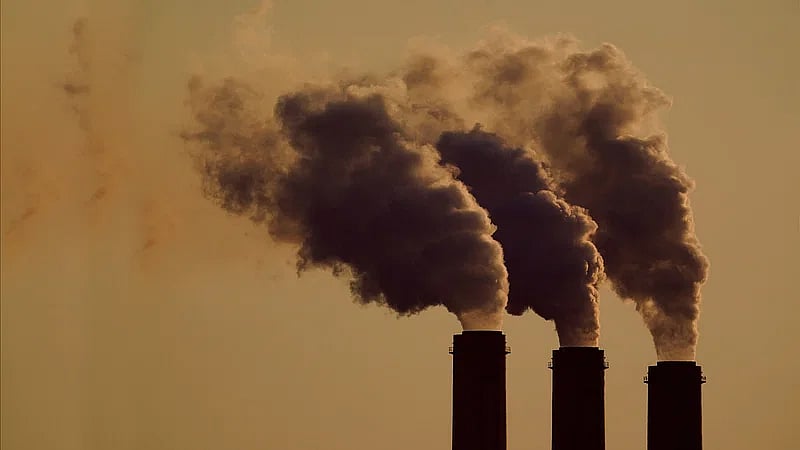
As the world grapples with the escalating climate crisis, carbon trading and carbon credits have emerged as some of the most widely discussed mechanisms for reducing greenhouse gas emissions. Governments, corporations, international financial institutions, and environmental organisations increasingly view carbon markets as an important tool for achieving global climate goals.
Supporters argue that carbon trading creates economic incentives for emission reductions and accelerates investments in sustainable development. Critics, however, question whether it truly addresses the root causes of climate change or merely allows major polluters to continue business as usual.
For climate-vulnerable countries like Bangladesh, understanding both the opportunities and limitations of carbon trading is essential. While carbon markets may offer access to new sources of climate finance and green investments, they also present significant risks related to equity, governance, environmental integrity, and climate justice. Therefore, a balanced and critical examination of carbon trading is necessary before embracing it as a pathway toward sustainable development.
What is carbon trading?
Carbon trading is a market-based mechanism designed to reduce greenhouse gas emissions by assigning a monetary value to carbon dioxide and other greenhouse gases. Under this system, organisations, companies, or countries that reduce emissions below a specified threshold can generate carbon credits. These credits can then be sold to entities that exceed their emission limits or seek to offset their carbon footprint.
The concept is based on the principle that emissions reductions should occur where they can be achieved most efficiently and at the lowest cost.
Carbon credits may be generated through various activities such as renewable energy projects, forest conservation, afforestation, reforestation, methane capture, improved waste management, energy efficiency measures, and sustainable agricultural practices.
Today, carbon trading operates through both compliance markets, which are regulated by governments, and voluntary carbon markets, where businesses and individuals purchase credits to meet self-imposed climate commitments.
At first glance, the concept appears logical and pragmatic. It seeks to harness market forces to drive environmental outcomes. However, the effectiveness of carbon trading depends heavily on how the system is designed, regulated, monitored, and enforced.
Potential benefits of carbon trading
One of the strongest arguments in favor of carbon trading is its ability to mobilise financial resources for climate action. By placing an economic value on carbon reductions, carbon markets can attract private sector investment into projects that might otherwise struggle to secure funding.
Developing countries often possess significant opportunities for low-cost emissions reductions through renewable energy deployment, forest restoration, sustainable land management, and waste management improvements. Carbon markets can channel international financing toward these activities, helping countries pursue greener development pathways while generating economic benefits.
Carbon trading can also encourage innovation. When emissions carry a financial cost, businesses have greater incentives to adopt cleaner technologies, improve energy efficiency, and invest in sustainable production processes. In theory, this market-driven approach can accelerate the transition toward a low-carbon economy.
Another important benefit is flexibility. Carbon markets allow businesses and governments to achieve emission reduction targets in ways that are economically efficient. Rather than imposing rigid regulations, carbon trading creates incentives for participants to identify the most cost-effective solutions.
For many developing nations, carbon markets can also contribute to broader sustainable development goals. Projects that generate carbon credits often create employment opportunities, improve energy access, reduce pollution, enhance ecosystem services, and strengthen climate resilience.
Hidden challenges and risks
Despite these potential advantages, carbon trading is far from a perfect solution. In fact, some of its most serious weaknesses have become increasingly apparent over the past two decades.
One major criticism is that carbon trading can enable large polluters to avoid making meaningful reductions in their own emissions. Instead of transforming their operations, companies may simply purchase carbon credits to offset continued pollution. This creates a situation where emissions reductions occur on paper while fossil fuel dependence remains largely unchanged.
Developed countries and large multinational corporations have contributed disproportionately to global greenhouse gas emissions. In contrast, many developing countries, including Bangladesh, have contributed very little to the problem while suffering some of its most severe consequences.
The concept of “offsetting” is particularly controversial. Critics argue that reducing emissions in one location does not necessarily justify continued emissions elsewhere, especially when the climate crisis demands rapid and substantial reductions across all sectors.
Questions regarding the environmental integrity of carbon credits have also emerged. Numerous investigations have revealed instances where carbon reduction claims were exaggerated, poorly verified, or based on projects that would have occurred even without carbon finance. Such situations undermine confidence in carbon markets and raise concerns about “greenwashing,” the practice of portraying environmentally harmful activities as sustainable through accounting mechanisms.
Another challenge relates to permanence. Forest conservation projects, for example, may generate carbon credits based on stored carbon. However, if forests are later destroyed by logging, wildfires, cyclones, or land-use changes, the previously claimed carbon benefits may disappear. Climate change itself is increasing the vulnerability of many ecosystems that serve as carbon sinks.
Equity and climate justice concerns
Perhaps the most important debate surrounding carbon trading involves issues of equity and climate justice.
The climate crisis is fundamentally linked to historical patterns of industrialisation and fossil fuel consumption. Developed countries and large multinational corporations have contributed disproportionately to global greenhouse gas emissions. In contrast, many developing countries, including Bangladesh, have contributed very little to the problem while suffering some of its most severe consequences.
In this context, there is growing concern that carbon markets may shift responsibility away from major emitters rather than requiring them to undertake deep domestic emission reductions.
There are also concerns regarding the rights of local communities and indigenous peoples. In some cases, carbon offset projects have restricted access to forests, agricultural lands, and natural resources that communities depend upon for their livelihoods. Without strong safeguards, carbon projects can unintentionally create new forms of environmental injustice.
A truly effective climate solution must not only reduce emissions but also protect human rights, promote social equity, and ensure that vulnerable populations share fairly in the benefits generated by climate finance.
Where carbon trading works - and where it does not
Carbon trading is most effective when emissions reductions can be accurately measured, monitored, reported, and independently verified. Renewable energy projects, methane capture systems, industrial energy efficiency improvements, and certain waste management initiatives often meet these criteria.
However, not all environmental values can be captured through carbon accounting.
Biodiversity conservation, ecosystem integrity, cultural heritage, public health, environmental justice, and climate adaptation often involve benefits that extend far beyond carbon storage. A mangrove forest, for example, provides storm protection, supports fisheries, conserves biodiversity, and sustains local livelihoods. Reducing its value to carbon credits alone risks overlooking its broader ecological and social significance.
Similarly, adaptation measures such as cyclone shelters, climate-resilient agriculture, early warning systems, and disaster preparedness programs are essential for vulnerable countries but may generate limited opportunities within traditional carbon markets.
This highlights a crucial limitation: carbon trading should complement, not replace, broader environmental and development policies.
Opportunities for Bangladesh
For Bangladesh, carbon markets present both opportunities and responsibilities. The country possesses significant potential in areas such as mangrove conservation, afforestation, reforestation, social forestry, agroforestry, renewable energy, biogas production, methane reduction, waste management, and energy efficiency. Properly designed carbon projects could attract international investment while contributing to sustainable development and climate resilience.
The world’s largest mangrove ecosystem, the Sundarbans, represents an important natural asset with substantial carbon sequestration potential. Equally, community-based forestry initiatives and ecosystem restoration programs could generate environmental and economic benefits while supporting local livelihoods.
Bangladesh’s rapidly growing renewable energy sector also offers opportunities for carbon finance. Investments in solar energy, clean cooking technologies, Low methane/zero-waste mechanism, and sustainable urban infrastructure could help reduce emissions while addressing development needs.
Moreover, carbon finance could support rural communities, create green jobs, encourage technology transfer, and strengthen national climate action efforts.
The risks Bangladesh must avoid while these opportunities are significant, Bangladesh must approach carbon trading with caution.
First, carbon markets should never be viewed as a substitute for climate finance commitments from developed countries. The principle of climate justice requires that major historical emitters provide financial and technological support to vulnerable nations. Carbon trading cannot replace obligations related to adaptation finance, loss and damage compensation, or broader climate justice commitments.
Second, robust governance systems are essential. Weak monitoring, insufficient transparency, and inadequate accountability mechanisms could lead to fraudulent claims, inequitable benefit-sharing, and loss of public trust.
Third, local communities must remain at the center of any carbon market strategy. Projects should respect land tenure rights, protect livelihoods, ensure meaningful participation, and deliver tangible benefits to affected populations.
Fourth, Bangladesh should avoid becoming overly dependent on carbon markets. Carbon credit prices can fluctuate significantly, creating financial uncertainty. Long-term climate and development planning should not rely solely on revenues generated from volatile international markets.
A balanced path forward
Carbon trading is neither a silver bullet nor an inherently flawed concept. It is a tool that can either contribute to meaningful climate action or become a mechanism for delaying necessary transformations.
For Bangladesh, the most sensible approach is to engage strategically with carbon markets while maintaining a strong commitment to climate justice, environmental integrity, and sustainable development. Any participation in carbon trading should be guided by transparency, scientific rigor, social safeguards, and equitable benefit-sharing mechanisms.
Most importantly, carbon markets must not distract from the fundamental objective of climate action: reducing dependence on fossil fuels, accelerating renewable energy transitions, protecting ecosystems, and building resilient societies.
The world cannot trade its way out of the climate crisis alone. Markets may play a role, but genuine solutions require political will, technological innovation, international cooperation, and a collective commitment to protecting both people and the planet.
As global discussions on carbon markets continue to evolve under the Paris Agreement framework, Bangladesh has an opportunity to shape a model that reflects the principles of environmental sustainability, social justice, and climate equity. The challenge is not merely to participate in carbon trading, but to ensure that it serves the interests of vulnerable communities and contributes to a safer, fairer, and more sustainable future for all.
* Dr. Shahriar Hossain is an environmental scientist, journalist, and social justice advocate, involved in the UNFCC, BRS Conventions, Global Framework on Chemicals, and Plastic Treaty negotiations. Contact: shahriar25@gmail.com