Australia has always been one of the most coveted destinations for Test cricket. A fast bowler always dreams of showcasing the very best of his pace, bounce and movement in Australian conditions. Likewise, every batter hopes to demonstrate the full extent of his batting capability in those conditions. In short, every cricketer aspires to experience the true essence of Test cricket on Australian soil.
After a long time, 23 years to be precise, Bangladesh are set to tour Australia for a two-Test series. In the meantime, an entire generation of Bangladeshi cricketers had come and gone without having the experience of playing a Test match in Australia.
It is surprising that cricketers such as Shakib Al Hasan, Tamim Iqbal and Mahmudullah never got the opportunity to play a Test match on Australian soil. Mushfiqur Rahim, the only remaining representative of that generation still playing Test cricket, will finally get that opportunity this time.
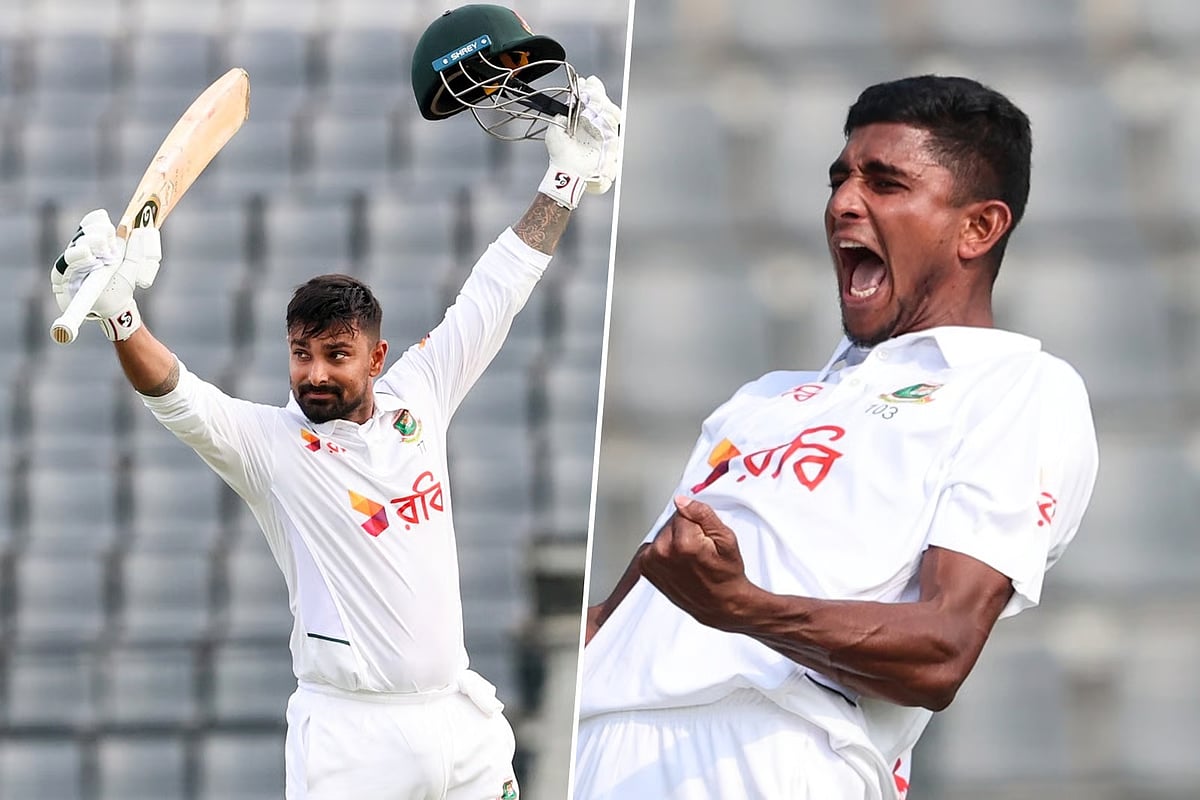
However, Bangladesh will be without te services of their leading pace bowler, Nahid Rana, for this much-anticipated series because of injuries. Litton Das, the batter from whom the team always expects the most, will also miss the first Test in Darwin.
Pace bowler Shoriful Islam has also been ruled out of the opening Test with a hamstring injury. If they recover fully, both Litton and Shoriful will be considered for the second Test in Mackay.
Injuries have blocked the path of all three players. The injuries to Litton Das and Nahid Rana, in particular, have also sparked controversy. Chief selector Habibul Bashar faced questions on the issue on Monday during a press conference held after the announcement of the squad for the first Test.
Fingers have also been pointed at the Bangladesh Cricket Board's (BCB) medical department over the injury management of Litton and Nahid.
What injuries Litton and Nahid have
Nahid suffered a side strain (on the left side of his rib cage) during the second Twenty20 International of Bangladesh's tour of Zimbabwe. The BCB has said he is unlikely to recover in time for the Australia series and will therefore miss both Tests.
Questions have been raised over the handling of Nahid Rana after he missed Bangladesh's only Test against Zimbabwe but played in two ODIs and the first two Twenty20 Internationals.
According to the board, Nahid will need between one and a half and two months before he is fully fit to return to competitive cricket.
Litton injured his left calf muscle while batting in the third One Day International (ODI) of the home series against Australia on 14 June. He is currently in Singapore undergoing platelet-rich plasma (PRP) therapy under the supervision of a specialist.
Following the completion of his treatment and rehabilitation programme, Litton is scheduled to undergo a fitness test on 13 August.
Controversy over injuries
Questions have been raised over the handling of Nahid Rana after he missed Bangladesh's only Test against Zimbabwe but played in two ODIs and the first two Twenty20 Internationals.
Critics argue that while there may have been ranking considerations in the ODI series, there were no such concerns in the T20Is. With a Test series against Australia approaching, they ask whether Nahid could have been rested during the T20I series against Zimbabwe.
Questions have also been raised over Litton's injury, with critics alleging that the BCB medical department misjudged the severity of his condition. As a result, despite travelling to Zimbabwe, he did not play a single match on the tour.
We divide our fast bowlers into three zones—red, green and yellow. If someone bowls too much and becomes overloaded, he moves into the red zone. But even if someone bowls too little, he can also end up in the red zone. That means a fast bowler has to bowl an adequate amount.Chief selector Habibul Bashar
There are also questions as to why Litton was sent to Zimbabwe instead of being rested when he was already experiencing issues with his leg. Muscle injuries of this nature usually heal within two to three weeks. Yet, more than a month and a half after sustaining the injury, Litton is still not fit to play, leaving his participation in the Australia tour uncertain.
Many have blamed what they describe as "wrong treatment" for the prolonged recovery.
Was Nahid really the victim of a poor decision?
Chief selector Habibul Bashar dismissed the allegations regarding Nahid Rana outright. He said Nahid's appearances had been managed carefully through a workload management programme. That was why he did not play every match in the home series against Australia and was also rested for the Test against Zimbabwe as well as one ODI in that series.
Explaining Nahid's workload management in greater detail, Habibul Bashar said, "We divide our fast bowlers into three zones—red, green and yellow. If someone bowls too much and becomes overloaded, he moves into the red zone. But even if someone bowls too little, he can also end up in the red zone. That means a fast bowler has to bowl an adequate amount. Nahid also needed to bowl enough before playing a Test match. That meant he had to play some form of cricket."
The chief selector also referred to the use of GPS trackers, devices that are now widely used in modern cricket to monitor how many matches a player can play and how much training they can undertake.
"Now we also have GPS trackers. Everything can be monitored, who will play which match, how many matches a player will play, which series he will be available for. Everything is tracked in this way," Habibul said.
Habibul concluded by making what was perhaps the key point regarding Nahid's case: it is difficult to expect a fast bowler to bowl at full pace and never suffer an injury. Even after taking every possible precaution to keep a fast bowler injury-free, injuries can still occur. That is normal in fast bowling, and that is what happened in Nahid's case.
What happened in Litton's case
Habibul Bashar also does not believe the BCB medical department bears any responsibility for the assessment of Litton's injury.
Now we also have GPS trackers. Everything can be monitored, who will play which match, how many matches a player will play, which series he will be available for. Everything is tracked in this way.Chief selector Habibul Bashar
According to him, in such cases, the board's medical department makes decisions regarding treatment and rehabilitation based on scan results and other medical examinations. Those tests are conducted at some of the best hospitals both at home and abroad.
Litton's case was no exception. Although he suffered the injury during the final ODI against Australia, he returned to bat later in the innings and remained unbeaten on 58. As he did not initially feel any significant discomfort, he was included in the squad for the T20I series against Australia in Chattogram and was expected to play in the second T20I.
However, after experiencing pain, Litton underwent a scan of his leg in Chattogram on 17 June. The scan revealed a Grade 1 tear in his calf muscle.
He then returned to Dhaka and began his rehabilitation programme. At one stage, Litton reported pain in another area adjacent to the original injury. As a result, another scan was conducted in Dhaka on 27 June.
The scan report showed that the injury he had sustained in Chattogram had improved to some extent. However, despite Litton's complaints of pain in the new area, the scan detected no problem there.
According to sources, after discussions with the team's physiotherapist and trainer, the team management decided to take what they described as a "calculated risk" regarding Litton. They believed that although he might not be ready for the Test match, he would recover fully before the second ODI against Zimbabwe. It was with that expectation that he was included in the squad for the Zimbabwe tour.
However, Litton continued to complain of pain in Zimbabwe, and as a result he did not play in a single match during the tour. After returning from a personal visit to China, the BCB sent him to Singapore for further treatment.
Another scan, conducted at Singapore General Hospital on 23 July, also found no problem in the area where Litton had reported new pain in Dhaka. The condition of the original injury sustained in Chattogram was similar to what had appeared in the Dhaka scan. There was no muscle tear, although the muscle remained bruised.
Why hasn't Litton recovered yet?
The type of injury Litton suffered usually heals within two to three weeks. Yet nearly one and a half months later, he is still not fit to play.
Officials familiar with the matter say that in cases like this, recovery depends not only on treatment and rehabilitation but also on factors such as a player's overall fitness, diet, sleep and general lifestyle. They stress, however, that this does not mean Litton has been negligent in any of those areas.
So why did the scan report conducted in Dhaka on 27 June and the scan performed later at Singapore General Hospital produce essentially the same findings? Why had Litton's condition not improved significantly during that period?
According to a source familiar with the matter, Litton may have placed additional strain on the injured area while undergoing a fitness test in Zimbabwe, which could have affected his recovery.
However, the source also acknowledged that this cannot be stated with certainty as the definitive reason behind the delay in his recovery.