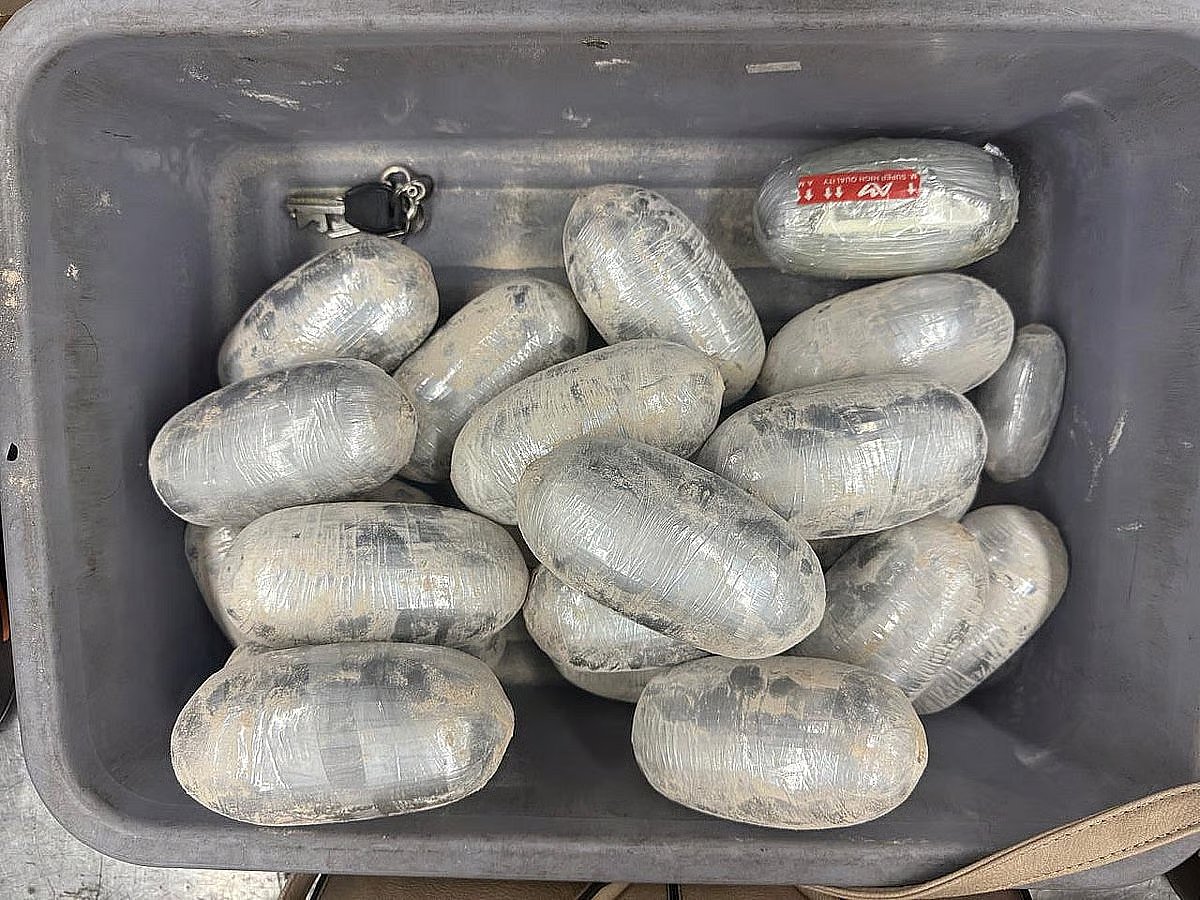
Bid to use Bangladesh as a cocaine transit hub
International drug trafficking syndicates are attempting to use Bangladesh as a transit point for smuggling cocaine, according to a report by the International Narcotics Control Board (INCB), a United Nations body. The INCB published the report on 26 February this year.
The report primarily examines the global drug trafficking situation in 2025. It says that after cocaine production in South America reached record levels, traffickers began searching for new markets and routes, with South Asia emerging as one of their new destinations.
According to the report, cocaine produced in Colombia, Peru and Bolivia is first transported to several African countries. From there, members of international criminal networks bring the drug to Bangladesh by air. Using Bangladesh as a transit point, part of the cocaine is then smuggled to various countries in South Asia and Europe.
The report warns that South Asia is no longer merely a transit region but is gradually becoming a consumer market for cocaine, raising concerns that cocaine use could also increase in Bangladesh.
Prothom Alo spoke to two senior officials of the Department of Narcotics Control about the findings of the INCB report. According to them, at least 10 cocaine consignments have been seized in Bangladesh over the past four years.
International drug trafficking syndicates are attempting to use Bangladesh as a transit point for smuggling cocaine, according to a report by the International Narcotics Control Board (INCB), a United Nations body. The INCB published the report on 26 February this year.
The Department of Narcotics Control (DNC)’s 2025 annual report also highlights cocaine trafficking.
According to that report, international drug trafficking networks are attempting to use Bangladesh as a transit point for cocaine smuggling.
Several nationals of Malawi, Nigeria, Tanzania and Cameroon have been arrested in Bangladesh for their involvement in cocaine trafficking. Those arrested had entered Bangladesh by air, with the aim of smuggling cocaine to India and other South Asian countries.
The DNC report mentions, nearly 130kg of cocaine was seized in Bangladesh in 2024. In 2025, the amount seized stood at 14.651kg. The Department of Narcotics Control's Central Chemical Laboratory tested seven cocaine samples in 2025, and all seven were confirmed to contain cocaine.
Drugs enter Bangladesh through border routes
The INCB report also outlines how drugs enter Bangladesh through routes other than air. It says drug trafficking networks in Southeast Asia are no longer confined to local markets and have now identified South Asia as a new target market. The spread of yaba in Bangladesh is part of that wider network.
Large quantities of methamphetamine—the key ingredient used to produce yaba—are manufactured in Myanmar’s Shan and Kachin states. The drugs are first transported through border areas in Myanmar to India's north-eastern region. They are then smuggled into Bangladesh through border areas in the Indian states of Assam, Mizoram, Manipur, Tripura and Meghalaya.
Whenever drugs are traced to a particular country, the relevant authorities there are informed so they can also take action.Hasan Maruf, director general of the Department of Narcotics Control
Meanwhile, the Department of Narcotics Control's 2025 annual report states that drugs are also entering Bangladesh from Myanmar through the Naf River, Teknaf, Shah Porir Dwip, Ukhiya, St Martin's Island and the Cox's Bazar coastline.
The current BNP government has taken steps to establish a stronger legal framework to combat drug-related crimes. The government is officially observing the International Day Against Drug Abuse and Illicit Trafficking today, Friday (26 June). This year's theme is, ‘World drug problem: persisting issues, new challenges, innovative responses’.
Rise of emerging synthetic drugs
Officials at the Department of Narcotics Control (DNC) say that alongside conventional narcotics, emerging and less common drugs are spreading rapidly across Bangladesh. Between 2018 and 2025, authorities identified and seized 13 types of new or previously uncommon drugs in the country.
Speaking to Prothom Alo, Mehdi Hasan, deputy director of the DNC's Dhaka Divisional Intelligence Office, said the detection of new types of drugs has increased significantly since 2018. Most of these substances are chemically synthesised.
According to DNC sources, although Bangladesh is not a drug-producing country, its geographical location leaves it highly vulnerable.
The country lies between the world's three major drug production and trafficking regions—the Golden Triangle, the Golden Crescent and the Golden Wedge. As a result, Bangladesh is increasingly becoming an important transit route and potential market for international drug trafficking networks.
The DNC report mentions, nearly 130kg of cocaine was seized in Bangladesh in 2024. In 2025, the amount seized stood at 14.651kg. The Department of Narcotics Control's Central Chemical Laboratory tested seven cocaine samples in 2025, and all seven were confirmed to contain cocaine.
The Golden Triangle comprises the border areas of Myanmar, Laos and Thailand and lies to the east of Bangladesh. Bangladesh shares a direct border with Myanmar.
The Golden Crescent refers to Iran, Afghanistan and Pakistan, a region known for drug production and trafficking routes, located to the west of Bangladesh.
The Golden Wedge includes the Indian states of Himachal Pradesh, Uttar Pradesh and Arunachal Pradesh, as well as parts of Nepal and Bhutan, and lies to the north of Bangladesh.
Hasan Maruf, director general of the Department of Narcotics Control, told Prothom Alo that whenever drugs are traced to a particular country, the relevant authorities there are informed so they can also take action. At the same time, the DNC and other law enforcement agencies in Bangladesh are working in coordination to bring drug traffickers to justice.
He said there has been a growing trend of drug trafficking through cyberspace and online platforms. To detect and prevent such crimes, the DNC has strengthened both its technological capabilities and its legal enforcement measures.