Light of art shines through the ashes of Prothom Alo
Exhibition Schedule
18 February 2026: 4:00 pm – 7:00 pm
19–28 February 2026: 11:00 am – 1:00 pm; 3:00 pm – 5:00 pm
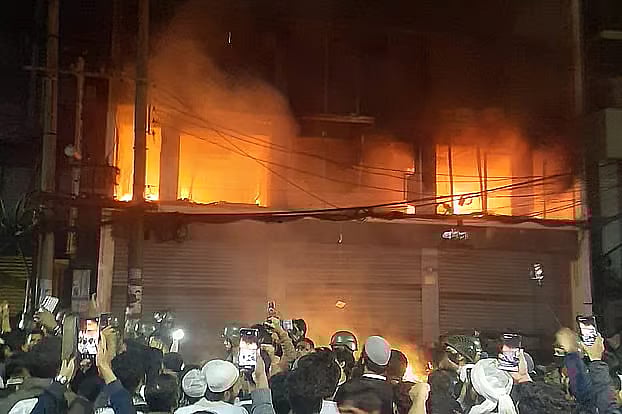
From the darkness of night came a hostile band of extremists. Those who represented the darkness launched a frenzied attack on Prothom Alo. For 26 years, this organisation had delivered the light of truth to countless people every morning.
It was brutally assaulted, looted and set ablaze. Yet darkness failed to dim that light. In this new spring, the fire-scorched building has awakened to a renewed radiance of courage and art.
On the night of 18 December last year, a group of extremists driven by vengeance attacked the headquarters of the country’s leading media outlet, Prothom Alo, at Karwan Bazar in the capital.
They broke through the shutters and large glass doors, entered the building, looted it, and set it on fire. To satisfy their vengeance, they even prevented the fire service from reaching the scene.
The attackers recklessly obstructed law enforcement agencies including the police, RAB, and the army. Eventually, the building was reduced to ashes. That same night, extremists also attacked and set fire to the offices of The Daily Star and the cultural institution Chhayanaut.
The massive assault and destruction halted its online news flow, and for the first time in its 26-year journey of presenting truth to the public, publication of its print edition ceased on 19 December. However, through the determination and courage of its employees, Prothom Alo resumed online operations within just 17 hours. The print edition once again reached eager readers across the country on 20 December.
For a long time, certain quarters harbouring hostility toward Prothom Alo had been spreading misinformation to incite the public. That night, the newspaper fell victim to their brutal retaliation.
The massive assault and destruction halted its online news flow, and for the first time in its 26-year journey of presenting truth to the public, publication of its print edition ceased on 19 December.
However, through the determination and courage of its employees, Prothom Alo resumed online operations within just 17 hours. The print edition once again reached eager readers across the country on 20 December.
Starting tomorrow, Wednesday, the burnt building will host a special art exhibition titled “Alo” (Light). Renowned artist Mahbubur Rahman, through his aesthetic vision, has illuminated the charred structure with expressions of art and courage. Where flames once consumed, strokes of colour and radiant lines now appear. Burnt books, shattered interiors, and objects reduced to charcoal have been transformed into artistic materials — and from them emerges a light that reiterates the eternal truth: darkness is fleeting.
They broke through the shutters and large glass doors, entered the building, looted it, and set it on fire. To satisfy their vengeance, they even prevented the fire service from reaching the scene.
The exhibition opens on Wednesday, 18 February, from 4:00 pm to 7:00 pm and will continue until 28 February. It will remain open daily to visitors from 11:00 am to 1:00 pm and from 3:00 pm to 5:00 pm.
Visitors approaching the building will see a garden-like setting in front, filled with lush seasonal plants. Beyond this, their gaze reaches the fire-ravaged structure. The artist preserved the building’s façade exactly as it was after the fire.
Massive graffiti covers the burnt shutters on the ground floor — graffiti that became an expression of public aspiration after the July uprising, reflecting the younger generation’s hope for a free and inclusive society, aspirations that extremists sought to tarnish.
Firefighting equipment stored in the building could not be used during the blaze. On the ground floor, visitors will see four sculptural installations featuring burnt extinguishers presented as inert evidence. Light-and-shadow projections and sound are used here, including audio drawn from videos recorded during the fire and dialogue excerpts from Syed Shamsul Haq’s celebrated verse drama Nuruldiner Sara Jibon. A large damaged section of the front area has been preserved as it was, while drawings and multi-media works are displayed on the right side.
The elevator remains burned out. The visitors will have to climb the stairs — themselves once scorched. The ash and soot stains have been covered in three layers of colour: pink symbolising glory and grace, yellow wisdom and creativity, and green life and fertility.
Passing through this palette, visitors confront the grotesque ruins, allowing them to absorb contrasts between life and death, destruction and creation, darkness and light.
Mahbubur Rahman said he was initially stunned by the devastation. He later resolved to present to viewers both the brutal violence suffered by Prothom Alo and the resilience that allowed it to recover swiftly.
By merging these contrasts, he sought to create harmony from destruction, incorporating burnt bricks, iron, furniture, living plants, and even pigeons as artistic elements.
The large-scale exhibition uses real materials, video, photography, light, sound, sculpture, painting, and poetic drama. It also includes interviews with people who worked in the building, sharing their emotional attachments and memories — particularly about their lockers, which inspired a symbolic installation of large metal locks mounted on walls alongside burnt lockers placed throughout the space.
On the first floor, a room on the right features an installation made of burnt and half-burnt books. Within the shattered front section appear floating human forms fashioned from white cloth and metal — symbols of the dreams, hopes, anxieties, and fears of those who once worked there.
On the third floor, two large metal installations — one square and one pyramid-shaped — are constructed from twisted and melted metal objects salvaged from the fire. Their original shapes are preserved to convey the blaze’s intensity. Visitors can listen to eyewitness accounts from the attack, presented against a backdrop of a large black flag adorned with black stars.
Part of a third-floor room features flocks of pigeons among the debris. Burnt plants, teacups, glasses, and furniture have been arranged here as components of the installation.
Through these elements, the artist has reimagined ruins into artistic vision. The scarred walls have become his canvas; burnt scrap metal, torn books, and melted computer monitors his materials. The attackers emerged from darkness and slipped back into it, but light has prevailed, and it remains undimmed.