The child murder in the capital's Pallabi area was horrific. The nation was stunned by the incident and demanded swift justice. Demanding this is entirely logical because people often witness protracted investigations and trials in cases of brutal murder, especially regarding violence against women and children.
The victim’s family expressed satisfaction that the trial for the Pallabi incident was concluded within 19 days. Exceptionally, the state-appointed defence counsel also expressed satisfaction with the verdict.
We should not view this Pallabi child rape and murder case in isolation. In this instance, the highest echelons of the government stood by the victim's family and maintained direct contact. This is undoubtedly a commendable initiative.
While it may not be possible for the highest levels of government to intervene directly in every case, it is essential that, at the very least, updates are tracked and protective measures are put in place for all victims. Justice must be ensured for every victim and their family by properly following the due process of law.
It is also necessary to observe whether the manner in which the investigation and trial were conducted in the Pallabi child rape and murder case might influence judicial institutions.
In this case, we have seen that the investigation and trial were expedited with public sentiment in mind. If the defence is not given adequate opportunity to present its case, it could become a cause for concern in the subsequent stages of the judicial process.
There are certain legal processes that must be properly adhered to in the interest of justice. If an investigation and trial are rushed due to social pressure, and if those involved in the investigation and trial do not have the opportunity to work independently, it may impact the verdict.
Furthermore, if the executive branch expresses any expectations regarding a judgment due to public pressure, that too can influence the trial. Therefore, to ensure justice in any incident, the investigation and trial must not be influenced.
In a briefing following the verdict in this sensational murder case, the attorney general himself stated that even when a lower court delivers a judgment, delays in the appeal hearing lead to a protracted process in executing that verdict. He mentioned that he brought this matter to the attention of the chief justice in open court yesterday.
In response, the chief justice spoke of forming a specific bench to hear cases (death references and appeals) under the Women and Children Repression Prevention Act. We hope that due process of law will be followed there and that delays during the appeal stage will be reduced.
Appropriate punishment must also be ensured for the accused. Personally, I do not believe in the death penalty. This is because we cannot be entirely certain that someone will not be wrongfully executed in a given case.
We must also be cautious about the stage at which a death sentence is carried out. In particular, if a child is involved in the crime, or if someone mentally ill is implicated, the death penalty should not be imposed.
In the judgment of the Pallabi child murder case, Sohel's wife was also sentenced to death for aiding and abetting the rape and murder. Whether this punishment was adequate or excessive will perhaps be debated during the appeal.
There needs to be a guideline on whether the maximum penalty should be applied in all cases. Without a clear standard defining which type of offence warrants what sentence, it will create risks for the judicial system.
If we want good governance, courts cannot be influenced by public opinion and emotion. Opportunities to receive fair justice must be created. The judicial process must be strengthened. The character of the victim must not be assassinated. Furthermore, the protection of the victim, the victim's family, and witnesses must be ensured.
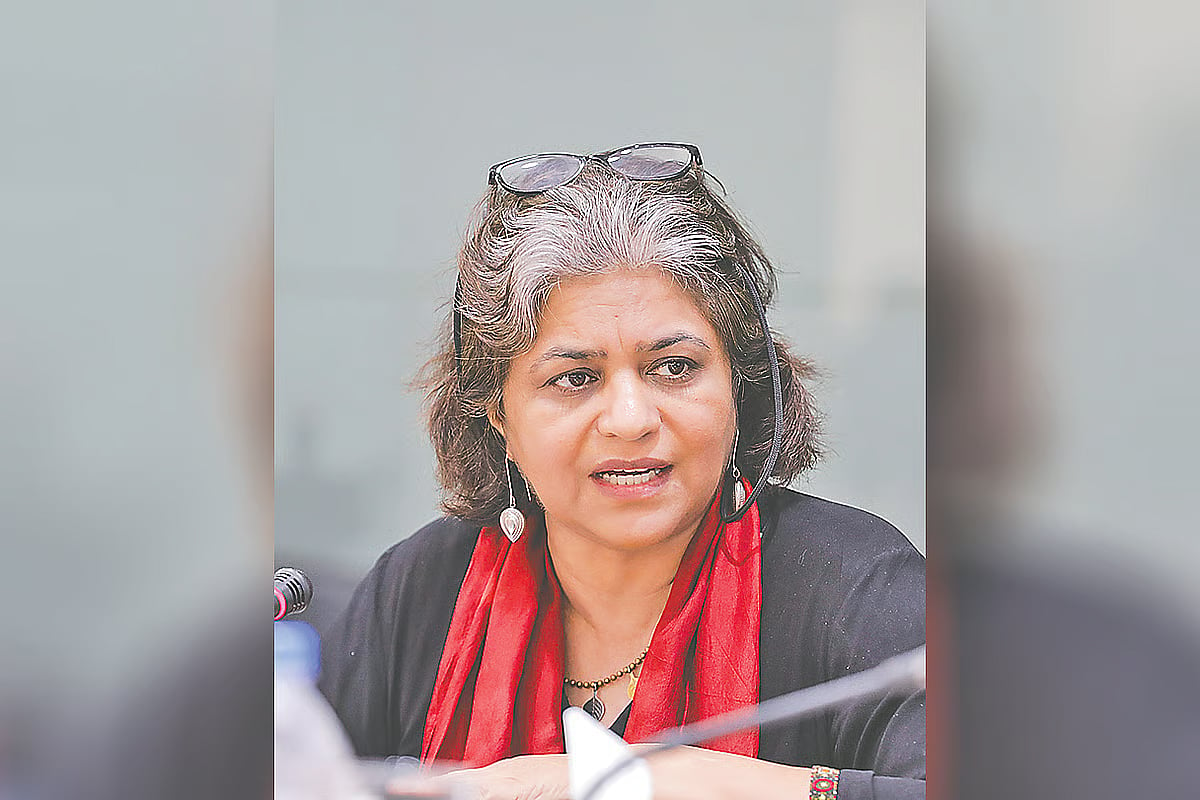
*Sara Hossain is a senior advocate at the Supreme Court.