Prothom Alo roundtable
Women's 5pc seats: Is that charity, who brings in RMG sector remittance, asks Farah Kabir
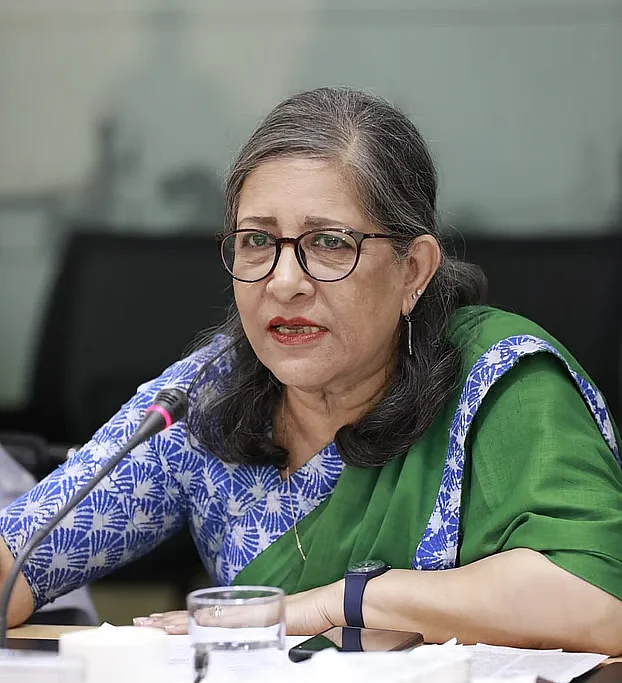
ActionAid country director Farah Kabir criticised political parties for wanting to keep five per cent seats in the Jatiya Sangsad (national parliament) reserved for women. She said, "Is this charity? Who brings in the readymade garment sector remittance? They contribute more than 50 per cent. So where does this 5 per cent come from?"
She was speaking today, Saturday, at a roundtable on 'Women's seats in the National Parliament and women's political empowerment' being held at the Prothom Alo office in Kawran Bazar of the capital. Prothom Alo senior correspondent Naznin Akhter presented the concept paper on women in parliament.
Farah Kabir said, "Back in 1995 the Bangladesh government had committed to 30 per cent seats for women. There is no alternative to direct election. The 30 per cent must be implemented. The women in the political parties must be readied. But the parties will say that we can't find the women. What is the benchmark for elections? Whether they can serve the voters or is it about muscle and power? When it comes to nation building, women's problems are relevant. The civil society wants 100 seat and direct election."
Prothom Alo associate editor Shumana Sharmin moderated the roundtable.
Also participating in the discussion are Shireen Parveen Huq, head of the Commission on Reforms on Women’s Issues; Badiul Alam Majumdar, head of the Electoral System Reform Commission; Rasheda K Choudhury, Executive Director of the Campaign for Popular Education and former advisor to the caretaker government; Fauzia Moslem, president of Bangladesh Mahila Parishad; Shaheen Anam, Executive Director of the Manusher Jonno Foundation; Khondaker Golam Moazzem, Research Director of the Centre for Policy Dialogue (CPD); Khushi Kabir, coordinator of Nijera Kori; Gita Das, chairperson of Naripokkho; Taslima Akhter, president of Garment Workers’ Solidarity; Ilira Dewan, member of the Local Government Reform Commission; and Nazifa Jannat, a key organiser of the July Movement and a student.